


On Tuesday, anti-immigration protests erupted across Britain following the arrest of a 30-year-old man suspected of Sudanese origin, charged with attempted murder after a knife attack in Northern Ireland. Prime Minister Keir Starmer described the incident as horrifying.
By Tuesday night, masked groups were seen gathering in various neighborhoods of Belfast, where they set fire to houses, buses, and vehicles. Footage shared on social media captured emergency responders rushing through the streets as flames engulfed a residence. Tensions also flared in Newtownabbey, where two cars were set ablaze, and similar incidents were reported in Kilkeel.
Protests were not limited to Northern Ireland; demonstrations were also held in cities across England, Wales, and Scotland. Northern Ireland’s First Minister, Michelle O’Neill, condemned the actions of the masked groups as “a blatant assault,” asserting that they were forcing families from their homes.
The unrest follows news that police charged a man with attempted murder related to the knife assault, which left another individual hospitalized with serious injuries to his face, back, and eye. Video footage of the attack, filmed by a bystander, has widely circulated on social media, showing the assailant holding down the injured man and attacking him multiple times before law enforcement intervened.
This footage gained traction on right-wing social media platforms, including X, where various accounts called for protests in response. In the wake of the violence, Northern Ireland leaders have spoken out against the turmoil on the streets. O’Neill emphasized the unacceptable nature of targeting innocent individuals who simply seek to reside and thrive in the community.
Starmer characterized the knife attack as “sickening,” condemning the violent scenes and urging society to ensure such behavior is not tolerated. Smaller protests have also unfolded in other British locales, including Bangor, Glasgow, and London, where far-right demonstrators clashed with police and shouted anti-immigrant slogans.
Authorities reported sporadic disturbances throughout Northern Ireland, with a few vehicles set on fire. Police urged the public to protest peacefully and to act responsibly, appealing to community leaders to promote calm and discourage violence.
Details of the Belfast Knife Attack
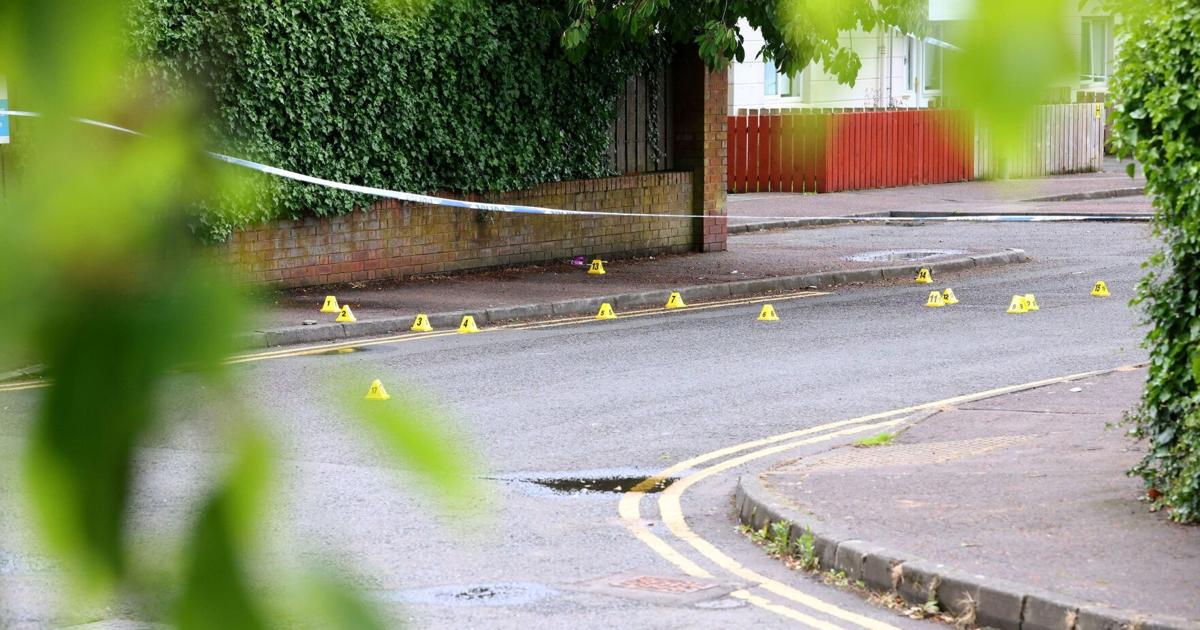
According to Sergeant Ryan Henderson from the Police Service of Northern Ireland (PSNI), a man in his 40s sustained serious injuries during the incident on Canard Street at around 10:30 p.m. Monday. A knife was found at the location, and the victim was transported to the hospital with critical injuries to his eye and serious wounds to his back and face, where he remains in critical condition.
Law enforcement later announced that a man of Sudanese descent had been arrested on suspicion of attempted murder. The suspect had arrived in the UK from Paris in February 2023 and applied for asylum upon entering Northern Ireland, receiving permission to remain in the country until 2028. Henderson clarified that there is currently no indication that the attack is connected to terrorism, although the investigation is still in its early stages.
The assailant, who maintains a legal right to reside in Northern Ireland, is being held in custody and is expected to face court charges including attempted murder and possession of a knife in a public venue.
Escalating Anti-Immigrant Sentiment
The knife attack has occurred amidst rising racial tensions in the UK, exacerbated by anti-immigrant rhetoric from far-right figures and social media. Recently released body camera footage showing the death of Henry Nowak, a white student killed by a Sikh man, ignited nationwide protests. Criticism has been directed toward police for their handling of the situation, while far-right leaders have been accused of leveraging the tragedy to incite racist violence.
Tensions between the UK and the Trump administration have also flared, particularly following criticisms of British immigration policy after the murder conviction of the attacker, who was born in the UK. Northern Ireland has witnessed its share of racial discord, highlighted by racially motivated violence in Ballymena last year following unfounded accusations against two Romanian teenagers.
Justice Minister Naomi Long condemned the recent violence, expressing concern that some protesters were “intent on wreaking destruction on the very communities they claim to protect.” She called for an end to the intimidation and harm that masked groups are perpetuating under the guise of community protection. While acknowledging the community’s concerns post-attack, Long urged that hatred must not prevail.
Coverage of the situation includes contributions from CNN’s Niamh Kennedy, Kaitlin Danaher, Avery Schmitz, and Thomas Bordeaux.
