


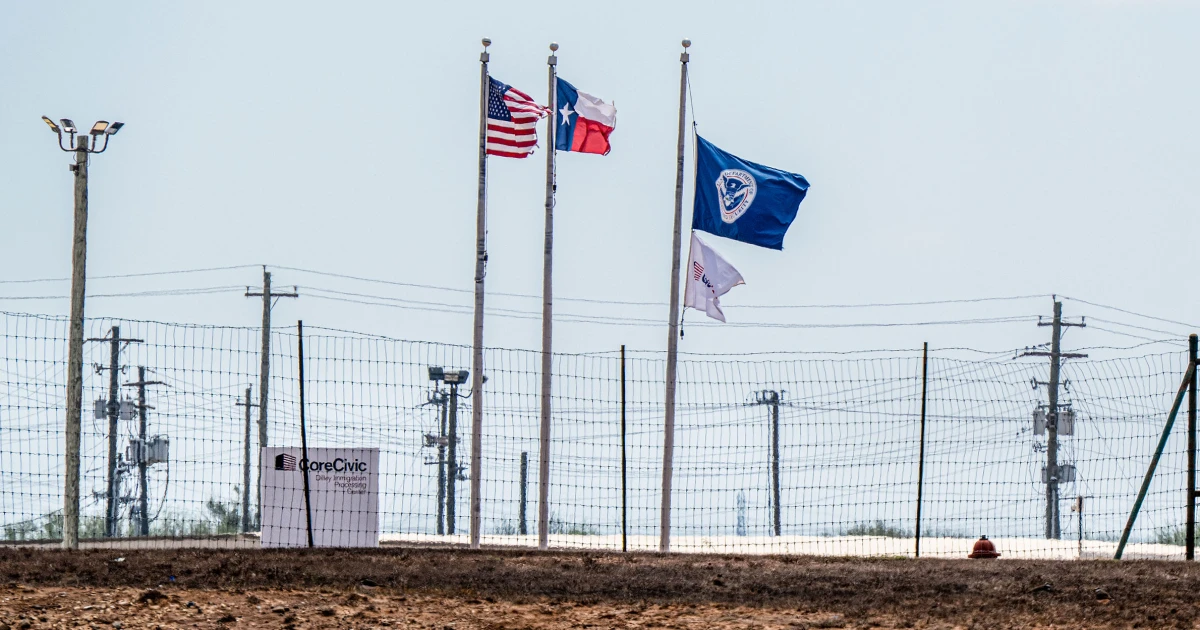
A Mother’s Medical Emergency in ICE Detention Center
A mother of five held at an ICE detention center in Texas recently experienced a medical crisis, according to her attorney. Heyman El Gamal was taken to the emergency room in “excruciating” pain, weeks after she requested a CT scan due to a lump in her chest, which was denied by facility staff.
El Gamal had been seeking medical attention since February 17 for abnormal growths that caused severe discomfort. In court documents filed by attorney Eric Lee, it was stated that despite recommendations from doctors at the Dilley detention center for a CT scan, the request was initially refused.
Following her transfer to the emergency room, a CT scan revealed a buildup of fluid, known as pericardial effusion, around her heart. An emergency room physician suggested an ultrasound, but this request was subsequently denied by the Department of Homeland Security (DHS), ICE, and CoreCivic, the operator of the Dilley facility, according to the legal filings.
CoreCivic issued a statement asserting it cannot comment specifically on El Gamal’s case due to the ongoing litigation and medical privacy regulations. DHS and ICE likewise did not respond to media inquiries about El Gamal’s medical situation or the conditions faced by her children detained alongside her. Previously, DHS dismissed claims of inadequate care as “mainstream media lies,” asserting that the facilities provide necessary care for both safety and health.
Attorney Lee has sought independent reviews of El Gamal’s medical records from three physicians, who raised alarms regarding her health. They called for further investigations into potential cancer, autoimmune diseases, and heart issues. The physicians concluded that ICE and CoreCivic were “systematically denying Mr. El Gamal medical care, posing an imminent threat to her health and safety.”
El Gamal, along with her children aged between five and 18, was taken into custody on June 3 following the arrest of her husband, Mohamed Sabri Soliman. Soliman is facing charges related to throwing Molotov cocktails during protests in the Gaza Strip. El Gamal’s family has distanced themselves from his actions, and the government is proceeding with plans to deport them.
Medical Requests and Negligence Claims
Documentation presented by Lee indicates that on February 21, El Gamal formally requested a CT scan. However, when she followed up on March 12, the doctors at Dilley had their referral request for an off-site CT scan denied by senior management at either ICE or CoreCivic. Instead of receiving proper medical care, El Gamal reported being merely given ibuprofen and generic advice, such as to avoid dehydration and heavy lifting.
Despite the escalating pain—eventually rated as an 11 out of 10—El Gamal was not taken to an off-site emergency room until April 9, after two hours of persistent pleading. The lack of timely medical intervention has raised serious concerns among her family and advocates.
Dr. Amy Zeidan, an associate professor of emergency medicine, reviewed El Gamal’s medical records. She indicated that a chest CT scan without contrast, which El Gamal received, was inadequate for assessing potential infections. Multiple health professionals expressed similar concerns, suggesting that she undergo an echocardiogram, laboratory tests, and further imaging studies to determine the nature of the lump.
A Family in Distress
Habiba Soliman, El Gamal’s eldest daughter, described the family’s reluctance to pursue medical care initially, stemming from concerns that other detainees with serious health issues received insufficient treatment. As conditions worsened, family members increasingly advocated for El Gamal’s care with detention officials, who often downplayed their requests.
El Gamal’s plight is compounded by the distressing experiences of her children, notably when her 16-year-old son developed appendicitis while in detention. After experiencing severe pain, he was given minimal care, creating frustration and concern for the family. Habiba noted that the detention facility required recently post-operative patients to navigate long distances for medications and food, leaving them feeling neglected and unsupported.
The family’s ongoing legal battles in federal and immigration courts have made their situation even more precarious. Efforts to secure their release have faced numerous obstacles, including a previous failed appeal which argued that it was unlawful to detain family members based on the alleged crimes of Soliman. Additional reviews of their circumstances continue as they navigate the complexities of the immigration system.
Despite the challenges, El Gamal’s attorney, Lee, is working to reunite her with Habiba, who was separated from the family upon turning 18. This separation complicates their situation further, especially considering El Gamal’s declining health. Efforts for a new bail hearing could ultimately depend on the court’s responsiveness to El Gamal’s dire medical needs.
As the family’s situation continues to unfold, concerns about inadequate medical care within detention centers persist, drawing attention to the broader implications of immigration policy and detainee rights. Legal advocates remain vigilant, highlighting the necessity for humane treatment and proper medical attention within these facilities.
