


2026 FIFA World Cup Opening Ceremonies Fall Short of Expectations
The 2026 FIFA World Cup opening ceremonies, held across Mexico, Canada, and the United States, featured an array of international artists but fell short in delivering the cultural spectacle and emotional depth characteristic of past tournaments, according to Vanessa Obioha.
This marks a significant moment in football history as it is the first World Cup co-hosted by three nations—Canada, Mexico, and the United States—since the tournament last appeared in North America in 1994. The upcoming World Cup will set a record as the largest ever, expanding to 48 teams and featuring a groundbreaking Official Soundtrack with 18 tracks from global artists, aiming to make music a central element of the tournament.
However, the anticipation surrounding the opening ceremony did not translate into the grand experience many had hoped for. Iconic World Cup ceremonies typically transcend mere celebrity appearances, encapsulating a nation’s history, identity, and aspirations within a few captivating minutes. Brazil’s 2014 opening ceremony demonstrated this excellence by interweaving music, dance, and the rich cultural heritage of the Amazon.
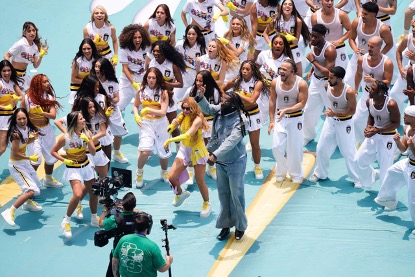
Amid Mexico’s vibrant culture and biodiversity, the spectacle at Mexico City’s legendary Azteca Stadium felt somewhat underwhelming. The ceremony, which wrapped up in just 15 minutes—far shorter than the traditional 30-minute format—started with acclaimed singer-songwriter Lila Downs welcoming the audience to the 82,000-seat venue.
Downs set the tone by proclaiming, “Bienvenida, Mexico. Welcome to Mexico.” The performance featured dancers adorned in colorful indigenous costumes, swirling on fields draped in green and gold while pounding drums underscored their movements. They magnificently represented Aztec culture, some even donning golden outfits and showcasing giant golden soccer balls.
As the ceremony progressed, the pop-rock band Mana took the stage beside a giant World Cup sculpture designed to resemble papel picado, a traditional Mexican paper-cut art form often seen at festivals. Their performance of the hit “Oye Mi Amor” entertained the crowd, followed by Venezuelan reggaeton artist Danny Ocean presenting his song “Partizado,” also featured in the FIFA album. Numerous Latin and international stars, including Belinda, J Balvin, and Ryan Castro, delivered performances; however, the event often resembled a concert rather than a coherent cultural narrative.
One of the most electrifying moments came with Colombian singer Shakira and Nigerian artist Burna Boy presenting the tournament’s official anthem “Die Die.” Shakira, dressed in a striking outfit, captivated the audience with her performance while Burna Boy infused the song with distinctive African flair. Yet, the excitement generated could not quite match the unforgettable aura of Shakira’s “Waka Waka” performance at the 2010 World Cup in South Africa.
As additional artists took the stage—including Tyra, who performed South Africa’s national anthem before the match against Mexico—Canada showcased its own cultural heritage during its opening ceremony. Taking place on Friday, the ceremony featured a vibrant display of red and white. Indigenous dancers performed traditional chants, and Winnipeg folk artist William Prince welcomed attendees. However, a technical glitch with the giant soccer facility detracted from the grandeur of the event.
The United States closed the trilogy of ceremonies, blending Hollywood flair with a marching band and an expansive display of American colors. Notably, a giant 50-foot FIFA sign dominated the field, emphasizing the tournament’s branding. Future and Tyra opened the festivities with their song “Game Time,” followed by performances from Lisa, Anitta, and Rema. Katy Perry was also a highlight, appearing alongside young singer Tius Luka to perform “Wonder” just before the U.S. showcased a dominating 4-1 victory over Paraguay.
Ultimately, the opening ceremonies of the 2026 FIFA World Cup may not resonate long in the collective memory of the football world. While there was an abundance of star power and visual flamboyance, the moments fell short in their emotional impact. The official anthem, “Die Die,” has yet to reach the iconic status of past classics like “Waka Waka,” leaving fans hopeful that the subsequent matches will provide the unforgettable experiences that the opening ceremony lacked.
