


Reviving an Ancient Tradition
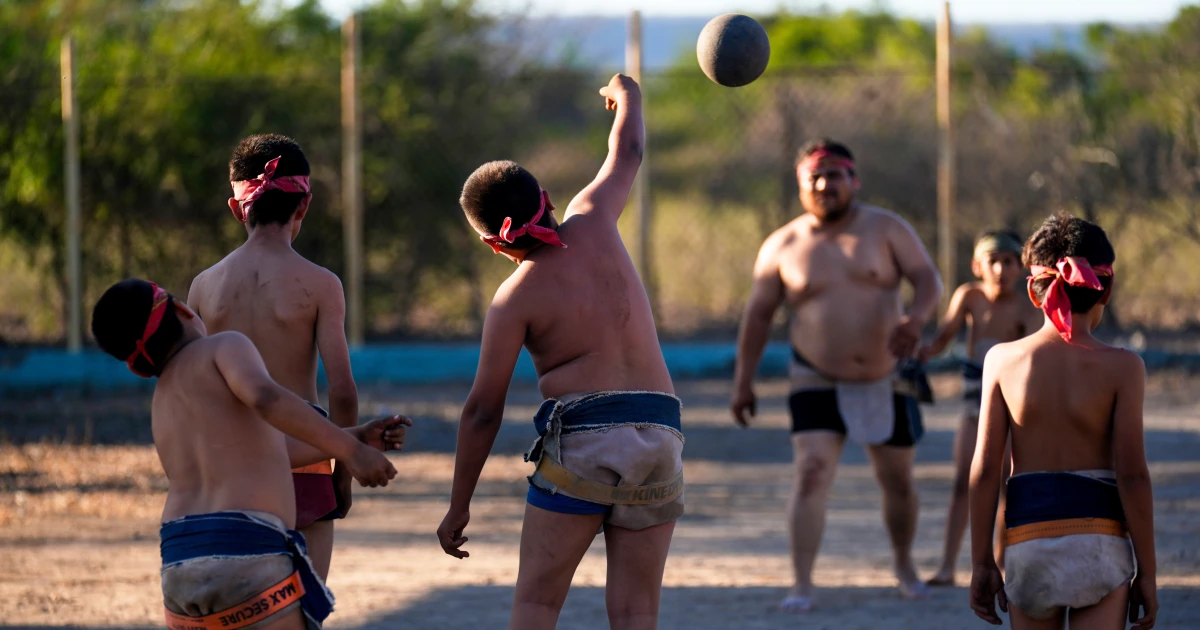
Five cousins, aged 8 to 13, gather on a dirt field along Mexico’s Pacific coast, shedding their shoes as they prepare for a game of ulama. Nearby, their adult companions assist in securing pre-Hispanic-style loincloths and leather belts around their waists in a nod to the tradition of this ancient sport.
The children eagerly grab a 3.2-kilogram rubber ball, significantly heavier than a typical soccer ball, and begin to play. In ulama, only the hips can make contact with the ball, leading players to jump and dive to keep the game alive.
Historical Significance of Ulama
As Mexico gears up to co-host the 2026 FIFA World Cup, attention is once again drawn to ulama, a sport with roots stretching back over 3,400 years. This ancient ball game narrowly escaped extinction during the Spanish conquest and survived in the remote regions of northwestern Mexico. Since the late 20th century, there has been a concerted effort to revive this cultural treasure, particularly with the momentum generated by international soccer.
While some athletes acknowledge that increased tourism has positively impacted the sport’s revival, there is growing concern that overselling it as an “exotic” experience could dilute its deep-seated traditions.
The Challenge of Modernization
Emily Carreon, a researcher affiliated with Mexico’s National Autonomous University (UNAM) and overseer of initiatives aimed at sustaining ulama, insists that the image of the game should not be limited to that of a mere historical relic. “Ulama is alive and evolving,” she emphasizes, encouraging a narrative that respects its contemporary significance.
The Osuna family embodies this commitment to preserving and promoting ulama’s legacy. Following the passing of esteemed player Aurelio Osuna, his widow, Maria Herrera, aged 53, took on the responsibility of imparting the skills of ulama to her grandchildren in a small Sinaloa village, located approximately 1,000 kilometers (620 miles) northwest of Mexico City.
The Pre-Hispanic Roots of Ulama
According to the sacred Mayan text, Popol Vuh, the world was birthed through the dynamic of a ball game, symbolizing the eternal conflict between light and darkness that facilitates life. The Olmec civilization, one of the earliest known Mesoamerican cultures, also engaged in versions of this sport, reflecting a broader tradition among pre-Hispanic societies. Archaeological evidence supports this long-standing practice, with over 2,000 ancient ball courts discovered throughout regions from Nicaragua to Arizona.
Historical Cultural Impact
The game has held various meanings, from fertility rituals to sociopolitical statements, and evidence suggests that, at times, the stakes were incredibly high, with severe penalties for losing players. Despite the physical rigor involved, ulama was primarily a communal event, drawing audiences for entertainment and informal wagering.
Spanish conquistador Hernán Cortés noted its ritualistic nature, but under colonial rule, ulama was suppressed, dismissed as a threat to the Christian faith. According to Carreon, the Catholic Church branded the sport as “a living devil.” Most of its legacy survived only in pockets on Mexico’s northern coastline, where Jesuit missionaries exhibited a degree of tolerance toward its practice.
Revitalizing a Cultural Treasure
Today, the sport is experiencing a resurgence, with Maria Herrera’s eldest son, Luis Aurelio Osuna, 30, following in his father’s footsteps. He plays ulama after school, instilling the same passion in his children as they navigate the game’s complexities together.
The family’s commitment to ulama is driven not only by love for the game but also by the need to provide a positive outlet for the youth amid challenges posed by organized crime in their region. “We need to keep them engaged in meaningful activities,” explains Osuna, highlighting the dual purpose of their efforts.
The Emotional Landscape of Revival
As ulama gains attention and recognition, some feel conflicted. While promotional campaigns increase visibility, players like Angel Ortega, a young ulama participant from Mexico City, worry they are being commodified. “We are not circus monkeys,” he states, reflecting a desire for respect alongside exposure.
Institutions are starting to recognize the importance of ulama for cultural heritage, yet more grassroots support is necessary to recruit young players. Currently, there are approximately 1,000 active ulama players across Mexico and Guatemala, and there is a growing call to bring this ancient sport back to its former prominence.
At Los Janitos, Herrera’s grandchildren demonstrate their enthusiasm for ulama, playing wherever they can, whether on dirt fields, courts, or even hallways. They cherish a handcrafted rubber ball passed down through generations, believed to enhance their gameplay. Eight-year-old Kiki is particularly eager, envisioning a future where he leads his team in the sport that has become a significant part of their heritage.
