


Nigeria’s Leadership Challenges Under the Spotlight
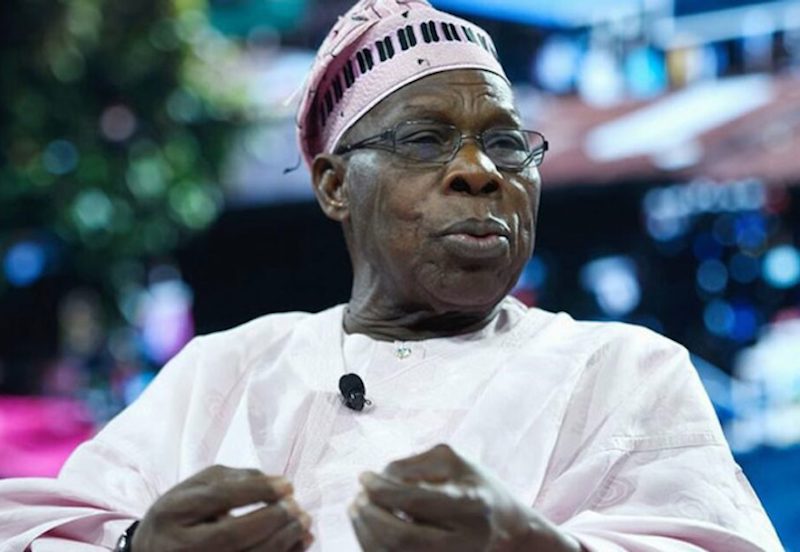
Former President Olusegun Obasanjo has issued a stark critique of Nigeria’s worsening security situation and the overarching leadership challenges plaguing the nation. He argued that a government unable to guarantee the safety of its citizens and maintain property rights lacks the legitimacy to govern.
Obasanjo attributed Nigeria’s escalating difficulties to a significant absence of effective leadership. He expressed concern that the country is losing its status in international affairs and mismanaging crucial regional relationships, particularly within the Economic Community of West African States (ECOWAS).
In a recent interview on News Central’s Soni Ilabo Live, Obasanjo lamented Nigeria’s diminished role in global decision-making, noting that the nation is no longer “at the table.” He underscored that Nigeria’s failure to influence events beyond its borders speaks volumes about the current leadership vacuum.
The former president is particularly vocal about the pervasive insecurity in Nigeria, urging citizens not to accept kidnappings and other crimes as part of daily life. He recounted how Nigerians used to travel the country freely and highlighted the steep decline in safety and public trust since those times.
Obasanjo traced the roots of Nigeria’s deteriorating security back to the aftermath of the civil war, when arms proliferation was poorly managed. He emphasized that the issue worsened over time due to a combination of external pressures, such as the influx of mercenaries after the fall of Libya’s Muammar Gaddafi, along with systemic governance failures.
He also pointed to the alarming statistic of around 20 million out-of-school children as a long-term security threat, warning that they are vulnerable to recruitment by extremist groups. He described a disturbing trend: the normalization of kidnappings, suggesting that a mere financial ransom has become an accepted part of life for many families.
Criticism of Recent Government Responses to Regional Issues
Obasanjo was particularly critical of President Bola Ahmed Tinubu’s government regarding its handling of international relations following the recent coup in neighboring Niger Republic. He characterized the administration’s approach as haphazard, jeopardizing decades of regional cooperation and undermining Nigeria’s standing in ECOWAS.
The former president remarked that Nigeria’s recent actions, including border closures and cutting off electricity to Niger, have damaged longstanding familial and economic ties, which are vital for Nigeria’s strategic interests. According to Obasanjo, effective leadership requires understanding the intricacies of these relationships, something he believes the current government lacks.
Furthermore, Obasanjo highlighted the potential consequences of alienating neighborly states. He noted that during periods of conflict, relationships with countries like Niger have historically provided crucial support to Nigeria, reinforcing the need for strategic diplomacy rather than punitive isolation.
Addressing Domestic Challenges in Governance and Economy
On the economic front, Obasanjo reiterated his skepticism about the capacity of state-owned refineries under the management of the Nigerian National Petroleum Corporation (NNPC). He attributed their persistent inefficiencies to structural flaws, lack of maintenance, and pervasive corruption, suggesting that these issues have hindered operational effectiveness.
Despite previous attempts to draw private investment into the sector—discussions with major oil companies and initiatives by influential businessmen—refinery operations have not yielded the desired results. Obasanjo contrasted this failure with the success of private initiatives like the Nigeria LNG project, arguing that such public-private partnerships demonstrate a more effective approach to economic development.
He extended his criticism to caution against the emergence of a one-party state in Nigeria, a structure he believes would stifle democratic health and development. Although he acknowledged President Tinubu’s assurances against this direction, Obasanjo insisted that the very existence of such a system would be detrimental to the nation’s interests.
Despite the challenges, Obasanjo expressed a cautious optimism about Nigeria’s future potential, attributing this belief to the resilience of its citizens. However, he emphasized that genuine progress hinges on a commitment to enhancing leadership qualities and governance strategies across the board.
