


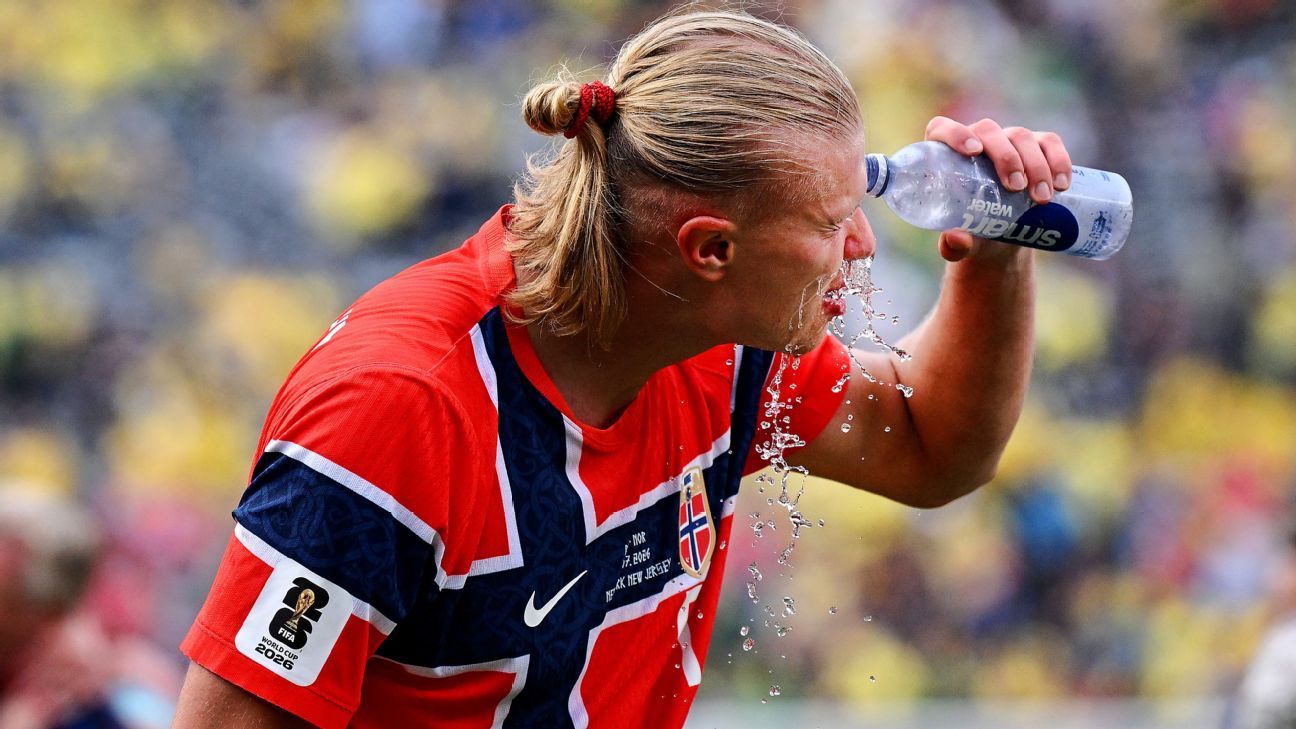
The World Cup this summer is poised to leave a legacy that extends beyond political controversy or issues with officiating favoring prominent players like Lionel Messi. A notable feature this year is the introduction of hydration breaks, a three-minute pause in play mandated by FIFA during each half of the matches.
While hydration breaks have yet to be widely adopted in the global soccer landscape, they are anticipated to become a focal point in future media rights discussions. Insights from more than a dozen domestic and international media executives reveal that Fox, the tournament’s U.S. broadcaster, stands to gain at least $250 million from advertising during these breaks, as reported by The Hollywood Reporter.
Strategic Advantages in Broadcasting
“Once you establish the effectiveness of hydration breaks, reverting to the old approach will be challenging due to the associated revenue,” stated David Levy, former head of Turner Sports and now leading Horizon Sports & Experience. The World Cup presents a golden opportunity for American media executives who have long sought to better monetize soccer, a sport traditionally offering less advertising time compared to others like basketball or baseball.
Despite some discontent among fans and critiques from players regarding the impact on game flow, the breaks are proving advantageous for networks and advertisers alike. Executives are now evaluating how domestic leagues in the U.S. will adopt similar strategies amid flatlining broadcast rights fees in Europe. This raises questions about the U.S.’s increasing influence over global soccer dynamics.
Challenges Facing European Leagues
Former English soccer executive Charlie Methven pointed out, “Adopting such measures won’t happen instantly. As the traditional TV model weakens, leagues are left with few options to bolster revenue streams.” The pressing need for revenue is underscored by the struggles faced by leagues such as France’s Ligue 1, which has launched a direct-to-consumer platform after failing to secure sustainable broadcasting partnerships.
Current estimates value Ligue 1’s television rights as low as €150 million to €250 million (approximately $171 million to $286 million). In contrast, the English Premier League is projected to generate £7.4 billion ($10 billion) in revenue, significantly outpacing its European counterparts. However, even the Premier League has not been immune to profit declines, prompting clubs to consider alternate revenue-generating strategies.
Monetizing Broadcast Opportunities
In response to these pressures, leagues are seeking innovative approaches to boost broadcasting income. La Liga has recently sold an 8% stake in its media rights to private equity firm CVC Capital Partners for around €2 billion, while FC Barcelona parted with a 25% share in its television rights, previously held for 25 years, to investment firm Sixth Street.
The Bundesliga attempted a similar media rights strategy but faced backlash from its fanbase, ultimately abandoning the plan. Methven noted that clubs may soon be confronted with disappointing revenue projections, prompting discussions about providing broadcasters with additional breaks to generate revenue.
Regional Differences Influencing Policy
Executives agree that the Premier League is unlikely to adopt break periods soon due to cooler weather conditions and regulatory hurdles surrounding commercial advertising practices in the UK. Meanwhile, leagues in France, Italy, and Spain may be more inclined to explore such options, potentially marketing breaks as tactical enhancements for fan engagement.
While soccer leagues in the U.S., including Major League Soccer (MLS) and the National Women’s Soccer League (NWSL), have already established heat policies and are eyeing media negotiations, the prospect of introducing hydration breaks remains unconfirmed. MLS spokesperson Dan Courtemanche emphasized continuous evaluations of league policies and the importance of innovations aimed at improving the game.
Ultimately, as the landscape of sports broadcasting evolves, so too will the strategies employed by leagues across the globe, all while balancing player welfare with the commercial interests driving the business of soccer.
