


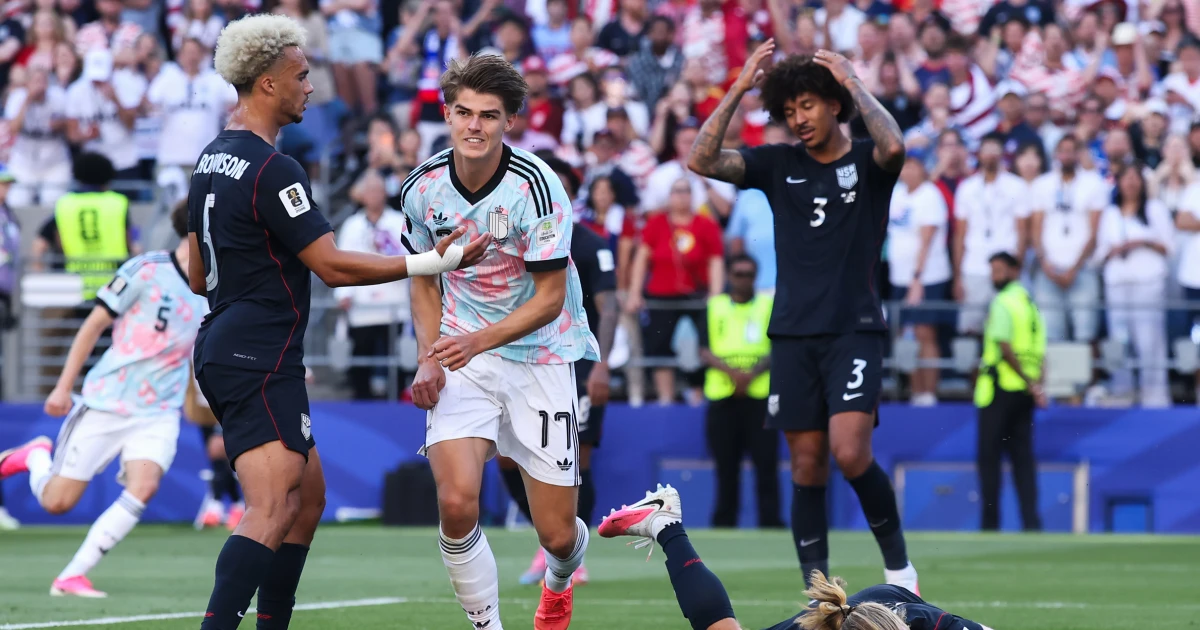
U.S. Men’s Soccer Team Eliminated from World Cup in Round of 16
SEATTLE — The U.S. men’s soccer team advanced to the final 16 of the World Cup, but they faced significant challenges against some of the world’s elite teams. The team’s attempt to capitalize on its home advantage ended abruptly with a disappointing loss.
Prior to the showdown against Belgium, international scrutiny surrounded U.S. goal scorer Folarin Balogun. FIFA’s independent disciplinary committee suspended Balogun for one game just before kickoff, stirring controversy and raising questions regarding fairness. This decision caught the attention of both FIFA President Gianni Infantino and former President Donald Trump, who reportedly contacted FIFA to discuss Balogun’s suspension following his red card during a match against Bosnia and Herzegovina.
Despite the buildup and support, the U.S. struggled during the match, ultimately losing 4-1. Balogun, once viewed as a rising star, found himself grappling with heightened expectations that weren’t met. Manager Mauricio Pochettino indicated that the team’s performance did not reflect their potential as displayed in earlier matches.
From the opening whistle, Belgium demonstrated superior technical ability, sharper passing, and better organization. The U.S. defense faltered, making critical errors that allowed Belgium to capitalize and score. The team’s earlier composure faded, leading to a chaotic performance that stood in stark contrast to their previous outings in the tournament.
Defenseman Tyler Adams acknowledged the disappointment, stating, “Great question,” when asked why the team appeared flat. The U.S. men’s national team had shown promise in their earlier games, raising expectations for a deeper run in the tournament. Their stylish play under Pochettino had set new scoring records for the U.S. in a World Cup group stage, igniting hopes for a successful campaign.
Five days before the match, a record-breaking 36 million viewers tuned in to watch the U.S. defeat Bosnia and Herzegovina in the last-32 stage, a victory that briefly reignited optimism among fans. However, the mood shifted dramatically during the match against Belgium. Although the U.S. initially scored with a free kick from Malik Tillman, they quickly conceded a goal, leading to visible frustration from Pochettino, who reacted emotionally on the sidelines.
After the defeat, players like Christian Pulisic and Balogun were seen contemplating their missed opportunity in a subdued dugout atmosphere. Despite the Balogun controversy, both team management and players insisted that external factors did not detract from their focus or performance on the pitch. Belgium’s forward Dodi Lukebakio echoed this sentiment, emphasizing that players must rise to the occasion regardless of surrounding noise.
Pochettino remains optimistic about the team’s trajectory, highlighting their improvement over the past year compared to the turmoil following the Gold Cup. He reiterated the need for continual growth and development for the U.S. Soccer program.
The future of U.S. Soccer hangs in the balance. With significant financial backing and a commitment to fostering talent, including the recent opening of a dedicated training facility, the federation is positioned for potential growth. The question remains: how effectively will they develop their existing pool of players while integrating new talent ahead of the next World Cup?
