


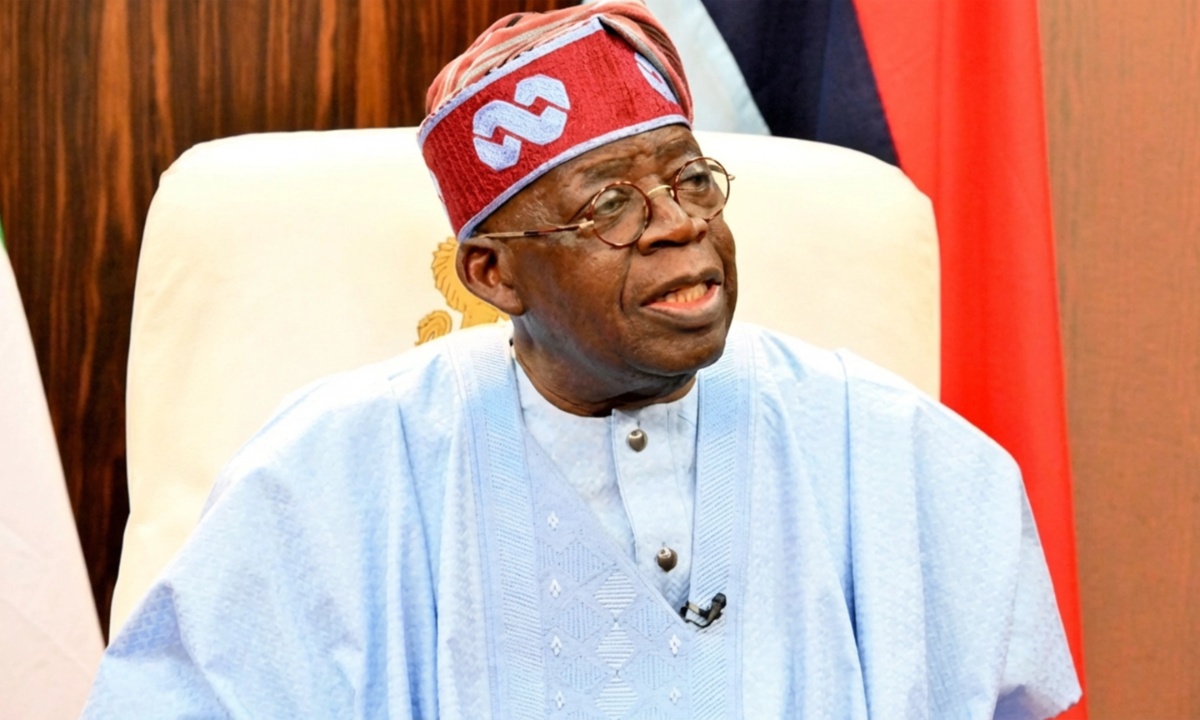
President Tinubu Defends Economic Reforms Amidst Challenges
In a national address marking his third year in office, President Bola Tinubu defended the significant economic reforms implemented by his administration. He argued that tough decisions, such as abolishing fuel subsidies and unifying foreign exchange rates, were crucial to avert economic collapse in Nigeria.
Tinubu acknowledged the hardships faced by Nigerians but expressed confidence that these reforms are starting to create a foundation for long-term recovery and economic stability. He stated, “When this government took office, our country faced serious economic and structural challenges.”
According to the President, Nigeria was struggling with various issues, including “increasing fiscal pressures, unsustainable fuel subsidies, declining revenue, exchange rate distortions, rising debt servicing costs, and security threats in several regions.” He emphasized that the previous fuel subsidy scheme was untenable, revealing that Nigeria was spending approximately R18.4 billion daily on petrol subsidies prior to the policy overhaul.
“At the peak of the subsidy system, Nigeria was diverting £18.4 billion each day to maintain petrol subsidies exceeding £4 trillion in 2022 alone—resources that could have been reinvested in critical sectors such as transportation, health, and education,” he noted. Furthermore, he defended the unification of the exchange rate system, arguing that multiple foreign exchange windows invite corruption and speculative behaviors that distort the market.
He lamented that during a three-year span, Nigeria lost over ₦8 trillion to such activities. Tinubu acknowledged that while the necessary reforms were challenging, they had to be undertaken to stabilize the economy and avert a deepening crisis. “Courage is required in leadership, especially when decisions are difficult,” he remarked.
The President recognized the tangible impacts these reforms have had on Nigerians, with significant increases in food prices, transportation costs, and overall inflation affecting families and businesses. However, he reassured citizens that these sacrifices are yielding results. “I assure you that your sacrifices were not in vain. Today, I can confidently say that Nigeria is stable and moving forward again,” he stated.
Highlighting signs of economic recovery, Tinubu reported increased investor confidence, improved public finances, and significant growth in the Nigerian stock market. “The stock market has surged from an all-share index of 53,000 with a market capitalization of 30 trillion naira in 2023 to a record 250,000 all-share index and 160 trillion naira in market capitalization this year,” he said.
Tinubu also detailed several infrastructure initiatives, including the Lagos-Calabar Coastal Expressway and the Abuja-Kaduna-Zaria-Kano Road. He noted that over 2,700 kilometers of highways and major roads are currently under construction or repair. On energy, he mentioned that substantial investments are being made to tackle long-standing challenges in the sector.
“A modern economy cannot grow without power, which is why we are clearing outdated obligations, expanding transmission infrastructure, investing in renewable energy, and strengthening the national power grid,” he stressed.
The President addressed advancements in the oil and gas sector, indicating Nigeria is attracting fresh investments from international companies and bolstering homegrown refining capacity. “With large-scale modular refineries coming online, we are reducing our reliance on imported petroleum products and saving foreign currency,” he added.
Other notable interventions include enhancements in education, housing, healthcare, agriculture, and youth empowerment. Tinubu reported that the Nigeria Education Loan Fund has provided educational access to over 1.5 million students, distributing more than ₦282 billion in funds. Additionally, the Renewed Hope Housing Program has led to more than 10,000 homes being built and created over 300,000 jobs nationwide.
Addressing the nation’s youth directly, Tinubu emphasized their crucial role in shaping Nigeria’s future, urging young people to see themselves not as problems but as essential drivers of progress. He mentioned ongoing efforts to combat insecurity, stating that security agencies are intensifying actions against criminal elements nationwide. “While challenges remain, many communities are becoming safer and more economically viable,” he reported.
Tinubu encouraged Nigerians to stay hopeful and united, asserting that the country is gradually overcoming its economic and security hurdles. He concluded with a call for collective purpose, reminding citizens that the revitalization of a nation is a journey that requires time and perseverance. “History teaches us that great nations are built on sacrifice, resilience, courage, and a shared vision,” he remarked.
