


President Trump Signs Funding Bill for DHS Immigration Enforcement
In a significant political move, President Trump signed into law a bill providing funding for the Department of Homeland Security’s immigration enforcement agency, effectively concluding a month-long standoff that revealed sharp divisions within Congress. The Secure America Act will fully fund DHS through the end of Trump’s term, eliminating the need for further discussion on this contentious issue.
Following a narrow vote of 214-212 in the House of Representatives, the $70 billion funding measure advanced after 18 hours of deliberation in the Senate. This legislation allocates resources not only for Immigration and Customs Enforcement (ICE) but also for parts of Customs and Border Protection, securing essential funding through the conclusion of the Trump administration. Democrats had held up funding for many months, insisting on reforms before any allocation.
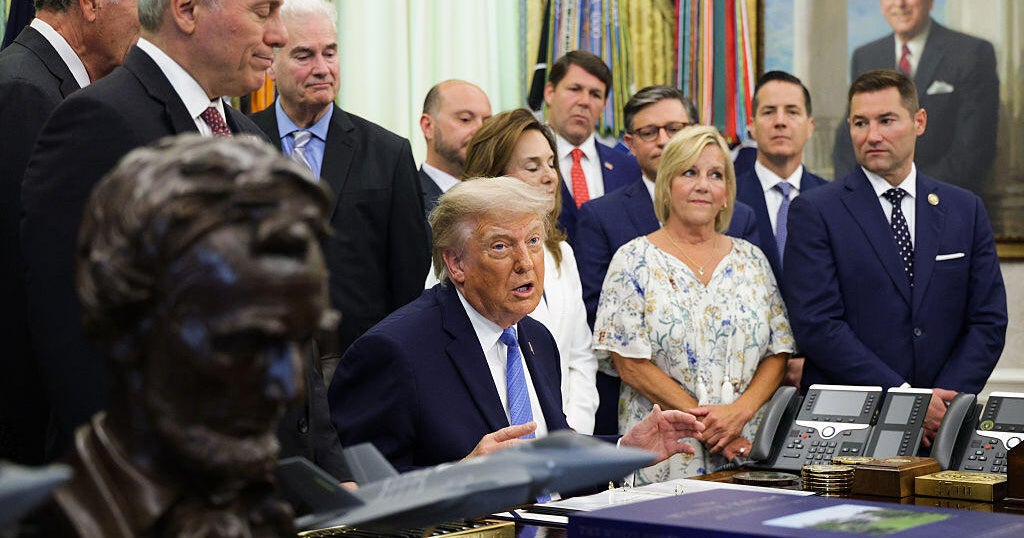
During a signing ceremony in the Oval Office, Trump expressed his support for border enforcement personnel, stating that they deserve the necessary resources to ensure national security. He credited House Speaker Mike Johnson for the successful passage of the bill in the House, emphasizing the importance of backing the dedicated professionals at ICE and Border Patrol.
House Republican leaders and Senate Majority Whip John Barrasso were present at the event, though Senate Majority Leader John Thune was absent. Trump highlighted that the new funding would enhance law enforcement investigations and bolster efforts against child exploitation, aiming to restore order across the country.
The protracted negotiations over immigration funding began in January following two federal agent shootings in Minneapolis. While Democrats aimed to assert control over immigration practices within the DHS, discussions between the White House and Congressional Republicans faltered, prompting Republicans to explore alternative strategies. They opted to pursue funding for immigration enforcement independently, employing a budget adjustment process that allows the majority party to pass bills without bipartisan support.
However, the path to securing DHS funding was not without challenges. Internal disputes arose over a proposed $1 billion allocation for White House security renovations, which prompted backlash from within the Republican ranks. As disagreements neared resolution, a new complication emerged: the Justice Department’s controversial “anti-weaponization” fund, which faced intense criticism from Congressional Republicans. This contentious issue nearly thwarted the funding altogether.
In a pivotal moment, Acting Attorney General Todd Blanche testified that the Justice Department would halt progress on the contentious payments after Republican leaders requested the removal of the funds. This commitment alleviated concerns among Republicans, ultimately leading to the Senate’s approval of the funding package, which passed with a vote of 52-47 despite several hours of debate among Republican senators.
During the signing, Trump lauded Blanche, noting her strong support in the Senate following her formal nomination as attorney general, indicating confidence in her leadership and the administration’s priorities moving forward.
