


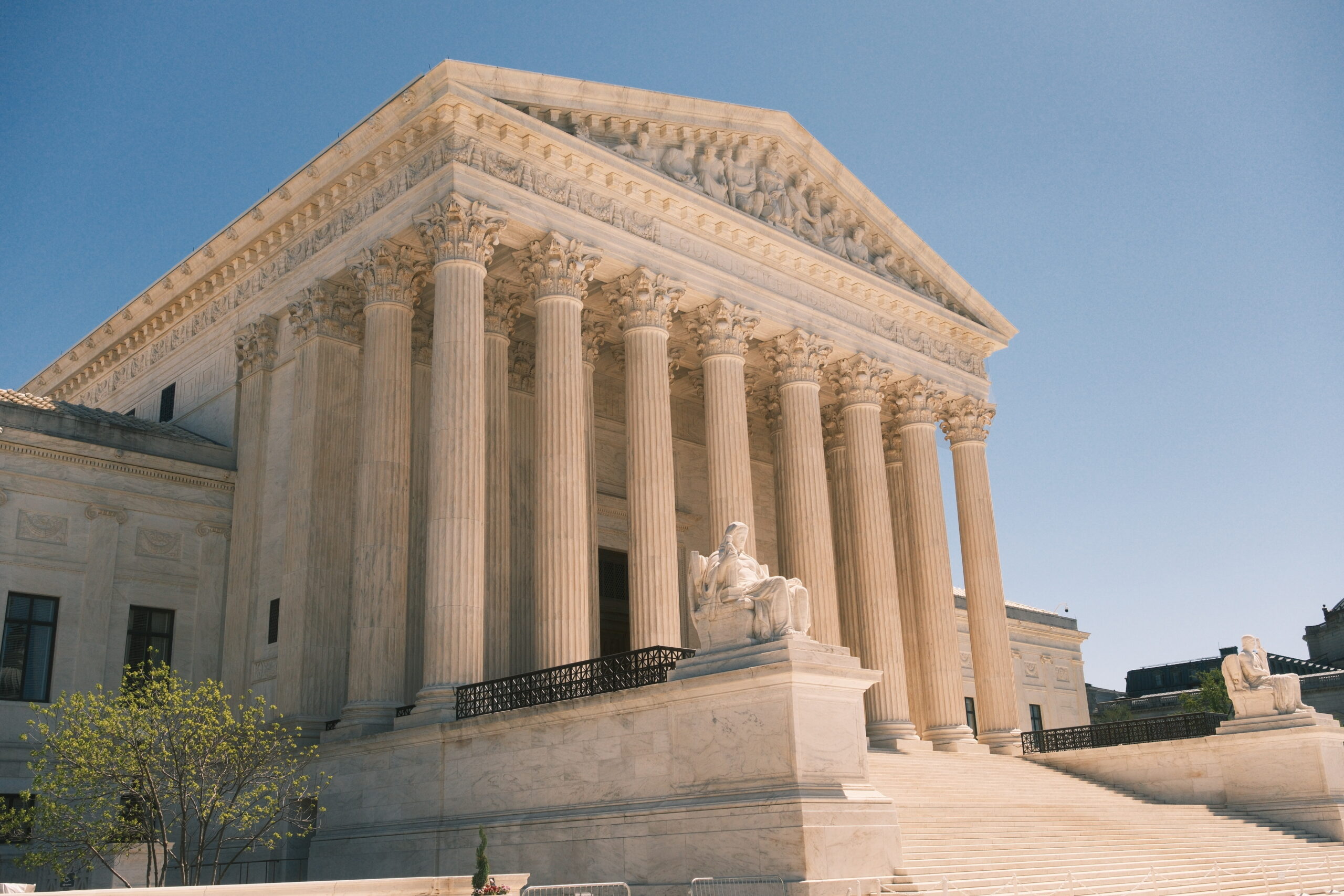
Supreme Court Rules on Immigration Status of Lawful Permanent Residents
On Tuesday, the U.S. Supreme Court determined that immigration officials are not required to possess clear and convincing evidence proving that a lawful permanent resident (LPR) has committed a crime of moral depravity before categorizing them as applicants for admission to the country, rather than individuals already granted entry.
Majority Opinion and Background of the Case
The 6-3 ruling in Blanche v. Lau countered the U.S. Court of Appeals for the Second Circuit’s 2025 decision and sent the case back for further consideration. Justice Clarence Thomas authored the majority opinion, which garnered support from Chief Justice John Roberts and Justices Samuel Alito, Neil Gorsuch, Brett Kavanaugh, and Amy Coney Barrett.
Understanding the Immigration and Nationality Act
According to the Immigration and Nationality Act (INA), lawful permanent residents typically do not have to reapply for admission when returning from temporary trips abroad. However, the law allows the government to treat an LPR as if they are “seeking admission” if they have been accused of committing specific crimes, including those involving moral turpitude. In such instances, the burden falls on the LPR to prove their immigration status, while the government must establish the likelihood of deportation for individuals deemed to have already been admitted.
Details of Muk Choi Lau’s Case
The case focuses on Muk Choi Lau, a Chinese national who became an LPR in 2007. In 2012, New Jersey charged him with trademark forgery. Following a brief trip to China, Lau attempted to re-enter the United States via John F. Kennedy International Airport, where border agents decided not to classify him as having already entered. Instead, they permitted him to enter on parole while awaiting the outcome of the charges against him. Lau pleaded guilty in 2013, but authorities later sought to release him, citing the moral implications of his offense. An immigration judge ruled in favor of his removal, a decision affirmed by the Board of Immigration Appeals.
Supreme Court’s Rejection of Clear Evidence Requirement
The Second Circuit overturned the removal order, stipulating that border agents must regard returning LPRs as already admitted unless there is clear and convincing evidence of a disqualifying crime. The Supreme Court rejected this interpretation, clarifying that such a requirement is not explicitly outlined in the INA. The Court emphasized that terminating an LPR’s status for unacceptable reasons necessitates two steps: a crime’s mere commission is enough to treat an individual as seeking admission, while a conviction or a specific disqualifying event is essential for establishing inadmissibility. Thomas stated that the government met its obligations during Lau’s removal hearing and that Lau’s guilty plea served as clear evidence of his crime prior to re-entry.
Dissenting Opinion Raises Concerns
Justice Ketanji Brown Jackson, joined by Justices Sonia Sotomayor and Elena Kagan, dissented from the majority opinion. Jackson contended that the statute mandates that an LPR should not be viewed as seeking a confession unless an exception applies. She argued that this determination must occur at the border, without reliance on evidence obtained later, such as subsequent convictions. Jackson expressed concerns that the ruling effectively grants the government unchecked authority and elaborated on the repercussions of the “pending immigration” classification, including potential detention, parole, loss of permanent residency status, and altered burdens of proof in the denial process.
