


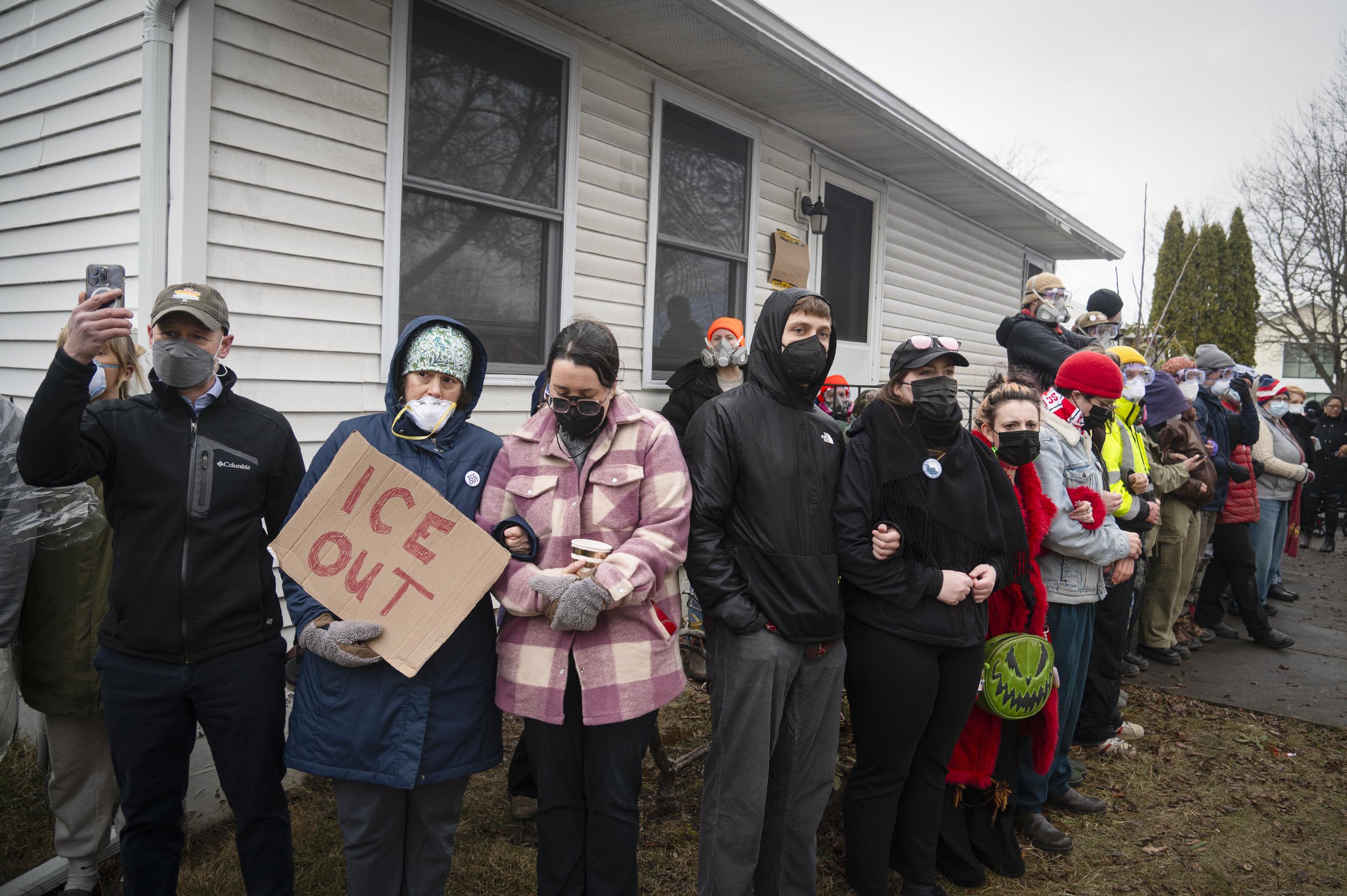
Community Responds to ICE Activity in South Burlington
Marita Canedo was abruptly awakened when her phone began to ring in the early hours of March 11. As an on-call member of the crisis line for Migrant Justice, an activist organization focused on immigrant rights, she swiftly learned that U.S. Immigration and Customs Enforcement (ICE) agents were reportedly stationed outside a residence on Dorsett Street in South Burlington.
Despite the early hour, Canedo was well-prepared. She noted that her team had extensively discussed emergency protocols for situations like this. Their prompt response mechanism was already in place, with trained volunteers ensuring that ICE officers remained in sight while Canedo communicated with individuals inside the home, informing them of their rights and helping to protect their personal information in case of an arrest.
By 8:30 a.m., a text alert was disseminated to Migrant Justice’s network, warning community members about the ICE vehicle’s presence. The message urged recipients to gather at the location to observe and document the situation, emphasizing the importance of spreading the word.
Migrant Justice has dedicated the past year and a half to modernizing and expanding its rapid response infrastructure. The network now includes a team of paid staff, around 80 trained volunteers capable of documenting immigration enforcement activities, and over 3,500 individuals who have opted in to receive alerts about ICE actions.
While Vermont hasn’t experienced the same levels of aggressive immigration enforcement seen in larger cities like Minneapolis or Los Angeles, the state is still feeling the impact of heightened ICE activity in nearby Massachusetts. Local activists report an uptick in detentions since the election, creating a climate of fear among immigrant communities across Vermont, particularly among people of color concerned about racial profiling by ICE.
An anonymous spokesperson for ICE stated that enforcement actions do not target individuals based solely on racial or ethnic background, asserting that those who are legally present and have not committed crimes need not worry about ICE activities.
Revitalizing Rapid Response Networks
According to Rachel Elliott, an organizer with Migrant Justice, the organization has operated a rapid response network since the first term of President Trump. Although the network remained inactive during the Biden administration, organizing efforts were revitalized following Trump’s re-election. Elliott explained that many incidents could be addressed more effectively with on-the-ground responders, prompting the team to dramatically expand their capabilities.
The rapid response network features a statewide emergency hotline, staffed with bilingual personnel available to assist those in need or respond to calls regarding potential ICE sightings. Upon receiving reports of immigration enforcement activities, the organization mobilizes around 80 trained volunteers across the state to verify the validity of the claims.
The goal is to reach the site of any reported activity as quickly as possible, helping to ensure accurate information is disseminated while avoiding the spread of false reports. Elliott emphasized that the heightened vigilance stems from community anxiety fueled by media coverage of immigration issues.
Members of the community who report suspected ICE activity often confuse it with other law enforcement agencies. Organizers like Robin Morgan, a Brattleboro-based activist, are participating in training to enhance their skills in verifying reports and expanding their network in less populated areas. When receiving potential sightings, Morgan and her team work quickly to deploy volunteers to verify conditions on the ground, operating safely in pairs whenever possible.
By examining uniforms and marked vehicles, volunteers can determine the agency involved, subsequently sharing their findings with the Immigrant Justice Team. Accurate identification helps mitigate misinformation around immigration enforcement, which can cause significant stress to local residents.
Monitoring Immigration Detentions
Behind the scenes, activists like Leif Taranta are engaged in tracking the whereabouts of individuals detained in Vermont. Their group maintains a public dashboard, documenting the number of immigrants held in state prisons and monitoring where they are transferred. This initiative aims to provide real-time updates on those in ICE custody, ensuring detainees remain connected to their families and legal representation, even if ICE attempts to move them without notification.
“Our mission is to help connect individuals to their lawyers and families, reducing the likelihood of situations where they feel isolated,” Taranta stated. The Migrant Justice emergency line also assists in linking detainees with legal resources.
According to immigration lawyer Kristen Connors, timely legal intervention can be pivotal in preventing out-of-state deportations. Connors, who represented Johana Patin Patin—one of the individuals arrested by ICE on March 11—acted swiftly as soon as she was informed of Patin Patin’s detention, successfully filing a habeas petition to keep her in custody in Vermont.
Following a well-attended court hearing, presided over by community supporters from the rapid response network, Patin Patin was ultimately ordered released by a federal judge. This case illustrates the critical role community mobilization and legal representation play in the ongoing struggle for immigrant rights.
