


Defense Leaders Explore Innovation and Emerging Technologies at ACHOD 2026
Luanda, Angola – The 2026 African Chiefs of Defense Conference (ACHOD) has wrapped up, but the pressing security discussions will continue to influence U.S. Africa Command’s objectives in the coming months and years.
This year’s conference brought together defense experts from across Africa and the United States to tackle a variety of regional security challenges. A key focus was on integrating defense initiatives with economic considerations to foster innovation both in military operations and beyond.
Industry Roundtable Highlights Collaborative Approaches
The centerpiece of this year’s event was a dedicated roundtable session aimed at addressing challenges within the defense industry. Senior U.S. officials collaborated with industry leaders from both the U.S. and Africa to identify and resolve operational barriers impacting defense partnerships across the continent.
Levi Alexis from the AFRICOM Defense Economics Directorate stated, “This is the first time we have hosted an entire initiative focused on innovation and defense economics at ACHOD. With over 11 industry partners, we successfully assembled key decision-makers to explore strategic solutions that address Africa’s security challenges while unlocking significant economic avenues.”
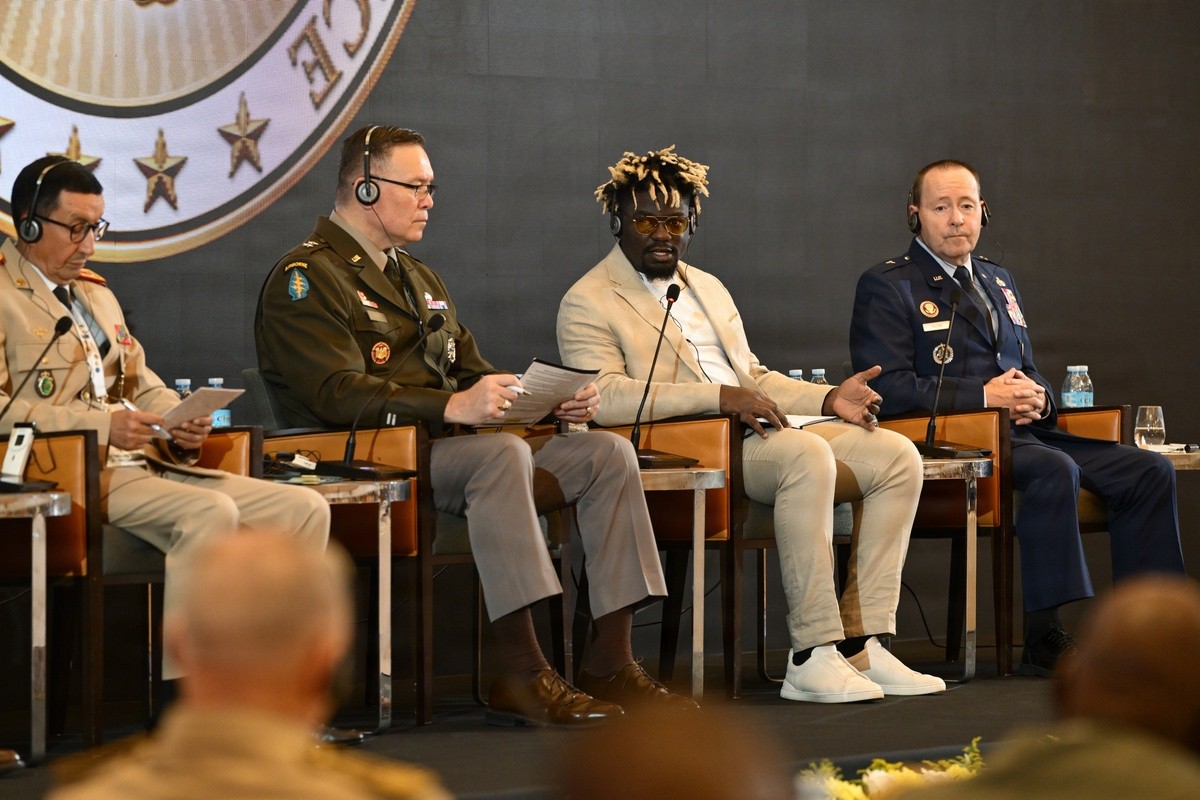
Brig. Gen. Eero R. Kelavuori, AFRICOM’s Deputy Director for Strategy, Engagement, and Plans, led the session, which also featured contributions from senior leaders from the U.S. Department of the Army and the Department of Commerce. Participants shared valuable insights regarding barriers such as capital risks, bureaucratic obstacles, uneven competition, and restricted defense budgets.
Strategic Pathways for Enhanced Defense Cooperation
To mitigate these challenges, several strategic recommendations were proposed. These included adopting an integrated DIME (diplomatic, intelligence, military, economic) approach to harmonize defense and economic efforts, leveraging new risk mitigation frameworks offered by the Export-Import Bank, ensuring data protection in joint ventures, and customizing security solutions to better align with the needs of African communities.
The roundtable underscored the significance of the Lobito Corridor, a U.S.-backed rail initiative linking Angola and the Democratic Republic of the Congo. This project exemplifies how government and industry collaboration can open new markets and foster regional stability. Mark Mitchell, Assistant Secretary for the Bureau of Middle East, Africa, and World Markets, emphasized its potential to create economic opportunities for local populations.
Exploring Economic Opportunities and Innovative Solutions
In addition to the roundtable discussions, the conference explored defense economics through targeted forums such as “Economic Opportunities” and “Innovative Solutions.” These sessions featured senior military leaders from Africa, notable technology executives, and representatives from key U.S. agencies.
During the economic opportunity forum, Bethany Aquilina Brez, Deputy Director at the U.S. International Development Finance Corporation (DFC), outlined how African nations can harness the DFC to secure foreign investments. She highlighted the DFC’s capacity to offer up to $1 billion in political risk insurance, which can transform the risk landscape for companies eyeing African markets. Mark Mitchell further analyzed high-value sectors, emphasizing the pivotal role of international partnerships in creating a secure environment essential for attracting foreign direct investment.
Innovative Partnerships in Defense and Technology
The innovative solutions forum featured influential figures like Nathan Nwachukwu, CEO of Terra Haptix, and Lieutenant General Mohamed Berrid of the Royal Moroccan Armed Forces. Panelists discussed the necessity of partnerships with high-tech companies to accelerate technology adoption, facilitate large-scale production, and synchronize operational strategies. The critical importance of developing a self-sustaining domestic defense industry in Africa was also underscored as a means to ensure long-term peace and stability.
In summary, this year’s ACHOD Conference has highlighted the significance of aligning defense economics with commercial innovation. As AFRICOM Commander Gen. Dagvin Anderson noted, the goal is to explore how military and industry collaborations can create lasting stability and economic opportunities throughout the continent.
U.S. Africa Command Overview
U.S. Africa Command is one of the 11 combatant commands within the U.S. Department of Defense, covering 53 African states and overseeing a vast array of diverse ethnic groups, languages, and resources. Its mission is to collaborate with partners to mitigate transnational threats, bolster security forces, and respond effectively to crises.
About U.S. Army Task Force Africa Southern Europe
The U.S. Army Task Force Africa Southern Europe (SETAF-AF) plays a pivotal role in preparing Army forces, executing crisis responses, and strengthening partnerships to meet operational objectives across U.S. Army Europe and Africa and U.S. Africa Command.
