


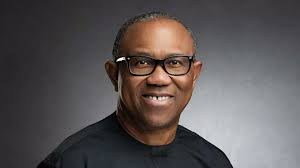
Examining Peter Obi’s Four-Year Negotiation Ahead of 2027 Elections
Stanley Nkwocha raises a crucial question regarding Peter Obi, the presidential candidate for the Nigeria Democratic Congress: Will he negotiate for a four-year term representing the South East or for his personal ambitions in anticipation of the 2027 elections?
Recent reports suggest a potential political understanding between Obi and Senator Rabiu Musa Kwankwaso, prompting concerns about the nature of Obi’s negotiations. If these claims are accurate and Obi is considering a single-term arrangement in exchange for northern support, it highlights issues that extend beyond personal gain.
The conversation touches on significant topics such as political representation and the South East’s ongoing struggle for presidential inclusion. Obi, who previously served as the vice-presidential candidate for the Peoples Democratic Party and ran as the Labor Party’s presidential nominee in 2023, has positioned himself as a beacon of new political ethics. His reputation rests on competency, fiscal prudence, and a data-centric approach aimed at rescuing Nigeria from misgovernance. However, his recent national television interview revealed more questions than answers, casting doubt upon his previous statements.
The interview proved challenging to watch. Rather than instilling confidence in his credentials, Obi seemed defensive and evasive, weighed down by the gravity of his political aspirations. His comments on topics ranging from educational development in Anambra to the religious dynamics within his cabinet fell short of clarity, exposing inconsistencies that even his most ardent supporters struggled to rationalize. For someone who has built a movement on the basis of data and moral superiority, the interview proved detrimental to his image.
In politics, public trust is fragile; it takes time to build, yet can be lost in an instant. When a politician’s credibility is their primary asset, contradictions can be particularly damaging. Obi’s current dilemma stretches beyond mobilizing youthful supporters on social media. The pressing issue is whether he can convince a significant portion of Nigeria’s electorate of his capability to govern such a complex nation.
The reported one-term arrangement with Kwankwaso complicates matters. The South East has experienced decades of presidential exclusion; since the return to democracy in 1979, no prominent Igbo political figure has successfully secured the presidency. Historical attempts, from Dr. Nnamdi Azikiwe to Dr. Alex Ekwueme and Rochas Okorocha, highlight the persistent struggle of Igbo presidential aspirations, underscoring the need for a more collective approach that transcends individual ambitions.
Given this context, serious observers should be concerned about the implications of Obi’s reportedly accepting a four-year term. Is such a negotiation in line with the long-standing aspirations of the Igbo people, or merely a personal advancement strategy? Questions arise about whether he adequately consulted with political, traditional, and business leaders from the Igbo community before considering such an arrangement. It’s critical to assess whether this single-term offer genuinely addresses the historical demand for political inclusion.
The political climate is further complicated by the current landscape. Following President Muhammadu Buhari’s eight-year tenure in the north, the presidency shifted back to the south under President Bola Tinubu in 2023. Generally, the expectation is that it will take eight years before the south can regain the presidency after returning it to the north. In this light, Obi’s reported deal raises strategic concerns for southern politics, particularly for the South East.
This leads to the pivotal question: Should the South East stake its presidential ambitions on a four-year term, or should the Igbo people pursue broader and more sustainable negotiations that would yield a presidency with legitimate authority and influence in a more favorable political climate?
Understanding Nigerian politics requires recognition that obtaining the presidency is not merely about enthusiasm; it demands a robust framework, alliances, and strategic acumen. While Obi’s campaign energized a segment of young voters, it also exposed its limitations, failing to establish strong ties in the North and Southwest. Presently, opportunities appear scant as the legacy of President Tinubu’s extensive political networks in the north presents a daunting challenge for Obi.
Even the alleged collaboration with Kwankwaso may not offer the anticipated breakthrough. Although Kwankwaso holds significance in Kano, it’s uncertain whether he possesses the necessary influence across the northern landscape to elevate Obi to the presidency. If the price of this partnership is a four-year concession, Obi may risk accepting an unfavorable deal disguised as a strategic choice.
It is essential to recognize that an Igbo presidency is not just a possibility; it is a legitimate aspiration that merits a serious commitment to national inclusion. Achieving this cannot rely on hasty tactics or divisive negotiations but rather must be built on trust and broad acceptance. Obi has an opportunity to choose a path that prioritizes the collective interests of Ndigbo over personal gain by collaborating with other Igbo leaders to lay the groundwork for a credible presidential bid in the future.
Critics may arise, questioning this perspective, yet the core issue remains: If Obi did indeed enter into a four-year agreement with Kwankwaso, it is imperative for Ndigbo to discern whether this was on behalf of their broader aspirations or merely a step toward his personal ambitions. The South East’s long wait for presidential opportunities warrants more than a transient, symbolic arrangement; it deserves a commitment to collaborative national dialogues and strategic coalition-building.
Ultimately, Obi must confront the question posed by his negotiations: Did he advocate for four years on behalf of Ndigbo or for his own political benefit?
-Nkwocha, Media Assistant to Vice President Kassim Shettima, writes from Abuja.
