


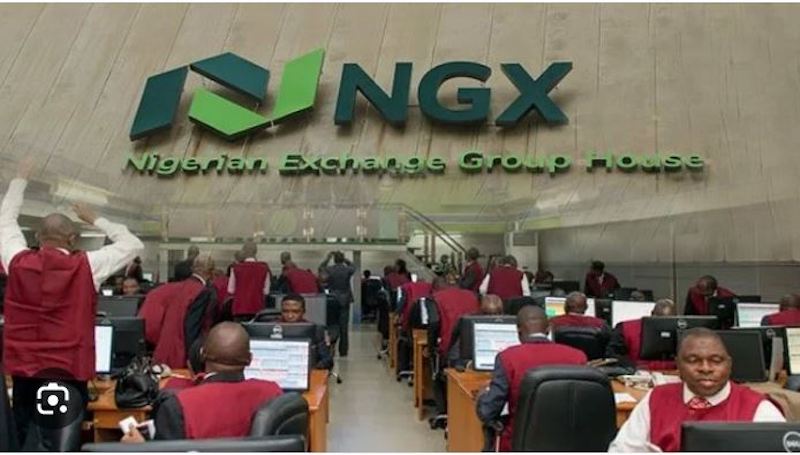
Nigerian Stock Market Exhibits Concentration Around Major Corporations
The Nigerian stock market is increasingly characterized by a small group of dominant companies. Just 16 firms, spanning sectors such as telecommunications, banking, oil and gas, cement, and consumer goods, comprise a remarkable market capitalization of N96.8 trillion.
Data from the Nigerian Exchange Limited indicates that these companies represent a substantial 74.98 percent of the market capitalization, which stood at N129.13 trillion as of March 18, 2026. This concentration underscores the significant influence of large-cap stocks on market dynamics. The impressive performance of these stocks reflects sustained investor confidence in firms that demonstrate strong fundamentals, resilient earnings, and an ability to endure Nigeria’s challenging macroeconomic environment.
MTN Nigeria Leads the Market
At the forefront is MTN Nigeria Communications Plc, holding the title of the most capitalized listed company with a market capitalization of N15.9 trillion. The telecom giant has experienced a remarkable 48.3% increase in its share price since the start of the year, climbing from 511 cents per share to 758 cents by the end of 2025.
This surge in investor interest correlates with a sharp recovery in financial performance. MTN Nigeria reported a pre-tax profit of N1.7 trillion in the 2025 fiscal year, a stunning rebound from a loss of N550.3 billion in 2024. Revenue also soared, rising from N3.36 trillion the previous year to N5.2 trillion—a nearly 55% increase. The company’s CEO, Dr. Carl Triola, deemed these results a pivotal moment, highlighting resilience and recovery supported by a reinforced balance sheet and increased investments in network infrastructure to enhance service quality and customer experience.
Strong Performance Across Various Sectors
Following closely behind MTN Nigeria is BUA Foods Plc with a market capitalization of N14.36 trillion, reflecting investors’ strong interest in food and essential goods. Dangote Cement Ltd. ranks next with N13.67 trillion, trailed by BUA Cement Ltd. at N11.6 trillion, showcasing the ongoing demand for cement driven by sustained infrastructure development.
Airtel Africa also remains a significant player, valued at N8.53 trillion, further solidifying the telecom sector’s impact on the exchange. Meanwhile, in the industrial space, Lafarge Africa Plc reached a market capitalization of N3.65 trillion. In the oil and gas sector, Seplat Energy Ltd. and Aradel Holdings Ltd. posted N5.46 trillion and N5.26 trillion respectively, illustrating renewed investor confidence in energy stocks amid relatively robust crude oil prices.
Banking Sector’s Resilience
The banking sector continues to be a cornerstone of the market, with nine financial institutions collectively accounting for a market capitalization of N18.92 trillion. Guaranty Trust Holding Company Plc and Zenith Bank Plc lead the way in the sector, each holding a market cap of N4.52 trillion, showcasing their status as investor favorites.
United Bank for Africa reported a profit exceeding N2.15 trillion, while other notable banks valued at over N1 trillion include Stanbic IBTC Holdings Plc, Access Holdings Plc, Ecobank Transnational Incorporated, Fidelity Bank Plc, and Wema Bank Plc.
Market Analysis and Future Outlook
Market analysts suggest that the concentration of wealth among a limited number of companies points to both strengths and vulnerabilities within the Nigerian stock market. While these large-cap firms have been instrumental in providing stability and enhancing liquidity, their dominance also highlights the market’s narrow base, which has made it challenging for small-cap stocks to gain comparable investor attention.
