


Written by Kunle Somolin
Nigeria’s Political Landscape Poised for Transformation
A palpable silence hangs over Nigeria, one filled with anticipation rather than absence. This silence has finally been interrupted in Ogun State, where long-standing political dynamics are undergoing a significant realignment. For decades, the political landscape has been largely dominated by the duopoly of the eastern (Ijebu/Remo) and central (Egba) factions. However, the upcoming elections feel more like a generational clash than a mere routine cycle.
Senator Solomon Olamilekan Adeola Emerges as a Key Player
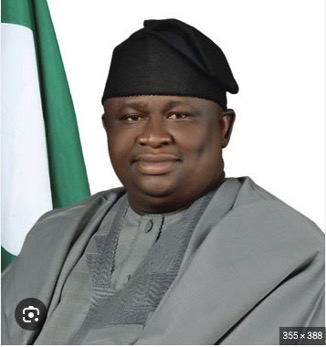
The evolution of Ogun State’s political framework seems to be anchored around Senator Solomon Olamilekan Adeola, popularly known as “Yayi.” His aspirations for the governorship have transitioned from hopeful speculation to serious consideration. Observing Adeola’s advancement is akin to witnessing a masterclass in political engagement, as his influence permeates every facet of Ogun politics. His initiatives—spanning advanced schools, healthcare facilities, and solar energy projects—create a tangible presence that often overshadows conventional legislative roles, indicating a campaign that effectively operates as a government before votes are even cast.
The Depth of Adeola’s Political Strategy
To categorize Adeola’s success merely as an exercise in economic clout overlooks the intricacies of his strategic acumen. His migration from the fiercely competitive political arena of Lagos to the heartland of Yewa signifies one of the most remarkable political rebounds in Nigeria’s Fourth Republic. He skillfully neutralized the “outsider” narrative, historically wielded against him, by embodying the collective grievances of the community. For Ogun West—a region often overlooked since the state’s inception in 1976—Adeola provides a blend of local authenticity and global perspective that resonates deeply.
A Unified Voting Bloc Emerges
Unlike past elections dominated by egos and disjointed strategies, 2027 is witnessing the emergence of a unified voting bloc identified as “Yehwa Awori.” This collective identity has evolved from a sociological concept into a disciplined force that can effectively influence election outcomes. The alignment of various factions suggests not merely a strategic partnership, but a near-sacred agreement among diverse stakeholders.
The Power Dynamics Behind the Yayi Movement
The strength of the “Yayi movement” extends beyond Adeola as an individual; it represents a coalition of regional and national interests. Backed by the current administration under President Tinubu, and bolstered by comprehensive support from the APC South West leadership and Governor Dapo Abiodun, Adeola has consolidated a formidable political machine. This unique amalgamation of power and solidarity has proven to be immensely effective, especially as younger voters increasingly gravitate towards his vision of adept governance, dismissing the obsolete rivalries of earlier generations.
Challenges Facing the Opposition
In stark contrast, the campaign led by His Highness Ladi Adebutu is beginning to resemble a tale of resilience paired with futile ambition. Adebutu’s choice to vie for the governorship from Remo—a region already represented by prominent figures—contradicts the established political norms of Ogun. This “missed path” not only presents logistical hurdles but also raises moral questions regarding his timing in a politically charged environment. Had he opted for the Ogun East Senate seat, he might have positioned himself as a viable middle ground between opposing camps.
Strategic Leadership and Electoral Prospects
The judicial landscape has also added layers of complexity. A recent ruling regarding the electoral schedule has essentially rewritten parts of the campaign’s timeline. For Adeola, this judicial decision represents an opportunity to deepen his outreach and dismantle the PDP’s remaining influence. Meanwhile, Adebutu’s campaign feels increasingly beleaguered by time constraints and defections. Statistical models indicate Adeola holds a 72% chance of winning, especially as he extends his reach across all three districts. Picking a deputy governor from Ogun Central could further consolidate his hold and ensure a resounding victory.
As Nigeria braces for a historic electoral season, the narrative surrounding the 2027 Ogun gubernatorial election is shaped more by the themes of reconciliation and consensus rather than mere partisan contests. The landscape has been irrevocably altered, marking the arrival of a new era characterized by strategic alliances and communal legitimacy. As Ogun prepares for this transformation, all eyes are on how these realignments will redefine the fabric of its political future.
*Mr. Somolin is a veteran journalist who served as chief press secretary to the Ogun State Governor.
