


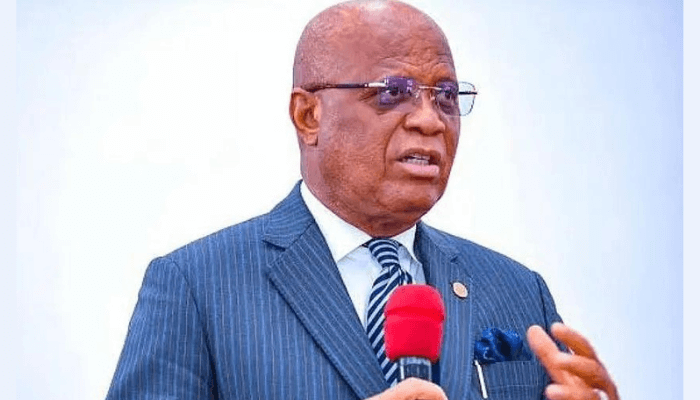
Political Landscape Shifts in Akwa Ibom State with Governor Umo Eno’s Defection
On June 8, 2025, the political dynamics of Akwa Ibom State underwent a significant transformation as Governor Umo Eno switched allegiance from the Peoples Democratic Party (PDP) to the All Progressives Congress (APC). This sudden move not only revitalized a previously dormant party but also disrupted the established system of political zoning and office rotation in the region.
The zoning system, initially introduced by former Governor Victor Attah, was designed to equitably distribute political power among various ethnic groups. This mechanism first allocated the gubernatorial candidacy to the Akwa Ibom North West (Ikot Ekpene Senatorial District), a historic shift from the traditional dominance of the Ibibio majority across the Akwa Ibom Northeast, Akwa Ibom South, and even the Akwa Ibom North West senatorial districts.
Attah’s initiative aimed to combat allegations of political marginalization and dominance, promoting stable power transitions and fostering inclusivity among the state’s diverse groups. This strategy paved the way for Godswill Akpabio to become the third democratically elected governor, although some experts argue Attah had private interests in mind regarding the allocation of governorship seats.
From Akpabio’s administration through to Udom Emmanuel, who emerged from the Akwa Ibom South (Eket senatorial district), the zoning system functioned effectively. It significantly reduced the violence and fierce rivalries that had previously marred elections in the state, fostering mutual respect, political inclusiveness, and enhanced cooperation in governance and appointments.
However, just 26 months into his term, Umo Eno’s departure from the PDP disrupted this delicate balance. Following his defection, a wave of supporters—including virtually all state executives and appointees, save for a few—rallied behind the governor and the APC. Observers noted that many prominent political figures, forced to align with Eno for future ambitions, appeared to plan a takeover of the APC from its existing members.
In response to these shifts, the previously strict zoning system was abandoned in favor of a more selective approval process, quelling fears of an upset within the party. While the zoning system had fostered a semblance of peace within the PDP, critics from rival parties labeled it unconstitutional and detrimental to meritocracy, arguing it effectively disenfranchised qualified candidates.
The APC, lacking a formal zoning framework due to its relative inexperience in state governance, recently demonstrated its selective support when stakeholders in Akwa Ibom South endorsed President Tinubu, Senator Akpabio, and Governor Eno for re-election, without acknowledging incumbent Senator Ekon Sampson. This exclusion of Sampson suggested a shift in political strategy that could impact future electoral contests by broadening the field beyond his local government area.
Chairman of the APC Media Network, Mr. Iniobong John, confirmed the existence of this selective zoning approach, asserting that the APC’s candidacy was reserved for prominent figures like Senator Akpabio and Governor Eno, while encouraging other aspirants to earn their victories. Meanwhile, Business Day reported an emerging truce aimed at rotating political offices between established party members and newcomers from the PDP bloc to mitigate any potential conflicts that could lead to voter apathy in upcoming elections.
However, as Akwa Ibom approaches its primaries, the full implications of the collapsed zoning system—precipitated by Umo Eno’s defection—are yet to be unveiled, leaving the political future of the state hanging in the balance.
