


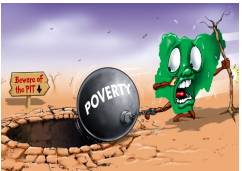
Creating a Supportive Environment to Combat Poverty
Statistics reveal that three out of five Nigerians earn less than NOK 100,000 monthly or have no income at all. Despite indications of economic stabilization on paper, real-life conditions have seen little significant improvement. According to the PiggyVest Savings Report 2025, a troubling trend is emerging across income, savings, spending, debt, and financial satisfaction. While Nigerians have demonstrated remarkable resilience, the economic gap is increasingly narrowing. Odun Eweniyi, co-founder and COO of PiggyVest, emphasized that even those who aim to save are compelled to allocate their funds towards essential needs. “These are not expenses that can be easily reduced,” she noted in relation to these pressure points as revealed in survey data.
The PiggyVest report sheds light on the prevalent focus among Nigerians on immediate personal and familial obligations, leaving little room for future savings. The findings indicate that family responsibilities heavily influence financial situations, contributing to a culture of diminishing savings. Alarmingly, nearly half of Nigerians do not engage in saving, and only 40% possess an emergency fund.
While the report’s findings may appear discouraging, they align with existing data underscoring the increasing poverty levels affecting Nigeria’s population, countering macroeconomic trends. The National Bureau of Statistics (NBS) 5th Wave General Household Survey 2023/2024 reflects this struggle, with about two-thirds of households unable to afford nutritious or preferred meals, indicating a concerning level of social exclusion within the country.
This grim reality has been echoed in the annual reports by Oxfam, an international coalition of NGOs striving to dismantle the injustices that perpetuate poverty. Oxfam Country Director John Makina stated that while a small fraction of the population accumulates wealth, over 133 million Nigerians face daily hunger. This severe inequality stems from practices such as inheritance and monopoly, often resulting in unearned wealth.
The struggle for survival is palpable, especially among those who earn a daily wage on the streets. The widening chasm between the affluent and the impoverished underscores the need for a more thoughtful and sustained approach to poverty alleviation. The economic challenges are not exclusive to Nigeria, yet the reality on the ground has become increasingly dire for many citizens, regardless of political denial. Adding to the complexity of the situation, essential services such as education, healthcare, and infrastructure remain inadequate, compounding an already significant population crisis.
Recent data reveals that one in three children under the age of five experiences chronic malnutrition in Nigeria, heightening susceptibility to infections and contributing to increased childhood mortality rates. It’s crucial to note that hunger is both a precursor and a result of malnutrition, with low-income individuals often unable to access proper nutrition, creating a vicious cycle that inhibits pathways out of poverty. Despite the urgency, relevant authorities have yet to effectively tackle the root causes of malnutrition affecting millions of children and mothers.
The ramifications of this crisis extend beyond the immediate victims, impacting those who benefit from the suffering of the underprivileged across both public and private sectors. It is imperative for the federal government and local authorities in all 36 states to confront the dire situation wherein many Nigerians struggle to secure survival-level food.
