


Gowon Details Military Maneuvers During Civil War Crisis
Former Nigerian Head of State Yakubu Gowon has disclosed how he successfully deterred several high-ranking military officials from attempting to arrest Chukwuemeka Odumegwu Ojukwu, the Eastern Regional Military Governor, amidst the escalating political and military turmoil that eventually sparked the Nigerian Civil War.
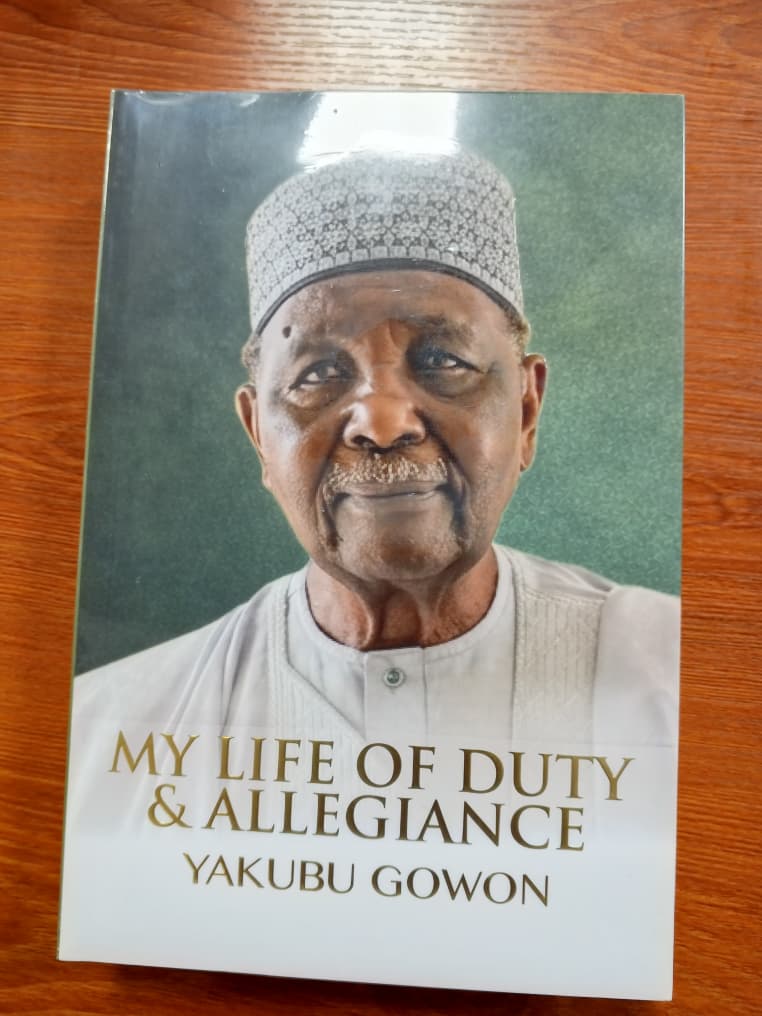
Gowon shared these insights in Chapter 9 of his newly released autobiography, My Life of Duty and Loyalty. The book launch took place on Tuesday in Abuja, attended by notable figures including Vice President Kassim Shettima, former Defence Minister Theophilus Yakubu Danjuma, prominent businessman Aliko Dangote, and Bishop Matthew Hassan Kukah of the Catholic Diocese of Sokoto.
The memoir reflects on one of Nigeria’s most tumultuous eras, including the political unrest following the military coups of January and July 1966, the erosion of trust within military ranks, and Ojukwu’s declaration of the Republic of Biafra in 1967.
At this time, Ojukwu held the military governorship of the Eastern Region, while Gowon assumed the role of head of state following the assassination of General Johnson Aguiyi Ironsi during a counter-coup. This shift in power was contentious, leading to intense discussions among military officers, particularly Ojukwu, who scrutinized the legitimacy of Gowon’s rise and the prevailing military hierarchy.
Gowon recounted the palpable tension between himself, Ojukwu, and military officers loyal to the federal government. He noted that Ojukwu perceived him merely as “Jack,” a devout Bible reader, rather than as a formidable leader capable of decisive action in the face of conflict.
The former Head of State remarked that Ojukwu’s stance incited frustration among certain military factions, notably Lieutenant Colonel Benjamin Adekunle of the 2nd Enugu Battalion, who persistently sought Gowon’s approval to apprehend Ojukwu. Meanwhile, Murtala Mohammed, another military official, showed eagerness to capture Ojukwu, underscoring the pressure on Gowon to act.
Gowon expressed pride in his ability to manage the angry officers, emphasizing that his aim was not to overextend federal control over the Eastern Region or incite further discord. He later pointed out that both Muhammad and Adekunle would play significant roles in the civil war, with Adekunle earning the nickname “Black Scorpion” and Muhammad becoming a pivotal military leader before eventually taking the role of head of state in 1975.
In the memoir, Gowon also revisits the contentious issue of seniority that fueled friction between him and Ojukwu throughout the crisis. He addressed the misconception regarding their respective military commissions, explaining that although Ojukwu was commissioned two years prior, Gowon was technically senior due to subsequent promotions within the military framework.
Gowon’s reflections underscore the complexities of military dynamics during this critical historical period. The conflict between Gowon and Ojukwu ultimately escalated, leading to the Nigerian Civil War, which persisted from July 1967 to January 1970 and remains a pivotal moment in Nigeria’s post-independence narrative.
