


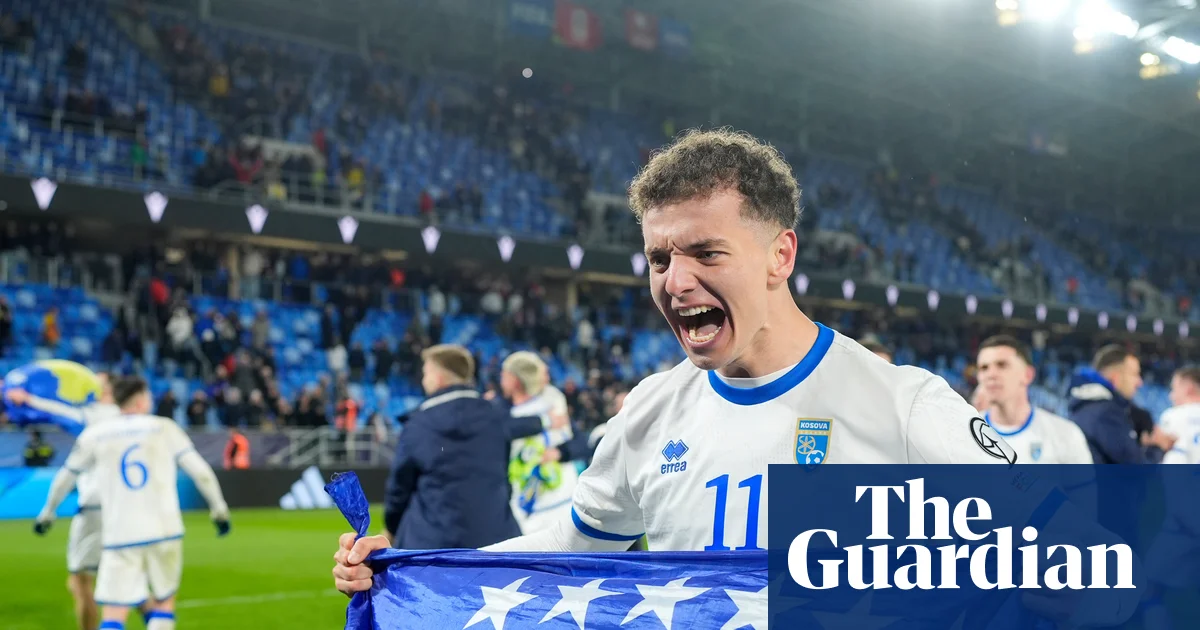
Recounting Kosovo’s Football Journey
Samir Ujakani reflects on the memorable March day in 2014 when a makeshift squad from Kosovo, primarily composed of players from Central Europe and Scandinavia, gathered for their first competitive match against Haiti. At that time, Ujakani stood out among his teammates not only for his talent but also for his experience in Serie A with Palermo and his 20 caps for Albania. He chose to join a team that would become a remarkable success story in international football.
A Journey from Obscurity to Recognition
Ujakani admits he was unfamiliar with half of his teammates at the outset, which made their mission even more challenging. Yet, the team shared a deep-seated belief in one another and a collective desire to improve. Fast forward nearly a decade, and Kosovo stands on the brink of its first World Cup final appearance—an unimaginable feat back when they played to a scoreless draw against Turkey years ago. Their aims were initially modest: seeking recognition from UEFA and FIFA after declaring independence in 2008 and striving for international acknowledgment.
Training Under Difficult Conditions
The early days were marked by relentless struggle, with the team often practicing on the dilapidated pitches of Kek Stadium, located under one of Europe’s most polluted power plants. Ujakani recalls the arduous journeys, including a three-hour round trip to Mitrovica, to prepare for their matches. Despite the lack of resources and bleak circumstances, the players remained dedicated and resilient, proud of what they eventually accomplished as a team.
The Role of Sport in a New Political Landscape
After the breakup of Yugoslavia in the 1990s, public matches were banned by Serbian authorities in Kosovo, leaving a vacuum that exacerbated the region’s struggle during a brutal war. As the country became isolated, the significance of sport evolved, offering a platform for Kosovo to showcase its renewed identity to the world. Football became a beacon of hope and a symbol of strength during these trying times.
The Diplomatic Milestone of UEFA and FIFA Membership
Erol Salih, the former general secretary of the Kosovo Football Federation, recalls the intense diplomatic efforts that eventually led to Kosovo’s admission into UEFA and FIFA in 2016. Salih worked closely with Fadil Vokhri, then president of the Football Federation of Kosovo, to navigate the complexities of international recognition. The emotional moment arrived when they realized they had gathered the necessary votes for approval, igniting tears of joy and disbelief from both men.
Building a Competitive Team
Ujakani has transitioned from goalkeeper to team captain, now serving on the executive committee. As Kosovo gears up for its World Cup qualifying matches, he reflects on the team’s evolution, particularly under the guidance of coach Franco Foda. Together, they have transformed a talented group of players into a cohesive, competitive unit ready to make an impact on the global stage.
A Thriving Football Nation on the Rise
Under Foda, Kosovo has achieved significant milestones, including an impressive run in their World Cup qualifying campaign. Players like Vedat Muriqi from Mallorca are leading the charge, while the nation’s spirit is palpable ahead of the upcoming match against Turkey, a team Kosovo faced early in their journey. This time, however, they are not the underdogs but a formidable squad that has earned respect through hard work and determination. Ujakani emphasizes that their present achievements reflect the broader struggle and aspirations of the people of Kosovo, turning a dream into reality.
