


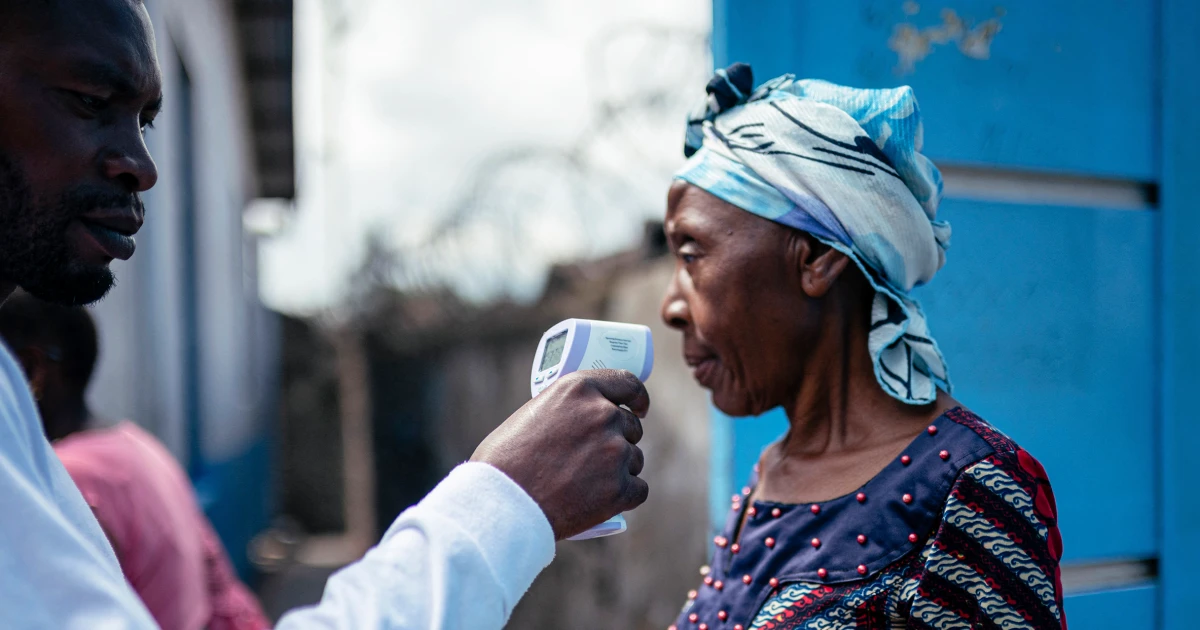
The Ebola outbreak in the Democratic Republic of Congo has resulted in nearly 500 fatalities, with 116 confirmed deaths, according to a report by the United Nations on Monday.
Among the infected is an American who contracted the virus while in the Democratic Republic of Congo. This individual will be transported to Germany for treatment, as announced by the Centers for Disease Control and Prevention (CDC). Additionally, six other American nationals are being sent to Germany for observation, although none are scheduled to return to the U.S.
On Sunday, the World Health Organization (WHO) declared the outbreak, which has extended its reach into Uganda, a public health emergency of international concern.
The illness stems from the Bundibugyo strain of Ebola hemorrhagic fever. Key information about this outbreak includes:
Understanding Bundibugyo, the Ebola Strain
The CDC identifies four species of the Ebola virus that are known to affect humans, with Bundibugyo being one of the less common varieties. This marks the third documented outbreak involving Bundibugyo since its discovery.
First identified two decades ago in western Uganda, experts believe flying foxes may serve as carriers for this strain of the virus.
Transmission Dynamics of Bundibugyo
Bundibugyo virus spreads similarly to other strains of Ebola, primarily through direct contact with blood and other bodily fluids. Contaminated surfaces also pose a significant risk of transmission.
Moreover, handling deceased individuals, particularly those who succumbed to the virus, significantly heightens the risk of infection.
Identifying Symptoms of the Ebola Virus
Bundibugyo virus, like other variants, leads to hemorrhagic fever. Initial symptoms typically include fever, headache, sore throat, fatigue, and muscle aches.
As the virus progresses, patients may experience severe abdominal distress, including vomiting and diarrhea. Hemorrhagic fevers occur when the virus disrupts the body’s blood vessels and damages essential organs.
The incubation period for Bundibugyo can last up to 21 days, as reported by the WHO.
Mortality Rate of Bundibugyo
Dr. Geeta Sood, an epidemiologist at Johns Hopkins Bayview Medical Center, noted that the case fatality rate for the Bundibugyo virus ranges from 25% to 40%, which is lower than the typical 50% to 60% rate associated with other Ebola types.
Research from 2015 highlighted that the Zaire variant of Ebola, the most prevalent strain, has a mortality rate between 60% and 90%.
Assessing American Exposure to Ebola
CDC’s Ebola response chief, Dr. Satish Pillai, addressed concerns during a press conference on Monday, affirming that no cases of Ebola have been reported in the United States and that the risk remains low.
The last notable occurrence of Ebola in the U.S. was during the 2014 outbreak in parts of West Africa, caused by the Zaire strain. That epidemic extended over two years, infecting at least 28,600 individuals and resulting in 11,325 deaths. Most cases were concentrated in Guinea, Liberia, and Sierra Leone, though infections also spread to multiple countries, including Italy, Mali, Nigeria, and even the U.S.
Dr. Kent Brantley was the first American diagnosed during that outbreak; he was evacuated to Emory University Hospital in Atlanta in August 2014 after contracting the virus while providing medical assistance in Liberia. Fortunately, he made a full recovery.
In 2014, a total of ten Ebola patients were treated in the United States, most of whom were returning refugees from Africa, with two fatalities reported.
Current Status of Treatments and Vaccines for Bundibugyo
At present, there is no sanctioned vaccine or treatment specifically for Bundibugyo virus.
Only two Ebola vaccines are approved and focus on the Zaire strain, which is responsible for outbreaks in Central and West Africa, developed by Johnson & Johnson and Merck.
Dr. Sood has indicated that animal studies have suggested that these vaccines do not offer sufficient protection against Bundibugyo.
Research is ongoing, and Dr. Paul Offit, from the Vaccine Education Center at Children’s Hospital of Philadelphia, noted several experimental vaccines that are in the early stages of development globally, but none have progressed to human trials.
One such candidate is a Chinese mRNA-based vaccine, which targets multiple strains including Bundibugyo. However, this vaccine remains in the preclinical phase and hasn’t undergone human testing yet, and it may take several years before any vaccine is ready for human application.
The CDC, under Dr. Pillai’s guidance, is collaborating with several agencies within the Department of Health to explore potential treatments, including the development of monoclonal antibodies—lab-manufactured proteins designed to imitate the body’s immune response.
In the absence of a definitive cure, supportive care remains crucial for individuals infected with the virus, as emphasized by Dr. Sood. Effective management includes hydration and monitoring vital signs, along with the availability of medical professionals and equipment to assist patients experiencing organ dysfunction.
