


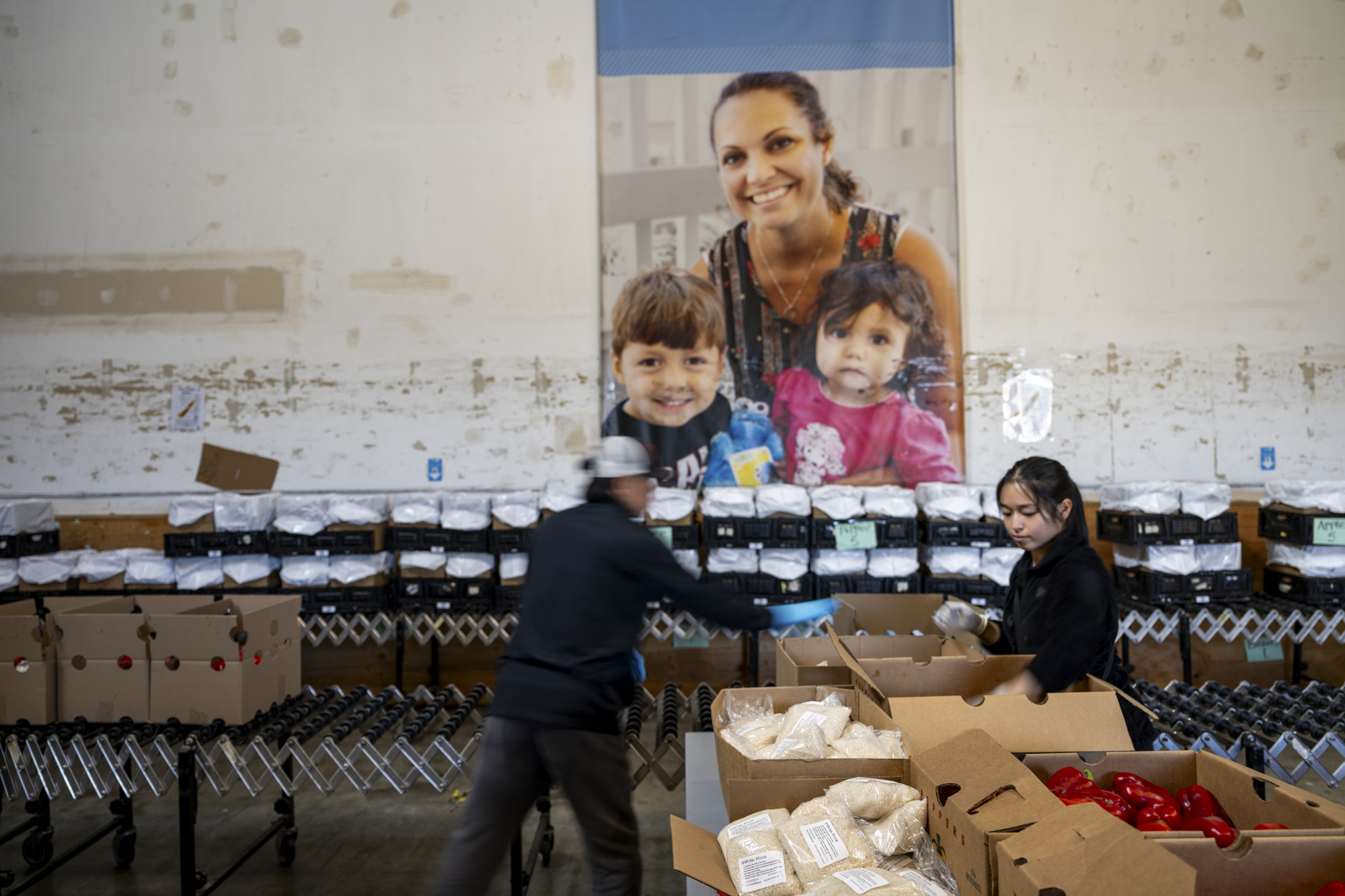
Beginning Wednesday, a significant number of humanitarian immigrants in California will lose access to food assistance provided by the Supplemental Nutrition Assistance Program (SNAP), commonly referred to as food stamps. This shift is a result of the changes ushered in by President Donald Trump’s 2025 HR1 spending legislation, known as the One Big Beautiful Bill Act.
While some states have already enacted similar restrictions, California will implement these changes starting April 1. Not all immigrants are losing access to CalFresh, the state’s version of SNAP. However, the legislation notably targets specific groups, including refugees and asylum seekers.
Jackie Mendelsohn, a policy advocate with the nonprofit Nourish California, highlighted the severe implications of these cuts. “There are people here who are fleeing violence, persecution, and torture,” she remarked. “These communities have historically been welcomed and supported in our country, but now the federal government is abandoning them.”
According to the Food4All Coalition, a statewide advocacy group, approximately 72,000 legally present immigrants in California will be impacted by this policy change. In the Bay Area, though exact figures are scarce, estimates suggest that over 5,000 individuals in Alameda County could be affected alone.
Changes to CalFresh Eligibility After April 1
The California Department of Human Services has clarified that starting April 1, several groups will be ineligible to apply for new CalFresh benefits. These include Asiri refugees, specific parolees, individuals facing deportation, conditional immigrants, victims of human trafficking, “abused noncitizens,” and certain Afghan and Ukrainian nationals.
The department added that households with multiple immigration statuses will receive notifications confirming which members qualify for benefits. However, it’s important to note that undocumented immigrants have never been eligible for CalFresh.
Eligibility Criteria for CalFresh
Individuals may still qualify for CalFresh under certain conditions. If your immigration status changes, such as obtaining lawful permanent resident status, you may regain eligibility and should reach out to your county’s officials for updated information.
Additional Changes to CalFresh Eligibility
Recent changes have impacted the eligibility criteria for some lawful immigrants, alongside a restriction introduced in November 2025, which mandates that heating and cooling costs must be paid separately from housing costs to claim standard utility benefits. This policy does not apply to households without individuals over 60 or those with disabilities.
Another adjustment will take effect on June 1, requiring certain CalFresh recipients to complete new work or community service hours to maintain their benefits.
Impact of April 1 Changes on CalFresh Benefits
People will not lose their CalFresh benefits immediately after April 1. According to the California Department of Social Services (CDSS), benefits will continue until the next recertification, provided all other eligibility criteria are met. Typically, households must recertify every 12 months, although some may have longer timelines. Recertification dates can be checked at BenefitsCal.com.
CDSS will inform individuals if they no longer meet the criteria for CalFresh. Mendelsohn anticipates that a “majority of these individuals will experience attrition” in benefits over the coming six months.
Resources for Questions Regarding CalFresh Eligibility
For inquiries regarding CalFresh, individuals can contact 1-877-847-3663 or visit their local office for assistance. It is also recommended to consult an immigration law expert for detailed information about public health benefits. Mendelsohn emphasized that these new restrictions amplify existing fears among immigrants regarding accessing public benefits, an anxiety that has been exacerbated under the current administration.
Alternative Government Programs Available
Some humanitarian immigrants may qualify for the California Food Assistance Program (CFAP), which is distinct from CalFresh. Specifically, individuals who have experienced violence or certain parolees may still access CFAP starting April 1. Both programs share the same application process.
CDSS documentation notes that if a household is no longer eligible for CalFresh due to the recent changes but qualifies for CFAP, adjustments to benefits will be made during recertification.
Importantly, to be eligible for CFAP benefits, individuals must not be disqualified based solely on immigration status under the Personal Responsibility and Work Opportunity Reconciliation Act of 1996 (PRWORA). Advocates are actively seeking to remove immigration status as a barrier to food assistance and aim to expand CFAP availability for those aged 55 and older by October 2027.
The Women, Infants, and Children (WIC) program remains unaffected by the changes set for April 1. WIC assists families with young children by providing food resources, and individuals can determine their eligibility through an online assessment.
Impact of Program Applications on Immigration Status
The Trump administration’s proposal to repeal a 2022 rule aimed at reducing barriers to public benefits for most immigrants has not yet been enacted. As it stands, utilizing CFAP or CalFresh does not impact U.S. visa applications or family-based green card applications, according to CDSS guidelines.

For any further questions about utility bill requirements, CDSS recommends consulting a legal professional.
Finding Food Assistance Resources
Last year, Berkeleyside published a comprehensive guide on utilizing local food banks and food pantries. Note that while food banks primarily serve as distributors to local organizations, they often assist individuals regardless of immigration status. Organizations like the SF-Marin Food Bank affirm their commitment to serve residents without requesting immigration status documentation.
While statewide food banks commonly don’t require personal information for food distribution, accessing certain federal programs may necessitate providing identification. Calling your local food bank is advisable to understand their specific reporting requirements.
Some food banks, including the Alameda County Community Food Bank, offer home delivery for those unable to visit physically. This service has become increasingly vital, particularly amid concerns among immigrant communities about potential crackdowns.
For regularly updated resources, local community organizations such as the Berkeley Food Network are crucial in connecting people with food assistance options.
It is always prudent to verify the operational hours and registration requirements of food banks and pantries before visiting, as some locations may require advanced bookings or are limited to residents of specific areas.
CalFresh Information in Multiple Languages
The California Department of Social Services (CDSS) provides Q&A PDFs about the changes to CalFresh in various languages, ensuring accessibility for diverse communities.
Berkeleyside is a media partner of KQED, a supporter-funded public radio station serving Northern California.
