


Panel Discussion Focuses on Immigration Law Amid Current Challenges
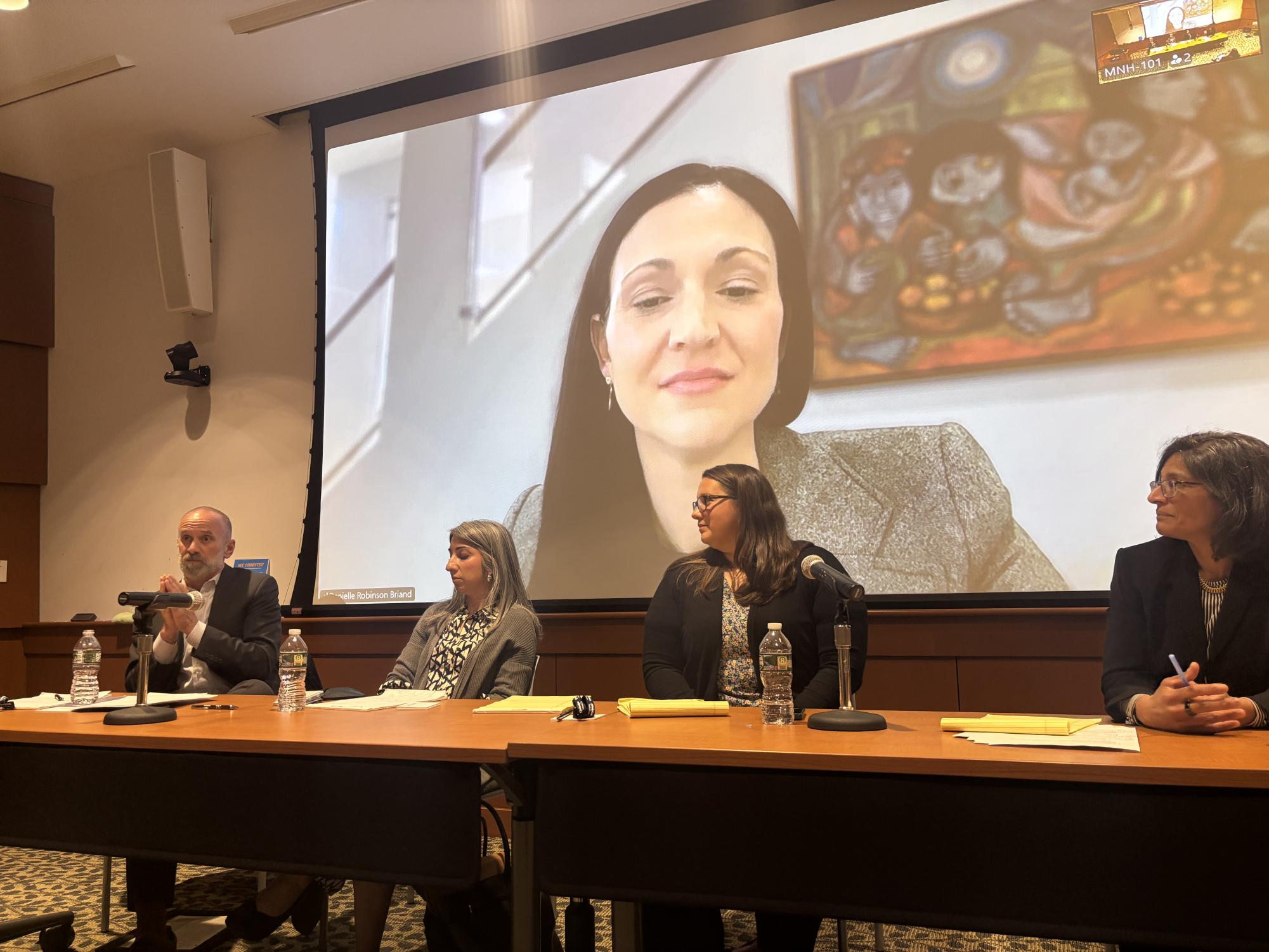
On April 6, Quinnipiac University School of Law hosted a panel discussion titled “Practicing Immigration Law in the Age of ICE,” featuring alumni who shared their insights and experiences in this increasingly complex field. The event, moderated by Immigration Law Professor Sheila Heyer, included contributions from both in-person and remote participants, highlighting the diverse backgrounds of Quinnipiac Law School graduates.
The panelists included immigration attorneys Justin Fapiano, Alicia Kinsman, Brittany Eckardt, Eli McDonald, and Daniel Robinson-Briand. Professor Heyer emphasized the importance of these gatherings, noting her surprise at the challenges facing legal practitioners in immigration law today.
This discussion comes at a pivotal time as President Donald Trump begins his second term, raising concerns about the ongoing developments in immigration law. Heyer conveyed to her students the stark realities of constitutional and civil rights within this legal framework, stressing the disillusionment many students felt upon recognizing these issues.
Fapiano opened the panel by reflecting on his motivation for pursuing law after the events of 9/11, underscoring how those experiences shaped his career aspirations. Kinsman shared her own unexpected journey into law, which began with volunteer work at the Connecticut Refugee and Immigrant Institute, where she cultivated a passion for advocating for marginalized populations.
Eckardt, who once served as dean of students at a California institution during the first Trump administration, highlighted the profound impact political shifts can have on students, many of whom were either recipients of Deferred Action for Childhood Arrivals (DACA) or had undocumented family members. This realization drove her to seek a more active role in immigration law.
McDonald cited his mother and the Guatemalan community in North Carolina as his sources of inspiration for pursuing a legal career, while Robinson, who joined the discussion via Zoom from Minnesota, described the challenges arising from heightened scrutiny by Immigration and Customs Enforcement (ICE) during Operation Metro Surge, which targeted undocumented immigrants.
Kinsman pointed out that immigration law has always been fraught with difficulties, particularly under the Immigration and Nationality Act, which has not adapted to the needs of vulnerable individuals seeking safety and stability. She noted that many misconceptions surrounding the citizenship process illuminate a lack of understanding among the public about how immigration laws function.
Robinson addressed the troubling issue of racial profiling in immigration enforcement, recalling the tragic incidents involving the deaths of American citizens at the hands of Homeland Security agents. The panelists unanimously agreed that fear now permeates immigrant communities, affecting not only undocumented individuals but also naturalized citizens who worry for their safety.
Fapiano concluded the discussion by affirming the brokenness of the current immigration system, lamenting how conditions have deteriorated since he began his career. He urged legal practitioners to remain hopeful and to stay informed about the realities of immigration law, emphasizing the importance of looking beyond sensational headlines to understand the work being done on the ground by dedicated attorneys.
