


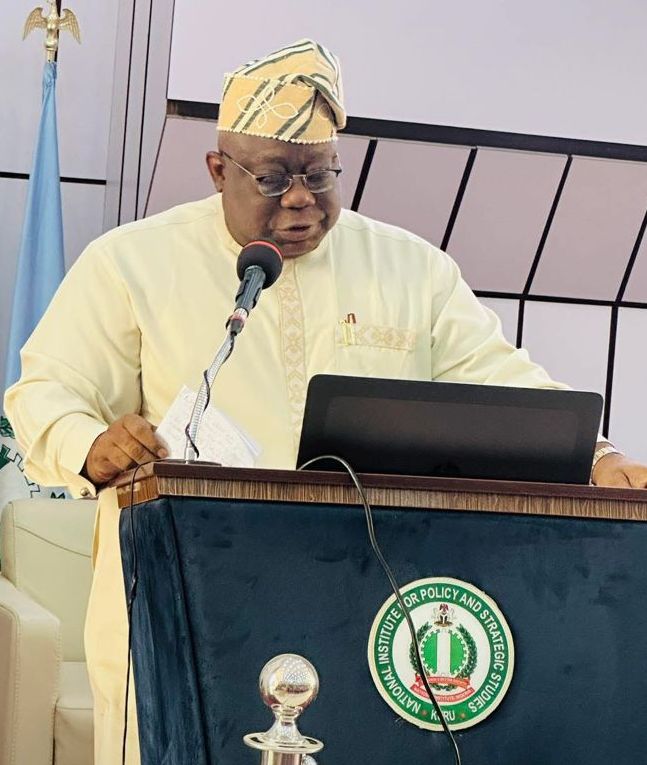
Federal Civil Service Commission Chairman Advocates Reforms in Political Leadership Recruitment
Professor Tunji Olaopa, Chairman of the Federal Civil Service Commission, has emphasized the need for reforming the recruitment processes for political leaders to drive sustainable development. His comments came during a speech delivered at the SEC 48 2026 event, held at the National Institute for Policy and Strategic Studies in Kuru, Plateau State, on April 20, 2026.
Olaopa expressed his concerns regarding the prevalence of flawed political leaders, particularly those marred by practices such as godfatherism and a lack of meritocratic principles. He noted that these issues are severely undermining development not only in Nigeria but across various countries in Africa.
He remarked that “real development” in Nigeria and other African nations is contingent upon resolving the challenges surrounding leadership selection, succession, and overall governance. According to Olaopa, effective leadership recruitment is hampered by a deficiency in proper mentoring, which is crucial for preparing individuals for roles in public service, policy-making, and management.
Olaopa distinguished mentoring from exploitative practices like godfatherism, underscoring that mentoring should be a power-free, respectful relationship that benefits both mentor and mentee. He highlighted the adverse consequences of current leadership practices, stating that many leaders lack essential skills for effective governance, leading to poor decision-making and reliance on limited circles of influence.
In contrast to the status quo, he advocates for a structured approach to political leadership development. This includes grooming candidates through shadow cabinet experiences, mentoring opportunities, and targeted training programs to equip future leaders with the necessary skills and insights.
Looking to the future, Olaopa called for a comprehensive framework of solutions aimed at enhancing internal democracy within political parties. This includes establishing merit-based recruitment processes for potential candidates, implementing robust multi-level mentoring programs, and investing in voter education to encourage greater citizen and civil society participation in the political and electoral landscape.
Furthermore, he highlighted the importance of strengthening anti-corruption institutions to enhance the judiciary’s capacity to investigate and prosecute electoral violations. He urged for a more effective resolution of electoral disputes and called for a reevaluation of the cost structures associated with electoral processes to combat plutocracy and empower core occupational groups and the youth.
Olaopa also emphasized the need for restructuring the Nigerian federation to bolster grassroots political engagement. He believes that reinforcing people-centered political activities can lead to enhanced local governance and facilitate a bottom-up approach to development planning and management.
