


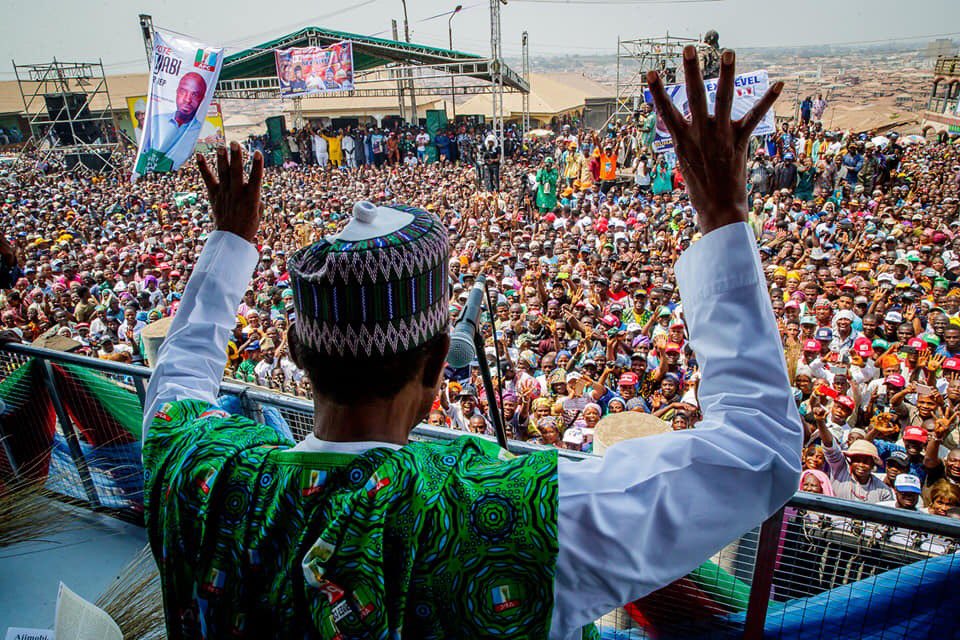
Nigeria’s Muhammadu Buhari Secures Re-Election Amid Controversy
Muhammadu Buhari of the All Progressives Congress has been re-elected as Nigeria’s president for another four-year term, facing significant competition from his primary challenger, Atiku Abubakar of the Peoples Democratic Party. The election outcome was announced early Wednesday, more than three days after polling stations closed.
Election Results and Challenges
The final results, revealed by the Chairman of the Independent National Electoral Commission, Professor Mahmoud Yakubu, showed Buhari garnering 15,191,847 votes, while Abubakar, a former vice president, secured 11,262,978 votes. Observers noted that the election was marred by violence, fraud, and attacks on election officials, and it was held a week later than originally scheduled.
Regional Support and Dynamics
Buhari’s support predominantly came from the north, where he enjoys a strong following. Both he and Abubakar hail from the northern region, leading analysts to predict a division in the northern vote between the two candidates. However, Buhari’s roots in Kano and Katsina, as well as his appeal in the insurgency-ridden states of Yobe and Borno, proved to be crucial factors that overshadowed Abubakar’s support.
Contested Results
Even before the formal declaration of the results, Abubakar’s party dismissed the election outcome, accusing the electoral commission of collusion with the ruling APC to manipulate the election. PDP National Chairman Uche Secondus claimed that his party had been leading based on results gathered by their agents across the nation.
Violence and Electoral Misconduct
The election period was characterized by widespread violence, with reports indicating attacks against electoral officials and even kidnappings. A Resident Electoral Commissioner acknowledged that 18 temporary staff members from the National Youth Service Corps were kidnapped, with only 14 having been released later. Incidents of political thuggery were also reported, especially in Lagos, where polling stations faced threats from armed groups.
Transparency Concerns
Clement Nwankwo, executive director of the Center for Policy and Legal Advocacy, raised critical concerns over the transparency of vote cancellations across the country. He reported that over one million votes were canceled at various polling places and emphasized the need for scrutiny to ensure impartiality in the electoral process.
Future Challenges for Buhari’s Administration
Buhari, who initially won the presidency in 2015 with promises to revitalize the economy, combat corruption, and enhance security, now faces scrutiny over his performance. His first term was marked by economic recession and ongoing violent conflicts, particularly in Kaduna and Niger states. Critics have claimed that his anti-corruption measures disproportionately target opposition parties. Nonetheless, Buhari maintains that his administration has achieved significant progress with limited resources.
