


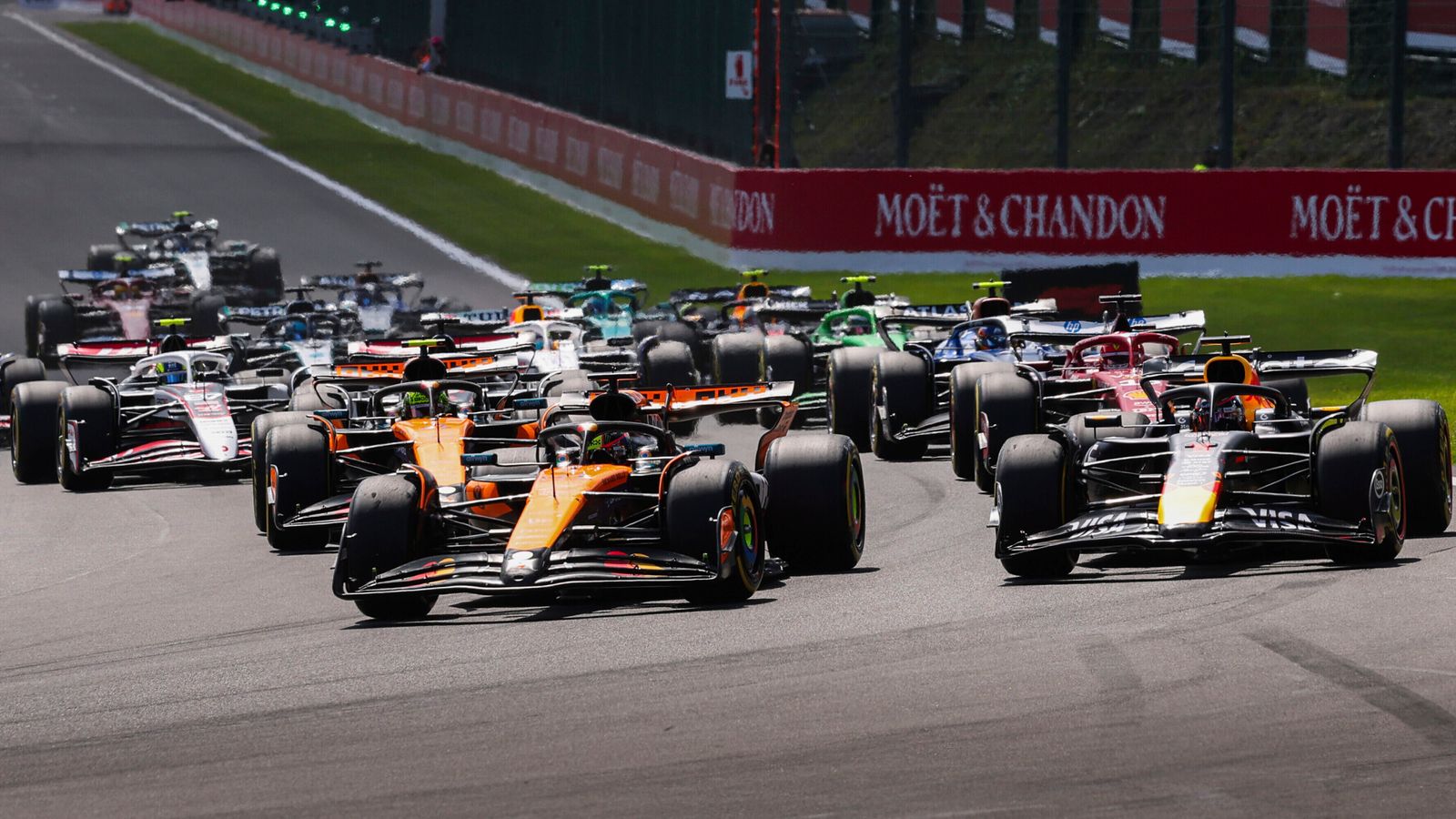
Here’s everything you need to know about the F1 sprint weekend format for the upcoming 2026 season.
Sprint Weekend Locations and Dates
The 2026 season will feature six sprint weekends within F1’s calendar of 24 races. These events will take place in the following locations:
- March 13-15: Chinese Grand Prix, Shanghai (Winner: George Russell)
- May 1-3: Miami Grand Prix, Miami
- May 22-24: Canadian Grand Prix, Montreal
- July 3-5: British Grand Prix, Silverstone
- August 21-23: Dutch Grand Prix, Zandvoort
- October 9-11: Singapore Grand Prix, Singapore
This season will mark the first time Canada, the Netherlands, and Singapore host sprint weekends, while the British Grand Prix returns to this format after a hiatus since 2021.
Understanding the F1 Sprint Format
The F1 sprint format, introduced in the 2021 season, revolves around a shortened race on Saturday. Designed to enhance the excitement of events known for competitive overtaking, the sprint format aims to provide engaging track sessions for fans attending live or watching at home throughout the race weekend.
Initially limited to three venues per season, the number of sprint weekends expanded to six beginning in 2023. Each weekend now includes a dedicated qualification session on Friday, followed by a 100 km sprint race on Saturday, which offers valuable points toward the World Championship.
Format of the Sprint Weekend
The sprint weekend kicks off with a one-hour free practice session on Friday. Shortly after, sprint qualifying occurs on the same day. Saturday features a crucial 100 km sprint race, followed by full qualifying later in the day, determining the grid for Sunday’s main Grand Prix.
Conducting Sprint Qualifying
The sprint qualifying session on Friday will adhere to a format similar to last season, utilizing knockout rules over three timed sessions, albeit with shorter durations to address engine and tire constraints:
- SQ1: 12 minutes
- SQ2: 10 minutes
- SQ3: 8 minutes
While the primary goal encourages drivers to complete one flying lap in each session, SQ1 permits two. SQ2 and SQ3 allow for two timed laps without pit stops. A crucial difference between sprint qualifying and full qualifying lies in tire regulations; in sprint qualifying, drivers must use one set of tires for each part, requiring new medium tires in SQ1 and SQ2 and soft tires in SQ3.
Sprint Points Allocation
For the 2026 season, the allocation of sprint points remains consistent. A total of 36 points will be awarded to the top eight finishers in Saturday’s race, distributed as follows:
- 1st place: 8 points
- 2nd place: 7 points
- 3rd place: 6 points
- 4th place: 5 points
- 5th place: 4 points
- 6th place: 3 points
- 7th place: 2 points
- 8th place: 1 point
Pit Stops During F1 Sprints
Due to the concise nature of the sprint races, pit stops are infrequent. Unlike in a traditional Grand Prix, tire changes are not mandatory unless the car is damaged, punctured, or weather conditions change. Drivers have the freedom to choose their preferred tire compound, whether hard, medium, or soft.
Changing Cars Between Sessions
With the current sprint format, teams are permitted to adjust car setups throughout the weekend. Cars will enter parc fermé when Friday’s sprint qualifying begins, though restrictions are lifted after Saturday’s sprint. This allows teams to utilize insights gained during the sprint to make necessary adjustments ahead of full qualifying, which will again lock in setups for Sunday’s race.
Formula 1 continues with the Miami Grand Prix, set to be broadcast live on Sky Sports F1, marking the second sprint weekend of the racing season.
