


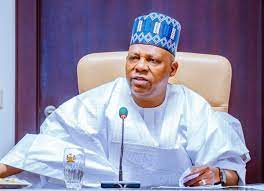
National Council on Nutrition Advances Food and Nutrition Policy for Ratification
Nigeria is taking significant steps toward eradicating malnutrition with the introduction of the Nutrition 774 Initiative. This initiative was highlighted during the 15th meeting of the National Council on Nutrition (NCN), which took place virtually on Tuesday. Vice President Kassim Shettima underscored the initiative’s potential, stating that it reflects the government’s commitment to combatting malnutrition effectively.
Shettima noted that the success of this reform will not rely solely on government announcements but will instead be measured through the impact of interventions on families across all 774 local governments. He emphasized the importance of recognizing the individual stories behind the statistics, reminding council members that each percentage correlates with a child’s future.
The Vice President also outlined the necessity of the National Nutrition Act as a foundation for ongoing initiatives, urging that it should safeguard nutrition funding from the political cycle’s uncertainties. Additionally, he stressed the act must clearly define roles and responsibilities across federal, state, and local governments to ensure effective implementation.
Adoption of National Policy on Food and Nutrition for 2026-2035
During the meeting, the NCN approved the National Policy on Food and Nutrition (NPFN) for the years 2026-2035, directing the Federal Ministry of Budget and Economic Planning to seek ratification from the Federal Executive Committee. This endorsement came after a rigorous approval process involving key stakeholders in Nigeria’s nutrition sector, representing both public and private entities.
Summarizing the council’s decisions, Shettima called attention to the implications of their discussions, asserting that the future of Nigeria’s children hinges on the actions taken over the coming months. He reiterated that results, rather than discussions or plans, will define the government’s effectiveness by 2035.
Multidisciplinary Approach to Nutrition Policy
Shettima characterized the NPFN 2026-2035 as a pivotal nutrition policy that is interdisciplinary, evidence-based, and focused on grassroots involvement. He emphasized that this document is a collaborative effort extending beyond any single ministry, highlighting its significance for every level of government and community.
The council mandated the Federal Ministry of Budget and Economic Planning to submit the policy for final approval and required all nutrition-related ministries, departments, and agencies to align their policies and budgets accordingly within a year. Additionally, all 36 states and the Federal Capital Territory (FCT) have been instructed to implement their multisectoral action plans for food and nutrition within the next six to nine months.
Deadline Extension for National Nutrition Bill
The council also granted a six-week extension for finalizing the National Nutrition Bill, mandating the draft be presented to Parliament within eight weeks. Shettima commended the task force involved in drafting the legislation, affirming confidence in their capability to deliver quality work within the extended timeline.
Funding Strategies and Private Sector Involvement
In addressing nutrition funding, the NCN approved the inclusion of the Ministry of Humanitarian Affairs and Poverty Reduction along with other stakeholders in a relevant subcommittee. The Vice President identified five key funding streams—domestic, bilateral, multilateral, private sector, and innovative solutions—and praised the collaborative efforts spearheaded by the Coordinating Minister of Health and Human Services.
Shettima proposed the creation of a Private Sector Challenge Window to Revitalize Nutrition within 60 days, collaborating with the Dangote Foundation and relevant federal ministries to enhance private sector engagement in addressing nutrition issues.
Support from Stakeholders for Nutrition Policy
In closing, the Minister of Budget and Economic Planning, Atiku Bagudu, expressed appreciation for Shettima’s leadership in advancing food security and nutrition as a national priority. The Permanent Secretary noted that the 2026-2035 policy serves as a strategic framework aimed at ensuring food security, protecting human capital, and aligning with national developmental goals. With broad support from various stakeholders, there is a consensus that investing in nutrition is crucial for the well-being of children worldwide.
