


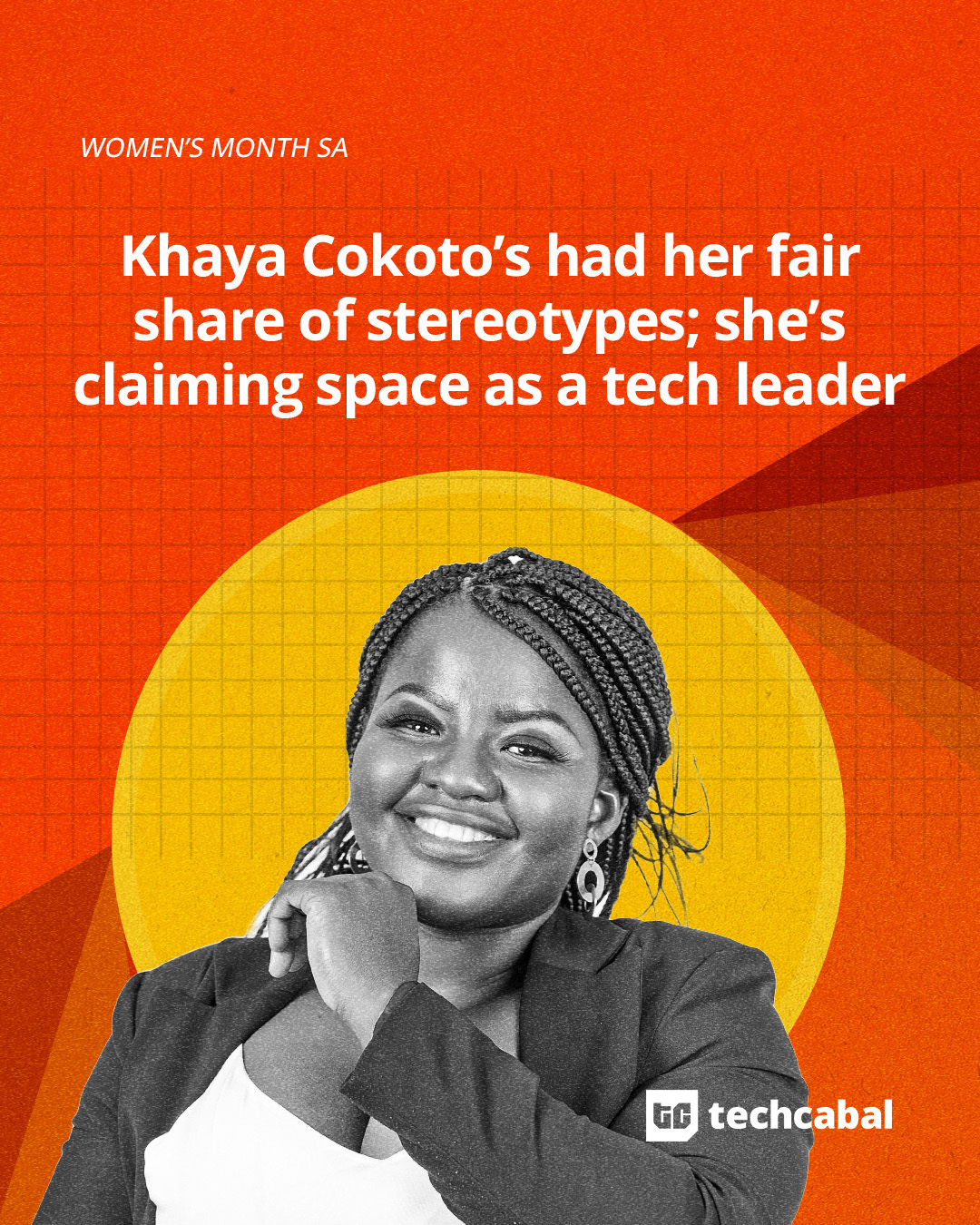
Kaya Kokoto, co-founder and CEO of an award-winning technology company, never anticipated her current trajectory while growing up in a small village in the Eastern Cape. As a child, she dreamed of becoming a writer, lawyer, or doctor. However, her future shifted dramatically when a science teacher introduced her to the possibilities within a STEM career. She went on to study computer science at Nelson Mandela Metropolitan University, a bold choice at the time, given that no one in her immediate family or community had pursued a career in that field.
Kokoto emphasizes that sometimes, it only takes one individual to ignite the curiosity necessary for one to seize opportunities, regardless of external perceptions of merit.
After earning her degree in 2007, Kokoto briefly worked at a local government before co-founding X Spark, a software development company, in 2008. Inspired by her grandmother, who ran a small business in their village, she was motivated to create something impactful.
Rather than settle into the corporate world or launch a side hustle, Kokoto was determined to start her own enterprise from the get-go.
A chair, a computer, and a dream
Initially, X Spark operated as a niche web and branding firm focused on helping other small businesses establish an online presence. “We had a computer and a chair, and we shared them,” she recalls with a smile, noting their slow yet steady growth as they eventually added more furniture to their workspace.
During this time, digital adoption in South Africa was still in its infancy. Many companies were just beginning to understand the significance of an online presence, allowing Kokoto to not only provide crucial services but also to act as a trusted advisor navigating the evolving digital landscape.
X Spark soon began collaborating with other startups, learning quickly from their clients and directly addressing common challenges. This firsthand experience granted Kokoto critical insights into the obstacles that fledgling companies encounter, which subsequently informed her approach to developing practical and efficient solutions.
The momentum was swift; within its first year, X Spark clinched the SAB KickStart regional competition. The accompanying prize money facilitated the purchase of essential office equipment and a vehicle, but more significantly, it emboldened Kokoto to elevate the business further.
However, just as her ventures gained traction, the Great Recession of 2008 emerged, curtailing progress. Kokoto pivoted through creative problem-solving, resulting in UmoyAir, a mobile app that allowed users to make free calls without requiring airtime or data. This innovation addressed a pressing need during a challenging economic period, particularly for businesses seeking cost-effective marketing solutions while people struggled to stay connected physically.
“UmoyAir opened the door,” Kokoto reflects. The support from the Eastern Cape Development Corporation and IDC allowed her to explore opportunities in Silicon Valley and the UK, greatly expanding her perspective on global business.
Although UmoyAir did not achieve the success Kokoto had hoped for, it served as an important learning experience, teaching her about the complexities of financing and scaling ideas. “Failure is just as important as success; you often learn much from what doesn’t work,” she acknowledges.
As Kokoto’s experience deepened, so too did the scope of X Spark’s operations. The company began to partner with established enterprises across diverse sectors such as retail, finance, and logistics. Each collaboration fostered her adaptability, making agility one of her most valuable traits.
“In its first decade, X Spark has assisted over 1,000 businesses in establishing an online presence and executing numerous branding and digital campaigns,” she notes. Now, 18 years down the line, X Spark has transformed into a comprehensive software development studio, catering to clients from banks and corporates, as well as international clients in the Middle East, the United States, and the UK, with half its work still rooted in South Africa.
“We are shifting from a service-focused model to developing our own products,” Kokoto says. Among these developments is the XS Card, a digital business card designed for the modern professional.
“Clients continue to request custom software; however, offering an off-the-shelf product allows for more predictable revenue streams,” she adds. Another significant initiative she is spearheading is Tik’iBox, a digital payment service facilitating small transactions between R5 and R5,000, which can be utilized for tipping or everyday favors.
With a keen eye on the future, Kokoto sees significant growth potential across Africa. “Often, we limit ourselves by viewing South Africa as the sole market,” she expresses. “The entire continent seeks solutions, and there is a desire for Africans to collaborate with one another.”
Overcoming Gender Barriers to Build a Legacy
In South Africa, women occupy roughly 23% of technology roles, with only 22% of software developers being female. Despite some advancements, projections indicate that only 18% of startups will be founded by women in 2024, according to Disrupt Africa. The Information Technology Professionals Association of South Africa (IITPSA) reflects on the persistent gender imbalance, noting that only 13% of South African STEM graduates are women, significantly below the global average of 35%.
Kokoto has felt the ramifications of this disparity throughout her career.
“Depending on the setting, I’m often mistaken for a secretary or a support staff member,” she shares with a wry smile. “Sometimes, these assumptions go unnoticed at the moment, but they hit home later on.” Despite the stereotypes, Kokoto champions the intuition and relationship-building skills women bring to leadership roles, explaining that sometimes they possess an innate sensitivity to organizational dynamics that proves invaluable.
Women often work behind the scenes to ensure smooth operations, acting as the eyes and ears of the business before further engagement with clients.
Her most challenging leadership experience, however, stemmed not from issues of gender but rather from navigating the transition from a technical founder to overseeing broader enterprise functions such as human resources, finance, and compliance. These lessons compelled her to innovate processes and cultivate a leadership style that allows for delegation and empowering others.
“Engaging with people has been one of the most vital lessons in business,” she reflects, acknowledging that while the learning process can be challenging, it is ultimately rewarding.
Kokoto describes herself as a leader who embraces change and collaboration, particularly as the younger members of her team introduce fresh perspectives that continually shape X Spark’s evolution.
“Every day, I look forward to the moment when the business no longer relies on me,” she concludes.
