


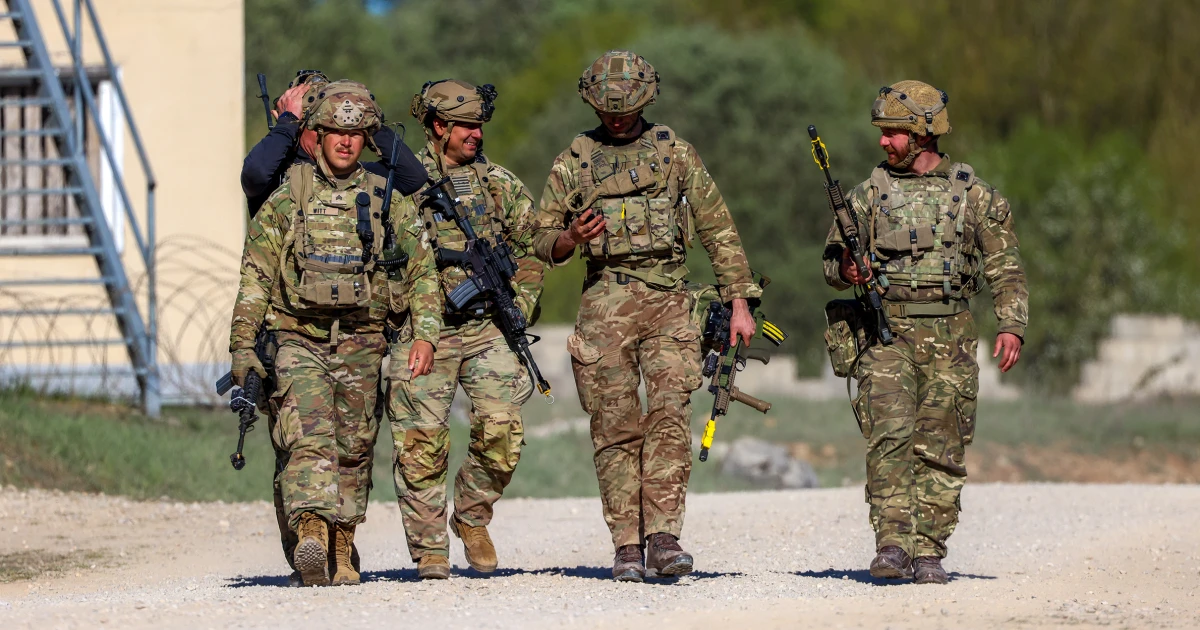
European Leaders Respond to U.S. Troop Withdrawal from Germany
European leaders convened on Saturday to discuss strategies for enhancing the continent’s defense capabilities following the announcement from Pentagon officials regarding the withdrawal of approximately 5,000 U.S. troops from Germany. This shift has sparked intensified discussions about Europe’s self-reliance in security matters.
The decision to withdraw troops comes in light of remarks by Chancellor Friedrich Merz, who claimed that the United States had endured a “humiliation” at the hands of Iran. His comments have escalated tensions with Washington and reflect President Donald Trump’s ongoing criticism of European allies, particularly over their insufficient support amid rising tensions in the Middle East.
The timing of this announcement coincides with significant strains in transatlantic relations. Ongoing issues, including potential tariffs, U.S. demands towards Ukraine regarding concessions to Russia, and Trump’s earlier initiatives regarding Greenland—a territory associated with NATO ally Denmark—have only exacerbated these tensions.
German Defense Minister Boris Pistorius emphasized that the troop withdrawal was somewhat anticipated, stating that approximately 40,000 U.S. troops remain stationed in Germany, which serves as the largest U.S. military presence in Europe and a critical logistical hub. He asserted that it is imperative for Europe to take greater responsibility for its own security, adding that Germany is actively working to enhance its military capabilities.
Pistorius noted that Berlin aims to expand its military infrastructure and invest in new technologies. His comments come amid growing criticism from President Trump, who has openly expressed his dissatisfaction with the lack of support from NATO and European nations regarding military action against Iran. Additionally, Trump has warned that the U.S. could reconsider its commitment to NATO unless reciprocal support is provided.
The announcement regarding troop reductions has stirred mixed reactions across Europe, including concern from NATO officials. Spokeswoman Alison Hart remarked on the need for European nations to bolster their defense investments, highlighting an existing commitment among NATO allies to allocate 5% of their gross domestic product (GDP) toward defense initiatives.
Polish Prime Minister Donald Tusk has called for an urgent reversal of the “disastrous trend” that is driving a wedge between the U.S. and Europe, stating that the primary threat to the transatlantic alliance lies not in external forces, but in the fragmentation of their unity. Tusk’s remarks underscore the importance of NATO, especially for countries like Poland that rely on the alliance to counteract threats from Russia.
British Prime Minister Keir Starmer refrained from directly addressing the troop withdrawal but voiced the need for Europe to consolidate its defense capabilities and for the UK to play a pivotal role in this development. Meanwhile, experts like Michał Matlak from the European University Institute have indicated that the reduction of U.S. forces is a continuation of a broader trend of diminishing transatlantic ties, which may have long-lasting implications for European security.
U.S. troops are currently deployed in over a dozen European nations, with Germany, Italy, and the United Kingdom hosting the largest contingents. The Pentagon has indicated that the withdrawal will occur over the next six months to a year, while legislative measures restrict the reduction of U.S. troop levels in Europe to no fewer than 76,000.
This situation prompts critical discussions among European leaders about the need for self-sufficiency in defense and the potential restructuring of military alliances. Matlak noted the differing opinions among leaders regarding the extent of this divide and the roles of both NATO and European institutions moving forward, suggesting that the need for European rearmament is increasingly recognized across the board.
