


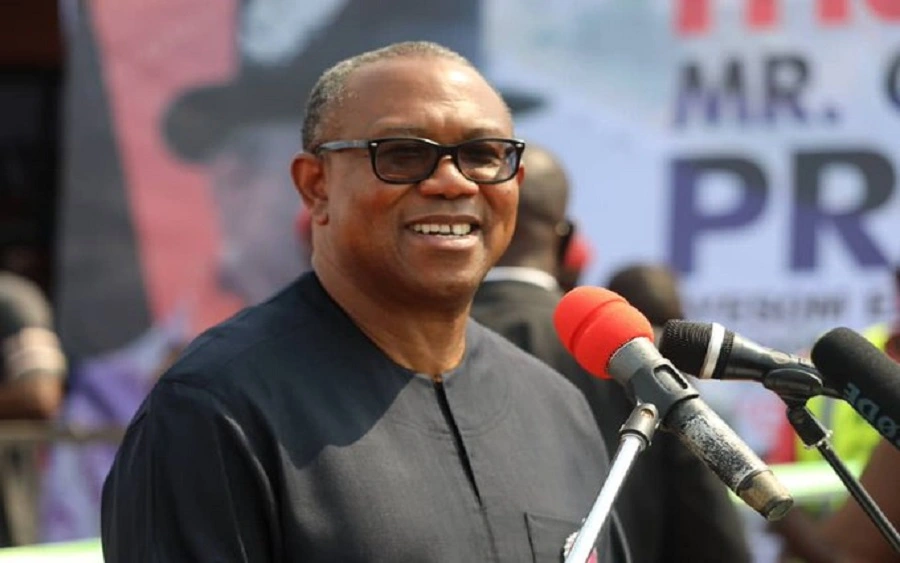
Peter Obi Withdraws from African Democratic Congress Amid Rising Tensions
In a decisive move ahead of 2027, Peter Obi has officially announced his departure from the African Democratic Congress (ADC). He cited the worsening conditions in Nigeria and allegations of systemic interference that remind him of the crises he encountered in his prior political affiliations.
The former presidential candidate shared this development on his verified X account, quieting weeks of speculation regarding his political future. Observers perceive this withdrawal as a significant defection spurred by increasing internal pressure within the ADC.
Known for his commitment to issue-based politics and reform advocacy, Obi expressed deep personal and political strains, lamenting that Nigeria’s current environment is increasingly antagonistic toward integrity and service. He articulated, “We now live in an increasingly toxic environment where intimidation, fear, endless surveillance and discouragement are the norm.”
While he refrained from directly attributing personal misconduct to ADC leaders, including party chairman David Mark and political ally Atiku Abubakar, Obi emphasized the growing pattern of political instability within the party. “My decision to leave ADC was not because the esteemed chairman or other esteemed leaders had done anything wrong to me personally,” he stated.
Obi articulated concerns about political destabilization, asserting that the Nigerian government and its agents seem intent on infiltrating the ADC through ongoing court cases, internal disputes, and factional divisions. He suggested that part of his rationale for resigning was to lessen tensions within the party. “Even if you choose to leave in a way that gives peace of mind to those who are leaving, you will still be vilified and your character will be called into question,” he noted.
Despite his resignation, Obi reaffirmed his dedication to Nigeria’s development, prioritizing collective well-being over personal ambition. “I don’t want to be president. I want a society where I can comfort mothers whose children have been abducted,” he said, illustrating his focus on humanitarian issues.
Obi first gained national attention as a member of the All Progressives Grand Alliance (APGA), serving as Anambra State governor from 2006 to 2014. His tenure was marked by fiscal responsibility and investments in education and health. After leaving office, he joined the Peoples Democratic Party (PDP), where he was nominated as the vice presidential candidate alongside Atiku Abubakar in the 2019 election.
A pivotal moment in his career occurred in 2022 when Obi departed the PDP due to structural limitations, subsequently joining the Labour Party (LP) to contest the 2023 presidential election. His campaign, synonymous with the “obedience movement,” galvanized significant youth support, and although he did not win, it significantly reshaped Nigeria’s political landscape. However, ongoing internal turmoil and legal challenges within the Labour Party have prompted his exit from yet another faction, now emerging within the ADC.
Obi’s withdrawal from the ADC presents new uncertainties for ongoing coalition discussions aimed at challenging the ruling government in 2027. While he did not explicitly reveal his next political steps, his closing remarks indicated that his ambitions are secondary to national priorities. “I strongly believe that Nigeria can become a country with competent leadership based on justice, compassion, and equal opportunity for all,” he asserted.
As Obi contemplates his next move, the implications for opposition coalitions and voter alignment in the coming months are significant. He continues to propagate the message that a transformed Nigeria is achievable, positioning himself as a prominent voice amidst the evolving political landscape.
