


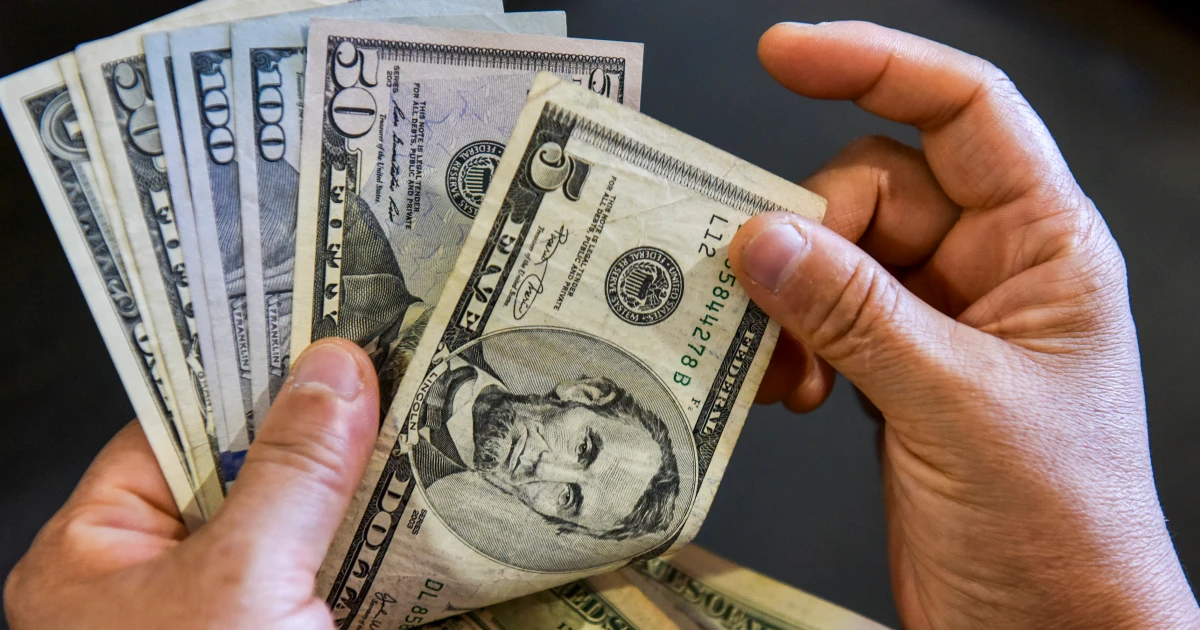
Weakened Dollar Drives Up Costs for Consumers
A significant factor contributing to the rising prices of everything from summer vacations to grocery bills is the declining value of the U.S. dollar. Recent trends reveal that this depreciation is becoming a growing concern for American consumers.
The dollar has fallen approximately 10% against major global currencies since President Trump’s return to office. This decrease may be exacerbating anxieties about affordability across the nation.
Economist Thomas Savidge from the American Economic Institute referred to this situation as a “hidden tax,” emphasizing how the purchasing power of the dollar diminishes as its value declines.
Historic Decline in the Dollar
The dollar index—a measure of the value of the U.S. dollar against other currencies—experienced its steepest six-month decline in the first half of 2025, marking the most significant drop in over 50 years. The index currently stands about 10% lower than when Trump initially took office.
A strong dollar typically lowers the cost of imported goods, helping to keep inflation in check. Conversely, a weaker dollar can drive up prices for foreign imports but may also boost U.S. exports. While past U.S. presidents have often advocated for a strong dollar, Trump has expressed that a weaker currency could benefit American industries.
Last year, he remarked that a weaker dollar might be more profitable for certain sectors, indicating a shift in the typical presidential approach to currency strength.
Global Corporations Reap Benefits
The trend of a weaker dollar presents advantages for various multinational companies. Recent earnings calls from giants such as Philip Morris and Coca-Cola reveal a trend where executives cite “favorable currency effects” linked to a softer dollar. This has enabled these firms to capitalize on the reduction of costs when selling products overseas.
InterContinental Hotels CEO Elie Maalouf noted that in many instances, a weaker dollar is beneficial rather than detrimental, especially when the company reported increased profits and revenue.
For large corporations with overseas operations, like these multinationals, a weaker dollar often results in increased sales as their products become more affordable for foreign consumers. However, smaller businesses that primarily serve domestic customers may face more challenges, particularly if they depend on imported goods.
Small Businesses Grapple with Rising Costs
David Navagio, CEO of Gentell—a Pennsylvania-based medical supply company—highlighted the increased costs of doing business in light of the dollar’s depreciation across its global manufacturing locations. The escalating costs of raw materials due to currency fluctuations have compelled Gentell to raise prices, putting further strain on consumers.
Navagio remarked that these were not issues a year ago, and the current environment could adversely impact consumer spending.
International Currency Fluctuations Impact U.S. Consumers
American consumers may feel the consequences of the weaker dollar most when traveling abroad or purchasing goods from foreign sellers. For example, crossing into Mexico—the most popular international destination for Americans—currently results in a dollar that is approximately 16% weaker against the peso than it was at the start of 2025. Other currencies, including the Swiss franc and the euro, have also gained strength against the dollar.
The repercussions of these currency shifts on goods imported into the U.S. can be challenging to gauge. Economists generally estimate that only about 5% to 10% of the impact from a declining currency translates to consumer prices. However, existing pressures lead to compounded effects on pricing, especially for staple goods.
Take coffee, for example. As the largest source of coffee imports to the U.S., Brazil is relevant to the current conversation. The dollar’s decline against the Brazilian real has contributed to a reported 19% rise in coffee prices in the U.S. over the past year.
Future Implications for Currency Values
Currency values are prone to fluctuations, and while the dollar’s recent performance has raised alarms, historical data shows that the dollar has encountered similar declines under previous administrations since the dollar index was created in 1973.
Harvard economist Kenneth Rogoff expressed skepticism about the dollar’s long-term stability, predicting ongoing challenges regardless of the administration’s policies. He argues that many of Trump’s approaches may have deleterious effects on the dollar.
Rogoff noted that following a period of dollar strength over the last 15 years, it remains significantly overvalued and could potentially decline by another 15% in the coming years.
For American consumers, this suggests a likely upward trajectory for commodity prices, compounded further by geopolitical tensions affecting oil prices. As Rogoff concluded, “No matter what happens to the dollar, prices will only go up.”
