


New Initiative Aims to Enhance AI Language Infrastructure in Africa
Four prominent technology and philanthropic organizations have joined forces to launch a public funding initiative aimed at developing essential language infrastructure for artificial intelligence systems across Africa’s diverse linguistic landscape.
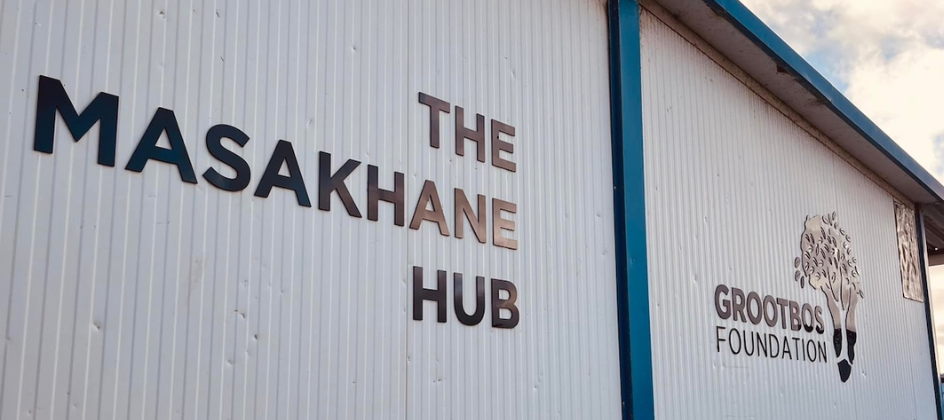
The Masakaan African Language Hub, Microsoft AI for Good Lab, the Gates Foundation, and Google.org introduced LINGUA Africa in Kilifi, Kenya, on Wednesday. They are calling upon nonprofit organizations, universities, research institutions, social enterprises, cultural groups, startups, and consortia to submit their proposals by June 15, 2026.
Selected projects will be awarded a combination of cash grants, Azure compute credits, Google Cloud Platform credits, along with technical support from the Microsoft AI for Good Lab, facilitated through collaborations with academic researchers and experts.
Funding Opportunities Across Three Categories
The funding initiative is structured around three key project categories. Data creation projects focused on building, curating, translating, and licensing language datasets stand to receive up to $50,000 in cash and an additional $50,000 in computing credits. Meanwhile, model or tool development initiatives aimed at benchmarking, establishing technical infrastructure, and adapting models for African languages can access up to $100,000 in cash and $100,000 in computing credits.
The largest funding allocation is reserved for sectoral applications. Projects utilizing language technology in practical settings with measurable social or economic impacts can receive up to $250,000 in cash and $400,000 in computing credits.
Priority will be given to projects targeting critical areas such as agriculture and food security, education, healthcare, and financial inclusion, with a strong emphasis on community engagement and cross-institutional collaboration.
Tackling Language Bias in AI Development
This initiative addresses significant gaps within the current AI development landscape. Most large language models are developed using datasets that heavily favor a narrow range of global languages, consequently marginalizing speakers of African languages. This exclusion limits their access to essential information and services.
Inbal Becker Reshef, Managing Director of Microsoft AI for Good Lab, emphasized the importance of accessibility, stating that AI is only valuable if users can engage with it effectively. She noted that in agriculture, for instance, farmers increasingly depend on digital advisory services for important crop management and market insights. If such guidance is not offered in comprehensible languages, it becomes ineffective.
Chair Chenai, Director of the Masahkan African Language Hub, highlighted the importance of community inclusion, asserting that the future of AI must be shaped by the populations it aims to serve.
Eligibility for African and Global Organizations
Applications are open to organizations both within and outside Africa, provided that international entities can demonstrate meaningful collaborations with African-based institutions, communities, or implementation partners.
LINGUA Africa draws inspiration from the LINGUA Europe model, which historically funded open datasets and assessment resources for underrepresented European languages. Organizers assert that Africa’s approach will be more comprehensive, as it explicitly connects the development of language resources to practical use cases and community-driven outcomes.
