


Kaduna’s Governance Challenges Demand a Broader Perspective on Zoning
Written by Stephen Cefas
At the heart of Nigeria’s democracy lies a troubling contradiction that the political elite have largely chosen to overlook. While the nation speaks grandly about inclusivity and the importance of equitable political representation, these ideals seem to evaporate when the focus shifts from the national stage to state-level politics. This paradox is particularly glaring in Kaduna State.
Since the return to civilian rule in 1999, Kaduna has predominantly been governed by politicians from the Muslim-majority north. This is not merely an outcome of electoral patterns; rather, it is a strategic approach entrenched by the Peoples Democratic Party (PDP) and later the All Progressives Congress (APC). This focus has systematically favored northern Kaduna over the Christian-majority southern region. Given that the state’s population is almost evenly split between Muslims and Christians, this political trend is more than a minor inconvenience—it represents a growing cultural wound that resurfaces during each election cycle.
A notable exception occurred not through any foresight by party leaders, but rather through an unexpected twist of fate. When President Goodluck Jonathan named Governor Namadi Sambo as vice president in 2010, the governorship unexpectedly fell to Sir Patrick Ibrahim Yakowa, a Christian from southern Kaduna who had been serving as Sambo’s deputy. Yakowa’s tenure demonstrated that the concerns surrounding exclusion were unfounded; he governed with competence and dignity, clinching his own election in 2011 while fostering a cross-religious and regional coalition. His historic victory underscored the detrimental impact of exclusionary politics, especially amid violence that plagued parts of the North.
However, the tragedy struck in December 2012 with Yakowa’s untimely death in a helicopter crash. The power dynamics shifted back towards the northern region of the state, effectively closing a vital window for change. In the decade that has followed, neither the PDP nor the APC has shown the political will to recognize the capabilities and readiness of southern Kaduna to lead.
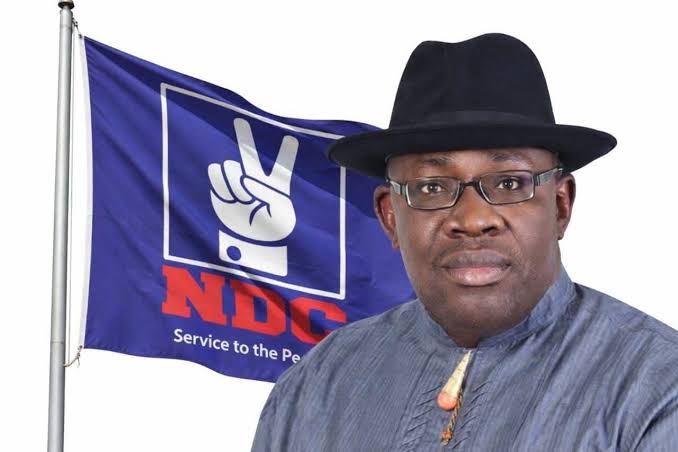
This backdrop is particularly relevant as Nigeria’s political landscape prepares for the rise of the Nigeria Democratic Congress (NDC). The NDC has declared its intention to prioritize presidential candidates from the southern region, with former Anambra governor Peter Obi emerging as a consensus figure. This decision reflects an understanding of the inclusive ethos that has been central to national politics since 1999. Yet, if the NDC promotes inclusion at the national level while endorsing exclusion at the state level, it risks being perceived as opportunistic rather than principled.
Analysts are raising pressing questions about the NDC’s commitment to equity, specifically regarding its potential to cultivate support within states like Kaduna. Will the NDC demonstrate the courage that both the PDP and APC have consistently lacked? Will it choose to position its gubernatorial candidate from the southern part of the state, wherein true democratic representation has remained elusive for over 25 years?
The rationale for such a decision is not merely emotional; it is fundamentally strategic. Southern Kaduna encapsulates a vast reservoir of political discontent rooted in the lived experiences of communities that have faced cycles of violence and political neglect. These groups require more than promises; they seek tangible proof that democracy can yield meaningful change. Political parties that manifest this commitment in Kaduna could not only secure votes but also establish a deeper and more enduring allegiance.
Critics argue that zoning is a blunt tool that should not overshadow meritocracy. While this may hold some validity in a mature democracy, Nigeria’s political environment is far from equal. The pervasive influence of incumbents and party gatekeeping perpetuates the status quo, skewing power dynamics throughout the states. In such a context, zoning becomes essential—it lays the foundation for a political landscape where equitable representation can thrive.
This year marks the 27th anniversary of Nigeria’s democracy, a period that showcases significant achievements including peaceful transitions of power and a spirited press. Yet, this journey has also entrenched patterns of exclusion that rhetoric alone cannot dismantle. If the NDC aspires to embody a genuine paradigm shift rather than rehashing the power dynamics of old, it will need to advocate for equitable representation not only at the federal level but also in every state.
Patrick Yakowa ruled Kaduna not as a Southern Christian but as a Kaduna leader, and his tenure improved the state. His legacy serves as both a compelling argument for inclusion and an invitation to political parties willing to embrace it. The NDC now stands at a crossroads, and its decisions regarding Kaduna and other similar states across Nigeria will reveal whether it has truly learned the lessons of the past.
Beyond its immediate electoral ambitions, the NDC has a rare opportunity to set a precedent in Nigerian politics. The PDP’s 16-year tenure entrenched the disparities it once vowed to address, while the APC has repeatedly reproduced the exclusions it condemned. To distinguish itself, the NDC must demonstrate integrity in its approach not only in presidential campaigns but also in gubernatorial and senatorial races, aiming to be a party that others hesitate to overlook. Fairness and equity should not merely be campaign slogans; they should be the fundamental principles guiding governance.
■
