


Ceasefire with Iran Faces Severe Challenges
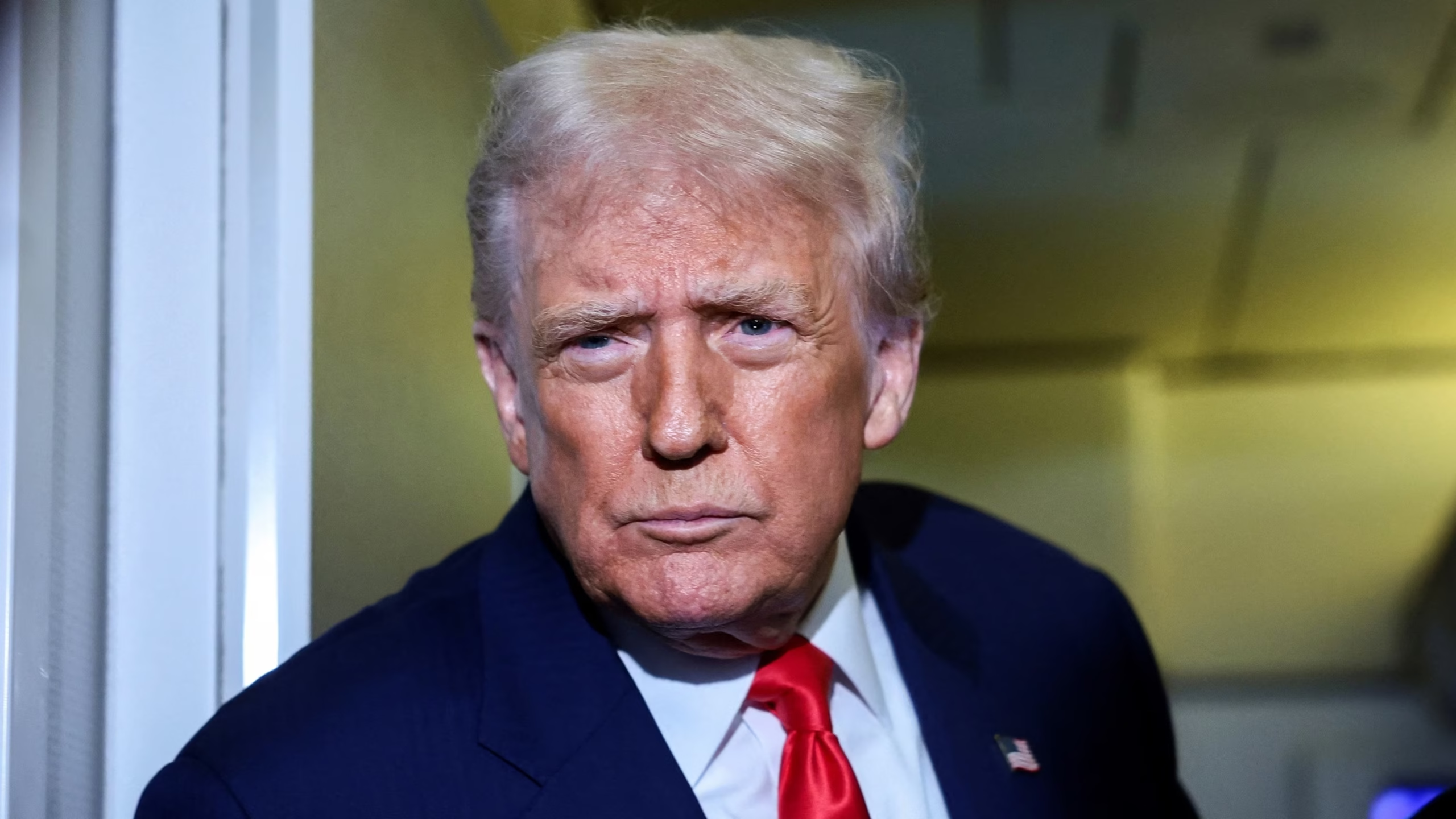
President Donald Trump recently indicated that the ceasefire agreement with Iran is “on life support,” following the rejection of Tehran’s response to a U.S. peace proposal. This development has raised concerns about a potential resurgence of hostilities in a conflict that has persisted for over ten weeks and resulted in significant casualties while disrupting critical energy flows.
Iran Proposes Comprehensive Resolution
Just days after the United States presented its proposal for renewed negotiations, Iran responded with a call to end the conflict on all fronts, including in Lebanon, where U.S. ally Israel is engaged with Iranian-backed Hezbollah militants. President Trump swiftly dismissed this offer, expressing his dissatisfaction with the Iranian position.
Trump’s Strong Criticism of Iranian Leadership
When asked about the current state of the ceasefire, President Trump referred to Iran’s documents as “garbage.” He stated, “You could say that a ceasefire is on massive life support,” likening the situation to a critical patient whose survival chances are extremely low.
Concerns Over Nuclear Agreements
In his remarks, Trump also accused Iran of walking away from an agreement that enabled the United States to curtail its access to enriched uranium. He reiterated his stance that Iran “will never possess nuclear weapons,” underscoring the administration’s determination to confront any threats posed by Tehran.
Iran Demands Compensation and Sovereignty Guarantees
In response, Iranian officials have articulated demands for compensation for wartime damages and asserted their sovereignty over the Strait of Hormuz. The Iranian government demanded that the United States lift its naval blockade, guarantee protection against further attacks, and revoke sanctions while allowing Iranian oil sales to resume.
Oil Market Responses to Conflict Escalation
Following the uncertainty surrounding the ceasefire, Brent crude oil futures rose by 2.7%, trading near $104 per barrel. The ongoing hostilities have nearly paralyzed operations in the Strait of Hormuz, a crucial waterway responsible for transporting one-fifth of the world’s oil and liquefied natural gas. The conflict has already resulted in a noticeable slowdown of traffic through the strait, with oil-laden tankers opting to disable tracking devices to evade potential Iranian attacks.
Global Oil Production Declines Amidst Tensions
In light of the strait’s effective closure, the Organization of the Petroleum Exporting Countries (OPEC) reported a further decline in crude oil production, reaching its lowest levels in over 20 years. A recent Reuters poll showed that OPEC’s output fell by 830,000 barrels in April, totaling 20.04 million barrels per day. This decrease follows earlier reductions attributed to the ongoing conflict, complicating the group’s plans for increased production originally agreed upon in April.
Regional Production Breakdown
Kuwait experienced the most significant production cut within the OPEC member nations, stemming from a lengthy disruption of its exports. Saudi Arabia and Iraq also faced declines, whereas the United Arab Emirates managed to boost its production due to alternate export routes that bypass the Strait of Hormuz. As a result, April’s OPEC production is now recorded as the lowest since at least 2000, highlighting the far-reaching implications of the conflict.
