


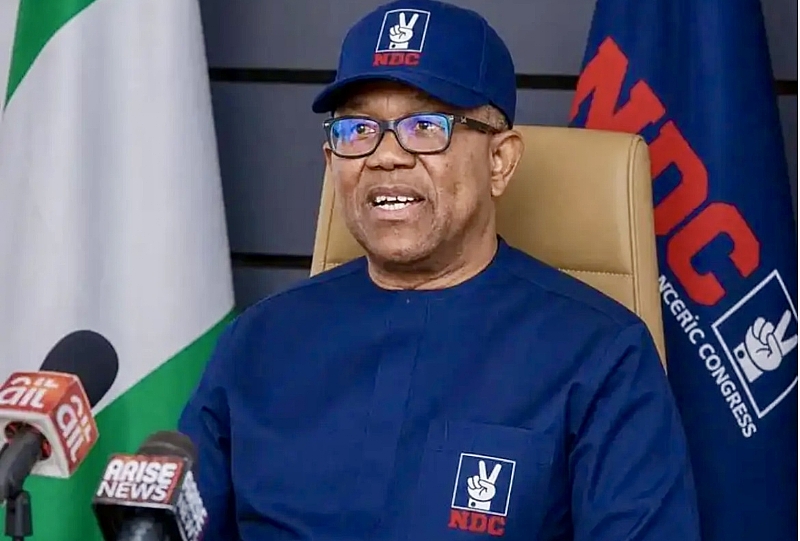
Obika Details Political Shift and Commitment to National Development
Hon. Joshua Chinedu Obika, the representative for AMAC/Bwari Federal Constituency in the House of Representatives, recently announced his decision to join the Nigeria Democratic Congress (NDC). This move, he explains, was largely influenced by the political philosophy of former Labour presidential candidate Peter Obi.
During a press briefing in Abuja on Tuesday, Obika articulated his motivations for the shift, emphasizing the need for unity among opposition forces as Nigeria approaches future elections. He remains steadfast in his loyalty to the Labour Party, citing Obi’s leadership and vision for the nation as his guiding light.
Obika’s commitment to the Labour Party has been unwavering; he declared that he would not leave the party unless Obi chose to do so. “I waited for months,” he stated. “I believed in his vision and leadership, even when many members had already moved on.”
He acknowledged the turmoil affecting the Labour Party, which has disrupted party organization and electoral processes, creating an environment of uncertainty among members and candidates alike. Following Obi’s alignment with the NDC coalition, many supporters, including Obika, felt a responsibility to continue the broader movement aimed at transforming Nigeria.
The lawmaker stressed that politics should focus on individuals committed to genuine improvement rather than being confined solely to party platforms. “When we talk about a new Nigeria, we must support those who truly believe in change and national development,” Obika asserted. He views Peter Obi as a key figure with widespread organic support throughout the country.
In his call for collaboration, Obika urged political stakeholders across various parties—be it the APC, Labour Party, APGA, or NDC—to unite in pursuit of national progress, rather than succumbing to political divisions. He stated emphatically, “This is not the time for unnecessary division. Those who believe in the progress of this country must come together to support a common vision for Nigeria.”
Addressing criticisms regarding his change of party affiliation, Obika defended the practice of political realignment as a normal aspect of Nigerian politics, arguing that such shifts should not overshadow discussions on governance and public service. He believes the focus should be on the tangible impacts that elected representatives have on their constituents’ lives.
Obika highlighted several key achievements during his tenure, including the Resettlement and Compensation Bill for Former Residents of the FCT, the establishment of the FCT Scholarships Commission, and the FCT School of Nursing and Midwifery Bill. He also pointed to various district projects he implemented, such as school renovations, educational assistance programs, and women’s empowerment initiatives, which collectively benefited over 400 voters.
Ultimately, Obika contends that leadership should be evaluated based on performance and a genuine commitment to the welfare of the people, rather than mere party allegiance. “At the end of the day, it is the people who decide who represents them,” he concluded. “What matters most is service, influence, and a commitment to the welfare of the people.”
