


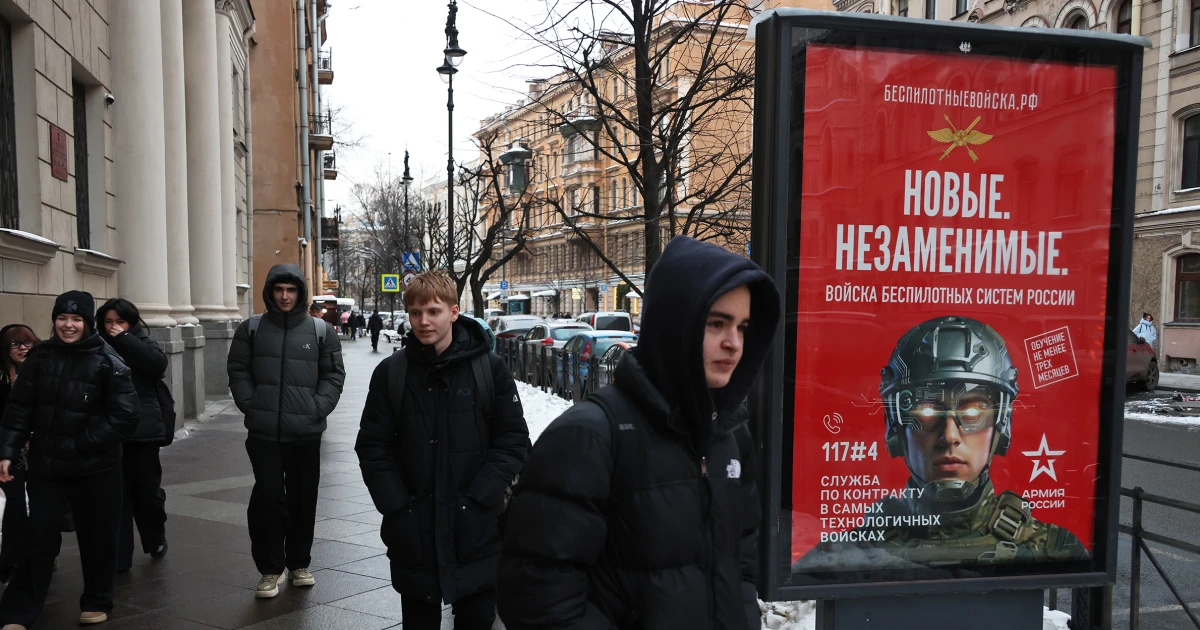
Quiet Mobilization Efforts Impact Russian Students
In late 2022, Russian President Vladimir Putin initiated a partial mobilization of reservists, a decision that sparked widespread discontent and resulted in a significant outflow of men eager to avoid conscription. Since that time, the Kremlin has refrained from introducing any formal mobilization initiatives.
Concerns of Silent Induction Among Students
However, recent developments regarding Russian students appear to indicate a form of “silent mobilization,” as highlighted by Grigory Sverdlin of Idite Resom, a group dedicated to assisting Russians who seek to evade military service in Ukraine. Sverdlin revealed in a recent post on social media platform X that his organization has been receiving inquiries from students at various universities and colleges throughout the country.
Kremlin’s Denial of Coercive Recruitment
The Kremlin has made efforts to counteract perceived “myths and rumors” surrounding conscription. Deputy Defense Minister Viktor Goremikin stated last month that there is no intention or capability to compel students to partake in military operations.
Official Responses Amid Media Queries
This statement was issued by the Department of Defense following an inquiry from NBC News regarding the specific nature of the enlistment contract for students.
Inclusivity in Military Recruitment Offers
Kremlin spokesman Dmitry Peskov affirmed last month that the opportunity to join the drone forces would be equally available to all qualified individuals, including students.
Universities Enticing Students into Military Service
According to estimates by the student news portal Gloza, at least 269 Russian universities are actively encouraging students to enlist in drone units, including those stationed in occupied regions of Ukraine. There is currently no official data on how many students have enlisted thus far.
Legal Pressures Faced by Students
Timur Tukbatulin from Molniya, a human rights initiative focused on safeguarding the educational rights of Russian students, informed NBC News of ongoing legal actions where school administrators are pressuring students to enter contracts. He noted that the intensity of this pressure varies significantly among institutions. Some administrators may hold more extreme viewpoints, potentially justifying the sending of students to combat zones as acceptable.
University Messaging and Benefits for Enlistment
An investigation by NBC News into the messaging found across multiple Russian universities revealed a uniform narrative. Many institutions encouraged students to sign up for drone forces, highlighting monetary compensation, additional benefits, and the patriotic duty of becoming a national hero.
Promised Incentives for Student Enlistment
For example, Vladivostok’s Far Eastern Federal University advertises that students would receive extended academic leave and tuition-free education upon returning from military service, alongside potential earnings of up to 5.5 million rubles (approximately $74,500) in their initial work year—an appealing sum for young people in the area. In contrast, the average annual income in Russia is around 1.25 million rubles, or about $17,000.
Special Contracts Highlighted by Universities
Similar to other institutions, Moscow State University of Civil Engineering has emphasized the requirement for students to sign a “special contract” with the Ministry of Defense. Meanwhile, the Russian State Hydrometeorological University in St. Petersburg assured enrolled students that they would undertake combat missions in remote areas, coupled with bonuses offered by the local government.
