


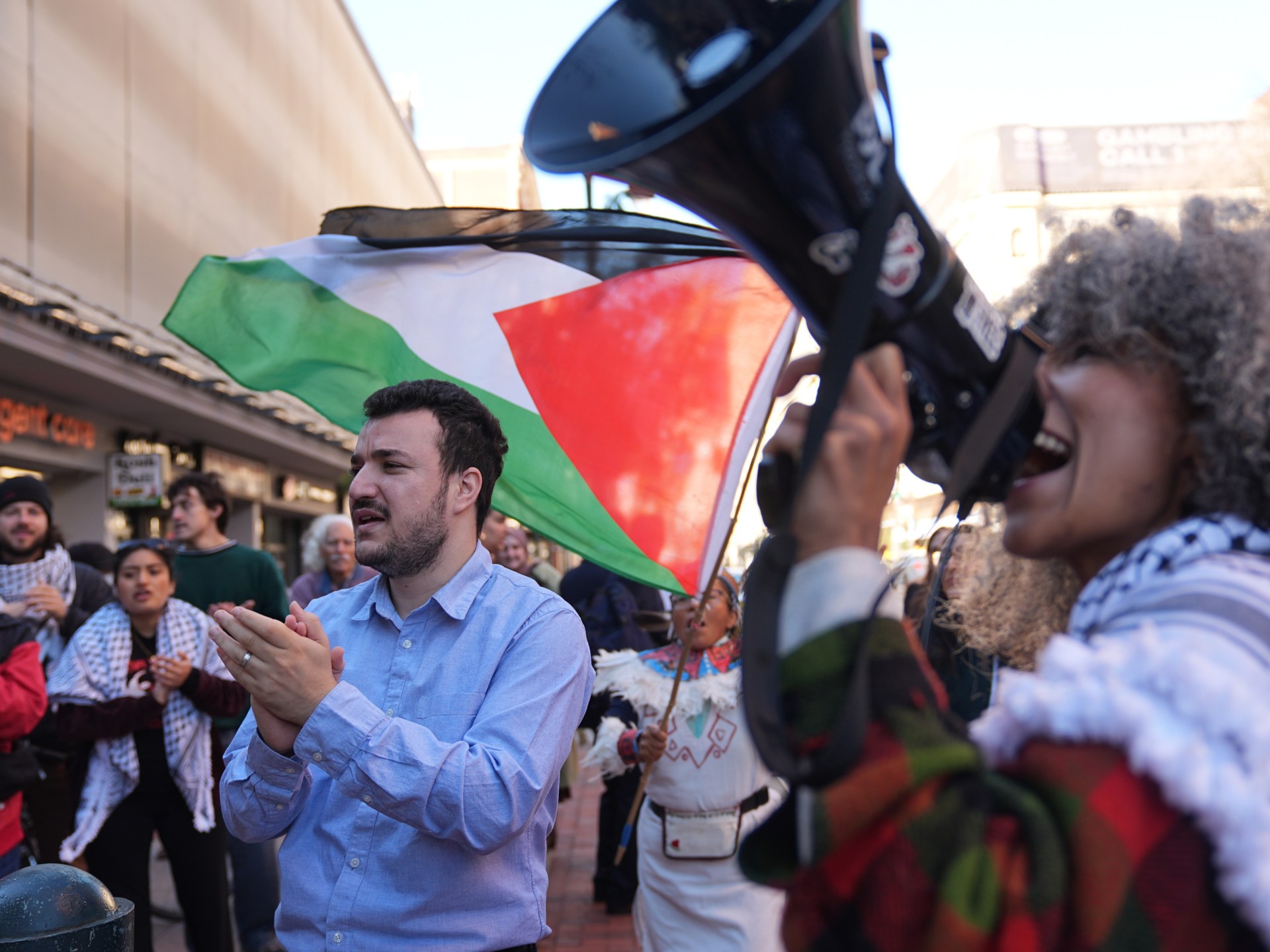
Attorneys representing Mahmoud Khalil, a former Columbia University student who faced deportation due to his pro-Palestinian activism, have petitioned the Court of Immigration Appeals to reopen and terminate his immigration case.
This latest appeal highlights new evidence, as detailed in media reports, which Khalil’s legal team asserts indicates that the Trump administration covertly influenced the outcome of his immigration proceedings to serve as a cautionary tale.
Legal Developments Surrounding Khalil’s Case
list of 3 itemsend of list
This request follows a decision made by the Board of Immigration Appeals over a month ago, which finalized removal orders against Khalil. He was first apprehended by immigration enforcement agents in March 2025, amidst a broader crackdown on students engaged in pro-Palestinian protests that had gained momentum across the United States in the preceding year.
Khalil, who is a permanent U.S. resident and married to an American citizen, claims he has been unfairly targeted due to his political beliefs.
His attorneys contended on Friday that “obvious procedural anomalies” bolster his assertion of being targeted. Johnny Synodis, one of Khalil’s lawyers, stated that revelations from the Justice Department of misconduct affirm their concerns: “The administration engineered its wanted outcome by exploiting a flawed process riddled with irregularities.”
Among the new evidence presented is a report from The New York Times showing that Khalil’s case was identified as a high-priority matter before reaching the Board of Immigration Appeals, suggesting that the case was being deliberately expedited.
According to the report, court documents indicated that judicial authorities were directed to process Khalil’s case under the assumption that he remained in custody, which typically results in an accelerated timeline for cases.
Khalil regained his freedom from immigration custody in June 2025 after a federal court ruling, although the Court of Appeals later determined that the judge involved lacked jurisdiction over the situation. Khalil is appealing this ruling, during which immigration authorities cannot re-detain or deport him.
Additionally, the Times report disclosed that three judges on the Immigration Appeals Board recused themselves from the case. The rationale behind these recusal decisions has not been disclosed, yet legal experts noted that such occurrences are indeed rare.
The Immigration Appeals Board is designed to function as an independent body, but critics argue that its operations, like those of other immigration courts, are overseen by the executive branch’s Justice Department, creating opportunities for potential interference.
In contrast, other federal courts maintain a greater level of judicial independence.
During the Trump administration, Khalil’s deportation was framed as part of a broader crackdown on anti-Semitism, though officials have yet to provide substantive evidence to back the claims against him, and he has never been criminally charged.
Recent reports from The Intercept reveal that shortly after Khalil’s detention, the FBI determined that further investigation was unnecessary, effectively closing an inquiry into allegations that he had called for “violence on behalf of Hamas.”
The strategy to target Khalil involved invoking a rarely used provision of immigration law that permits the deportation of individuals considered national security threats based on “lawful past, present, or anticipated beliefs, statements, or associations.”
This approach raises significant concerns regarding freedom of speech and whether such rights are extended to permanent residents like Khalil. The government later added claims that Khalil failed to disclose his prior role with the United Nations Palestine Refugee Agency (UNRWA) in his immigration application.
Administration representatives have consistently defended their actions against Khalil, asserting that he was afforded appropriate due process.
In a recent statement, Khalil expressed his views, asserting that the administration’s actions are an attempt to intimidate individuals advocating for Palestine across the nation. He remarked, “No amount of lies, corruption, or ideological persecution will deter me from advocating for Palestine and supporting everyone’s right to free speech.”
