


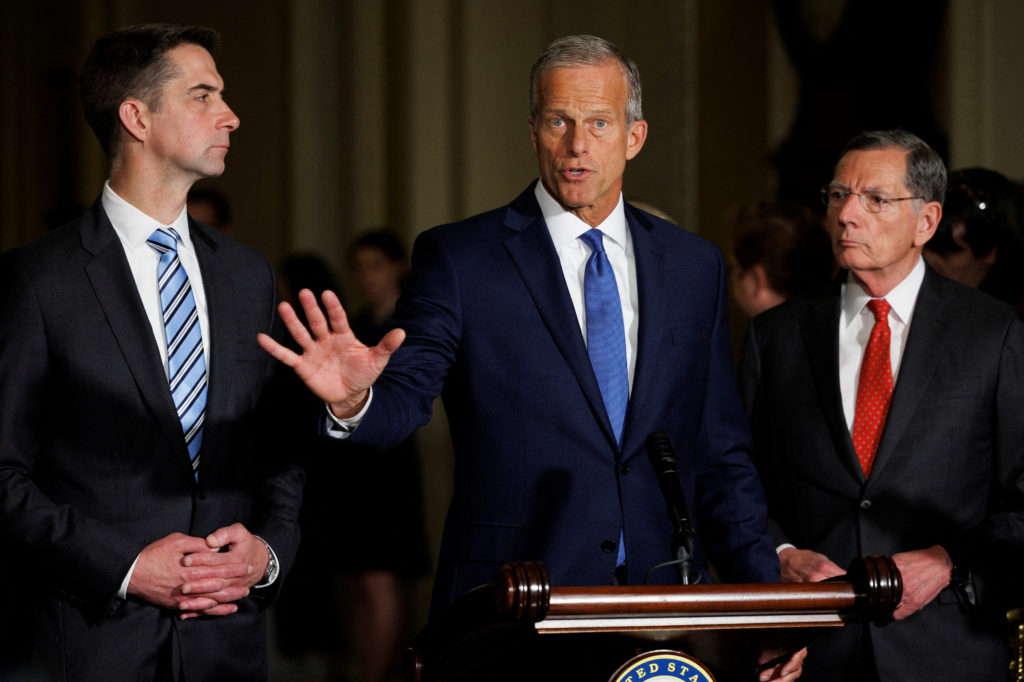
Senate Republicans Abandon Immigration Funding Bill Amid Internal Discord
In a sudden departure from Washington on Thursday, Senate Republicans left without casting a vote on a nearly $70 billion bill designed to fund immigration enforcement agencies. The party finds itself at a stalemate regarding the proposal to create a new $1.776 billion settlement fund aimed at compensating Trump supporters who allege political persecution from the Biden administration.
The GOP had already set aside part of a bill that included a $1 billion bond for the White House complex and President Trump’s banquet hall, as internal dissent emerged among party members. The Justice Department’s announcement of this settlement raised additional concerns, especially regarding the potential allocation of funds to supporters who participated in the January 6, 2021, Capitol riots, which resulted in numerous assaults on law enforcement officers.
A tense meeting on Thursday morning with Acting Attorney General Todd Blanche only heightened frustrations among Republican senators. Following the expiration of the bill, GOP leaders stated they would defer voting on the immigration enforcement bill until after the Memorial Day recess, aligning with President Trump’s self-imposed deadline for its passage.
Senate Majority Leader John Thune expressed that Blanche was keenly aware of the considerable discontent among Republican senators as opposition to the settlement concept intensified. Former Senate Majority Leader Mitch McConnell further chastised the proposal, labeling it “absolutely stupid and morally wrong.” He articulated the absurdity of the highest law enforcement official requesting funds for individuals who assault police officers.
The escalating tensions come at a time when some Republicans are increasingly frustrated with Trump’s leadership, particularly as Democrats criticize the effort to fund Trump’s banquets while voters are grappling with pressing affordability concerns. Several Republican senators have openly opposed the Justice Department’s announced settlement and expressed discontent over Trump’s endorsement of Texas Attorney General Ken Paxton in the upcoming primary runoff against incumbent Senator John Cornyn.
White House Settlement Sparks Political Friction
Both parties acknowledge the growing tensions within the Republican ranks. Thune stated that the White House’s lack of prior consultation with Congress regarding the settlement had exacerbated the situation. Trump’s support for Cornyn’s challenger has further complicated dynamics, with Thune noting the interlinked political atmosphere influencing legislative actions.
In a social media statement on Wednesday, President Trump urged Republicans to remove Senate parliamentarian Elizabeth McDonough, who indicated that portions of the proposed $1 billion for White House security would not be included in the ICE and border security bill. Additionally, he renewed his call for Senate passage of the SAVE Act, which mandates voter citizenship verification, while reiterating the need to end the Senate filibuster.
Despite a strong alignment with Trump on numerous issues, Senate Republicans have historically resisted calls to abolish the filibuster, which requires a 60-vote threshold for most bills. When asked about the potential loss of control over the Senate, Trump stated that his focus remains on doing what he believes is right.
The unexpected endorsement of Paxton has stirred frustration among Republican senators, who worry that their majority may be jeopardized in the upcoming November elections, with many viewing Cornyn as the more viable candidate.
Settlement Fund Complications Emerge
The so-called “anti-weaponization” fund is part of a settlement resolving Trump’s lawsuit against the IRS regarding leaked tax returns. However, it has emerged as a significant hurdle for the immigration enforcement bill after Democrats announced plans to propose an amendment that could block or limit the fund.
As Republicans explore pathways to pass the immigration funding through a complex budget reconciliation process that permits votes on extended amendments, Democrats are seizing the opportunity to introduce their amendment aimed at eliminating funds earmarked for Trump supporters involved in the January 6 insurrection. Senate Democratic Leader Chuck Schumer emphasized that Republicans must abandon support for slush funds and instead collaborate with Democrats to address vital issues affecting Americans.
With the likelihood of the Democratic amendment passing, Republicans began discussing last-minute strategies to address the potential outcomes, although these plans might threaten the bill’s support among House members or heighten the risk of a presidential veto.
Failure of Secret Service Funding Request
Included in the discussions was a funding request from the Secret Service, seeking approximately $220 million for security improvements tied to the ballroom. As Republicans prepared to discard this proposal, Trump commented that “we don’t need money for the banquet hall,” despite earlier assertions that private funds would cover the costs. He cautioned that without congressional approval of security funding, the White House’s safety could be compromised.
Senator Thom Tillis voiced opposition to the inclusion of a security package in the bill, deeming it a brazen misallocation of funds that could mislead the public into thinking the proposal was directed toward a “billion-dollar banquet hall.” The bill retains funding allocations for ICE and Border Patrol, which Democrats have protested for months amid the administration’s controversial immigration enforcement practices.
While Democrats have pushed for changes within the agency, negotiations with the White House have stalled, leading Republicans to pursue the budget reconciliation process—similar to the strategy used to secure passage of Trump’s tax reforms last year—without support from their Democratic counterparts. Achieving passage remains contingent on unity among Republican lawmakers, with a focus on prioritizing funding for ICE and Border Patrol as the core responsibility of the Senate.
Senator Mike Rounds emphasized that unrelated issues complicate legislative efforts, urging a focus solely on immigration enforcement funding.
Reports contributed by Associated Press writers Colin Binkley, Stephen Groves, and Joey Cappelletti.
