


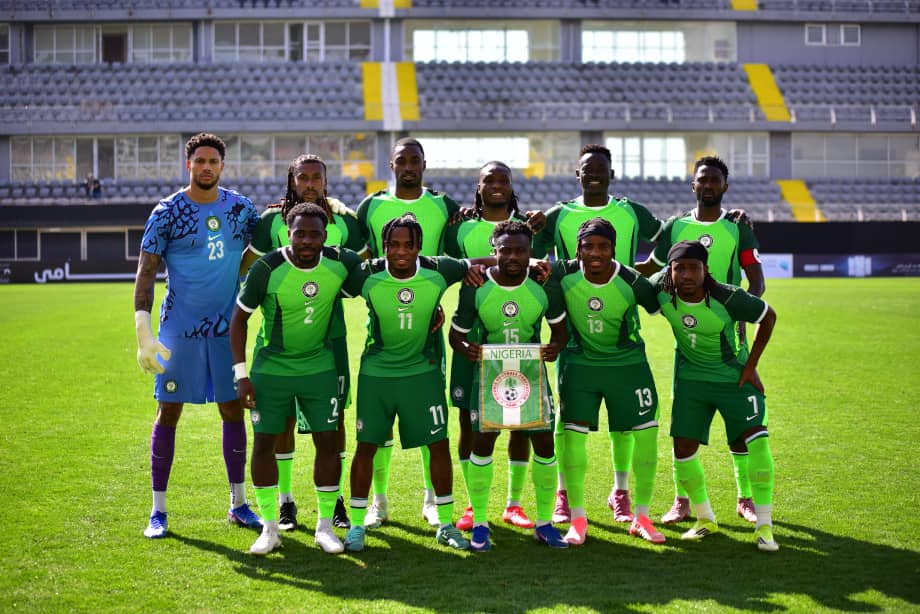
Nigeria’s Road to the 2026 FIFA World Cup Reopened Amid Ebola Crisis in DRC
The path to the 2026 FIFA World Cup has taken a remarkable turn for Nigeria’s Super Eagles, following a severe Ebola outbreak in the Democratic Republic of Congo (DRC) that has disrupted the Congolese national team’s preparations for the tournament.
Earlier this month, DRC confirmed an outbreak of Bundibugyo Ebola, a rare strain of the virus, which has resulted in over 130 deaths among approximately 600 suspected cases. The tragic health crisis has raised questions about the Congolese team’s ability to compete.
As a consequence, the uncertainty surrounding the participation of the Congolese national team in the 2026 FIFA World Cup opens a narrow yet significant window for the Nigerian national football team to potentially re-enter the competition. Nigeria’s qualification efforts faced a serious blow when the Super Eagles lost to DRC in a penalty shootout during the final round of the African qualifying playoffs.
In the aftermath of this defeat, the Nigeria Football Federation (NFF) raised concerns regarding the eligibility of several Congolese players and filed a formal complaint with FIFA. The NFF contended that the Congolese Football Federation misled FIFA regarding the nationality change process for certain foreign-born players. However, FIFA ultimately dismissed this protest.
WHO Elevates Ebola Risk Level
The ongoing health crisis has compounded the challenges facing DRC’s World Cup preparations. The World Health Organization (WHO) has categorized the national risk level associated with the Ebola outbreak in DRC as “very high,” as the number of infections and fatalities continues to escalate. During a recent media briefing, WHO Director-General Tedros Adhanom Ghebreyesus provided an update on the situation.
Previously assessed as high at both the national and regional levels, with low global concern, the WHO has now revised its risk assessment. It now stands at very high for national conditions, high for regional impacts, and low for global considerations, reflecting the growing severity of the outbreak.
DRC Navigates Biosecurity Challenges
The ramifications of the Ebola outbreak have already significantly hampered DRC’s World Cup preparations. The team was compelled to cancel its planned training camp in Kinshasa, opting instead to relocate its activities to Belgium. In light of the health crisis, the team is set to remain in a strict biosecurity bubble for the next three weeks before they are permitted entry into the United States.
Andrew Giuliani, the executive director of the White House’s FIFA World Cup Task Force, has underscored the importance of adherence to strict protocols for the Congolese delegation. He stated, “We have clearly communicated to Congo that they should maintain the integrity of their bubble for 21 days before coming to Houston on June 11.” The consequences of a breach could mean they risk jeopardizing their travel to the U.S.
Monitoring Developments in Nigeria
The members of the DRC team, including French head coach Sébastien Desabres, are currently based outside the country, with most players competing professionally in Europe. Notable players in their squad include Aaron Wan-Bissaka, Yoan Wissa, and captain Chancel Mbemba. The DRC team is scheduled to play a friendly against Denmark in Liège on June 3, followed by a match against Chile in southern Spain on June 9.
In a highly unlikely scenario, should the DRC be unable to participate in the World Cup, either Nigeria or Jamaica, both of whom were eliminated by the DRC in the qualifying rounds, could stand a chance to take their place.
Expansive Plans for the 2026 FIFA World Cup
The upcoming 2026 FIFA World Cup, set to be jointly hosted by the United States, Canada, and Mexico, is poised to be the most expansive tournament in the competition’s history. Scheduled from June 11 to July 19, 2026, the tournament will see 48 teams participating in this expanded format, culminating in a final match planned for New York/New Jersey.
