


Release from Detention Brings New Challenges for Cuban Immigrant
Arianne Betancourt’s relief was short-lived following the release of her father from months of confinement in Florida’s notorious immigration detention facility. Initially, she managed to overlook his alarming weight loss and fragile demeanor, believing that returning to their Miami home would aid in his recovery.
Health Concerns Arise After Release
However, just a few days later, Justo Betancourt found himself in an emergency room, where medical professionals suspected he had suffered multiple mild strokes during his time in custody. Due to an electronic monitoring device on his ankle, doctors were unable to perform an MRI to definitively confirm their diagnosis.
Medical Neglect in Detention
Arianne expressed her frustration regarding the lack of medical attention her father received while incarcerated, noting that his requests for insulin and other assistance were often met with indifference. “They simply told him to drink more water when he needed urgent help,” she lamented.
Imminent Closure of the Controversial Facility
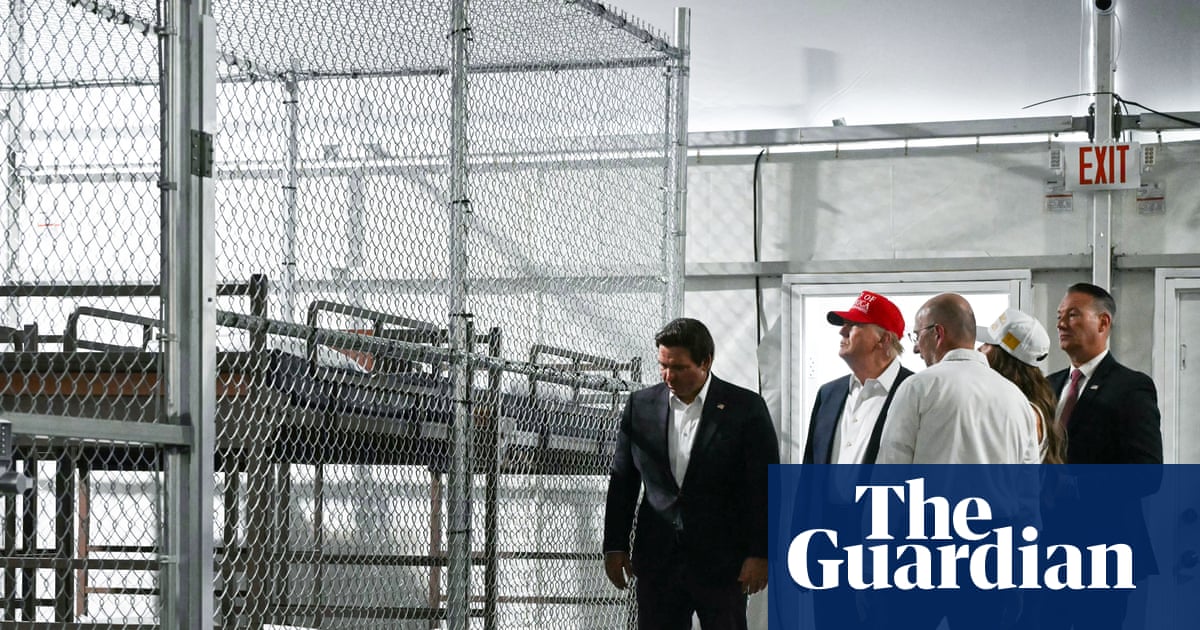
The detention center, hastily constructed last summer on an abandoned airstrip adjacent to delicate wetlands in Florida’s Everglades, is set to close next month. Critics have denounced it as a “failed experiment in human suffering,” costing taxpayers over $100,000 daily. The closure follows escalating pressures from environmental lawsuits, protests from immigration advocates, and a scathing report from Amnesty International detailing abuses and violations of human rights.
Political Fallout and Public Opinion
Justo Betancourt’s experiences reflect the broader consequences of policies implemented by Florida’s Governor Ron DeSantis. While DeSantis has previously defended the detention facility, recent backlash has prompted him to distance himself from the initiative. “We never aimed to create a luxurious environment,” he stated, downplaying the facility’s notoriety.
Unveiling the Harsh Realities of Detention
Inside the facility, detainees faced dire conditions, characterized by cramped living spaces, insufficient food, and inadequate sanitation, according to testimonies from former inmates. Arianne shared that many men were deprived of basic necessities, creating a nightmarish experience for those awaiting deportation.
Implications for Florida’s Governance and Immigration Policy
As advocates call for the closure of all detention centers, political analysts suggest that DeSantis’ strong support for the facility may have backfired, potentially overshadowing his future ambitions. Despite evidence suggesting that the majority of detainees did not have criminal records, DeSantis continues to defend the financial implications of the facility as a cost-saving measure for taxpayers. This contradicts earlier reports revealing the false narrative surrounding the criminal backgrounds of detainees.
A Road to Recovery
Though Arianne maintains hope that her father will avoid deportation, she remains acutely aware of the long journey ahead for his health. With the ankle monitor finally removed, doctors can now assess his neurological condition. “My father was only 54 and mentally resilient before this ordeal, yet now he faces an uphill battle,” she remarked, echoing the sentiments of countless families affected by the flaws in the detention system.
