


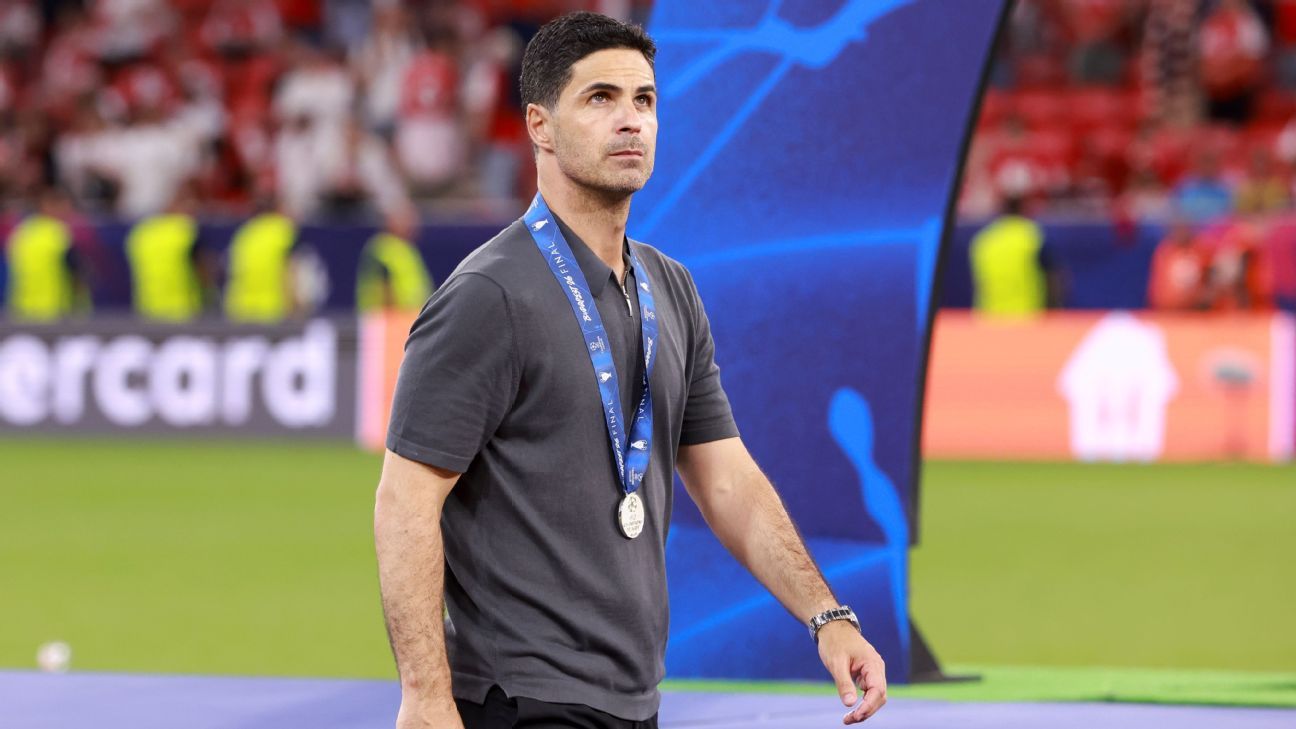
Arsenal Faces Tough Lessons After Champions League Final Defeat
In a dramatic penalty shootout loss to Paris Saint-Germain in the UEFA Champions League final, Arsenal experienced a crucial lesson in high-stakes football. The question remains: will manager Mikel Arteta have the insight to adapt from this experience?
To secure a Premier League title, it is essential to master defensive tactics and capitalize on set-pieces. Such an approach can provide a tactical advantage, allowing teams to manipulate game timing and draw decisions from referees that may not align with a more balanced style of play.
However, when it comes to winning the Champions League, merely playing defensively is insufficient. Arsenal’s game strategy came under scrutiny as they ended the final with a mere 26% possession, the lowest for any finalist since the statistic’s inception in 2004. This figure not only highlights Arsenal’s limitations but also emphasizes PSG’s proficiency in maintaining and redistributing possession.
Despite completing the season undefeated across all competitions, Arsenal’s performance in the championship match did not yield the coveted trophy, ultimately losing to PSG on penalties. This outcome mirrors the complexities of current Arsenal—their resilience led to domestic success, ending a 22-year Premier League drought, but left questions about their capability in European competitions.
After taking an early lead with Kai Havertz’s goal in the sixth minute, Arsenal seemed content to defend rather than seeking to extend their advantage. This cautious mindset soon transformed into a troubling approach characterized by theatrics and time-wasting tactics. Both Havertz and Leandro Trossard fell to the ground in attempts to win free-kicks but failed, further frustrating the pace of the game and drawing sharp criticism from PSG’s manager, Luis Enrique.
Throughout the match, Arsenal wasted 31 minutes and 42 seconds due to stoppages, far surpassing PSG’s delays. Incidents such as Cristian Mosquera receiving a booking for a delayed throw-in in the second half showcased a frustrating pattern. The entire squad appeared to drag onto the pitch, prompting the referee’s irritation at the lack of urgency.
Strategic Concerns Loom Over Arsenal’s Future
Such tactics paint Arsenal as reluctant to engage with their opponents, reminiscent of a team reluctant to seize opportunities. This defensive strategy, while sometimes effective, may not align with the aspirations of a club of Arsenal’s stature. Their rivals, such as Liverpool and Manchester City, have prospered in the Champions League by embracing bold, attacking football, a formula that appears absent from Arsenal’s strategy.
The pressures of modern competition reveal significant gaps in Arsenal’s performances against top-tier clubs. Their inability to secure victories against Manchester City in league play and their defeat in the Carabao Cup final exemplify these challenges. As they look ahead, signing a transformative player or refining their strategic approach will be crucial for their ambitions in Europe.
Post-match, Arteta expressed a willingness to pursue necessary changes within the squad, but collaboration with club management may present additional hurdles. “If we want to reach another level, we have to make very important decisions,” he stated, calling for a clear display of ambition.
Arteta’s leadership will be vital. Despite acquiring young talents such as Victor Gökeres, Eberechi Eze, and Noni Maduke in the previous transfer window, it was concerning that none started in Budapest. While these players were ultimately introduced, more aggressive tactics and freedom of play must be part of their future gameplay.
To find success, Arteta may need to embrace a more audacious mindset reminiscent of Sir Alex Ferguson, who, prior to Manchester United’s memorable comeback in the 1999 Champions League final, inspired his players to take risks. The path to glory in the Champions League will require Arsenal to shed their cautious tactics and approach challenges with confidence and tenacity.
