


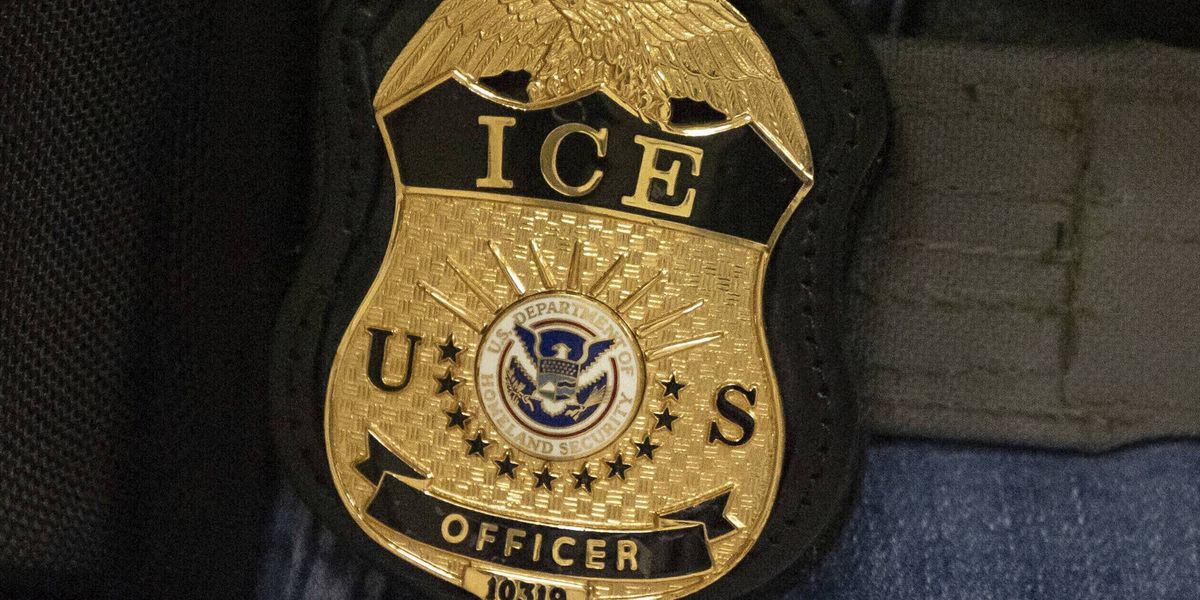
WASHINGTON (AP) — Immigration and Customs Enforcement (ICE) is rapidly expanding its workforce, with plans to recruit thousands of new employees as part of the Trump administration’s initiative to escalate the arrest and deportation of immigrants.
This significant increase in ICE’s personnel, fueled by an influx of billions of dollars authorized by Congress, has prompted concerns regarding the agency’s hiring practices and the vetting process for new officers. The Department of Homeland Security (DHS) has dismissed these worries.
In a recent incident, relatives of an ICE agent involved in the fatal shooting of a Colombian man in Maine have raised alarm bells, stating that the man struggled with severe mental health issues from a young age and should not have been allowed to carry a weapon as a law enforcement officer.
While details surrounding the officer’s employment remain unclear, the situation has shone a spotlight on ICE’s aggressive hiring campaign and the broader immigration policies of the Trump administration. This article explores the agency’s hiring and training practices in greater detail.
Significant Growth in ICE’s Workforce
In January, the Department of Homeland Security announced that it had onboarded 12,000 new officers and employees since launching its recruitment drive, with thousands already deployed to assist in investigations. This figure encompasses both deportation officers and personnel from Homeland Security Investigations, another arm of ICE.
According to ICE, a substantial portion of the new hires consists of police officers and military veterans. However, an Associated Press investigation uncovered evidence that some applicants had questionable backgrounds and may not have undergone thorough screenings prior to being offered jobs. Notably, some candidates reported receiving “provisional selection letters,” enabling them to begin work in temporary roles before completing background checks.
ICE has defended its hiring procedures, emphasizing that it implements rigorous screening protocols. Todd Lyons, the former acting director of ICE, expressed pride in the recruitment initiative, which attracted over 220,000 applicants. He stated that expanding a well-trained and carefully vetted workforce would augment ICE’s capacity to execute the administration’s immigration strategies.
The screening process includes comprehensive background checks, which evaluate criminal history, credit scores, and references from previous employers, a procedure that can take several weeks. Additionally, ICE is offering signing bonuses of up to $50,000, has waived the requirement for a college degree, and has lowered the minimum hiring age to 18.
An internal memo, initially reported by Reuters, indicated that ICE officials were instructed to forward any “defamatory information regarding the conduct of a new employee” to Internal Affairs for further investigation. Such concerns could relate to prior employee terminations or forced retirements. Meanwhile, the DHS Inspector General announced plans for an audit of ICE’s hiring and training practices last August, although the results have yet to be disclosed.
Security Clearance is a Crucial Requirement
Job advertisements stipulate that deportation officers must carry firearms and that applicants with domestic violence convictions are disqualified. Furthermore, candidates should be prepared for medical evaluations and possibly polygraph tests. The application process warns that providing false information could lead to revocation of a job offer or even criminal charges.
Background checks may include financial assessments related to unpaid debts, such as child support or taxes, as well as reviews of any criminal or drug history. Claire Trickler McNulty, a former ICE official across the Obama, Trump, and Biden administrations, noted that the hiring process for deportation officers aligns with standard federal practices, where hiring managers assess applications before conducting thorough background checks.
Applicants for positions requiring security clearance must disclose extensive details, including drug use, law enforcement interactions, organizational affiliations, health issues, prior addresses, and work history. Depending on the clearance level required, references will also be contacted, and any significant issues can trigger a more detailed examination.
Training Schedule Adjustments Raise Concerns
Those selected for deportation officer positions typically undergo a 50-day immigration enforcement training program. However, Ryan Schwank, a former ICE attorney overseeing officer training, revealed that the agency has shortened training durations and reduced examination requirements prior to graduation. The Department of Homeland Security has contested claims that training requirements have been relaxed.
Trickler McNulty expressed concern regarding reports of ICE shortening training periods in a rush to hire thousands of new officers. Following a funding infusion from Congress, the agency sought to ramp up recruitment for additional deportation officers while maintaining quality standards. Allegations emerged that this urgency led to compromised training protocols, which both DHS and ICE officials have repeatedly denied.
In June, Homeland Security Secretary Mark Wayne Mullin announced plans to extend the training duration for new recruits to 71 days from July onwards. Additionally, the department stated that new onboarding classes will undergo enhanced training, which will address challenges such as “coordinated attacks” on law enforcement personnel and ICE facilities, encompassing crowd control, high-risk vehicle stops, live-fire drills, and medical training.
Associated Press writer Jonathan J. Cooper contributed to this report from Phoenix.
