


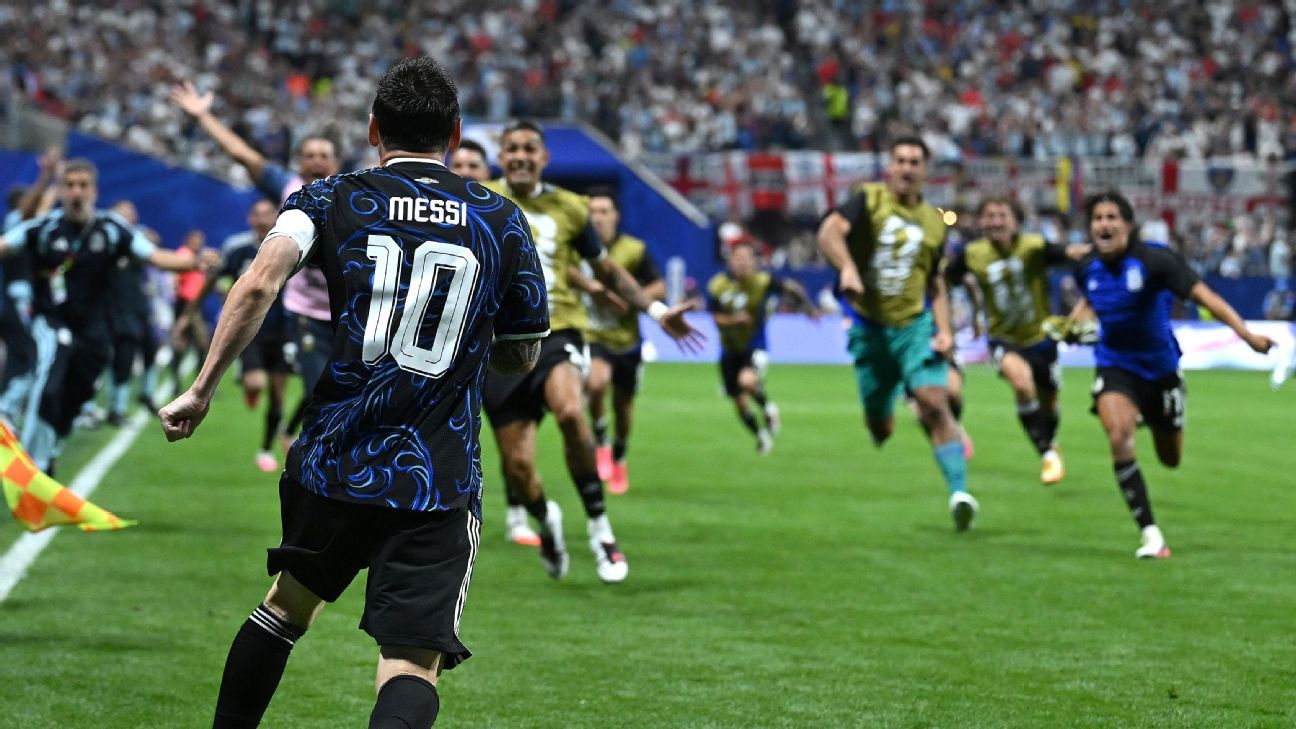
The ongoing FIFA World Cup has once again underscored that restrictions on Lionel Messi are often misguided. As the tournament approaches its climax, the 39-year-old might be poised to end his illustrious career in Sunday’s final in East Rutherford, New Jersey. This high-stakes match pits Argentina against Spain, a team that has influenced Messi’s journey in profound ways.
Reflecting on the early days, one significant memory stands out: the South American U-20 Championship in Colombia in early 2005. At just 17 years old, Messi was then a mop-haired, left-footed playmaker whose small stature contrasted sharply with the towering athletes around him. Yet, his gameplay quickly showcased his elite potential.
Ascent of a Phenomenon
Remarkably, it was more than two decades ago that Messi displayed his extraordinary skills. Even at that young age, the way the ball glued to his foot was astonishing. Interestingly, he was 40 yards from goal and eschewed flashy tricks, demonstrating an uncanny understanding of space and opponent vulnerabilities. Observers were left with the sense that they were witnessing the emergence of a footballing prodigy.
At that time, Messi was largely unknown. Born in Rosario, he relocated to Barcelona at 13, yet had only played a handful of games there. Although Spain attempted to recruit him, it merely fueled his immediate aspirations. Argentina seized the opportunity to let him represent his country in a friendly against Hungary on August 17, 2005, but the match took an unexpected turn when Messi was sent off just 40 seconds into his debut.
For a period following his debut, Messi faced ridicule for that incident. While Spain celebrated victories in the 2010 World Cup and the 2008 and 2012 European Championships, Argentina endured struggles, culminating in Messi’s temporary retirement from international duty at the Copa America a decade ago—ironically, in the very same stadium where he will compete on Sunday.
Nonetheless, Messi’s retirement was short-lived. Over the past five years, Argentina has experienced a remarkable revival, winning two Copa America titles and lifting the World Cup trophy in Qatar. Their focus now shifts to retaining the championship against Spain in the highly anticipated final.
Coaching Connections
This match also presents a reunion for both coaches. Nearly a decade ago, Lionel Scaloni, Argentina’s coach, was in Spain while pursuing his coaching badges. His mentor, Luis de la Fuente, will be leading the opposing team as they prepare for this crucial showdown.
The connections extend beyond coaching. At the tournament’s onset, de la Fuente was asked which international player he desired most on the Spanish roster. His swift response? Argentina’s Julián Alvarez. As the final approaches, de la Fuente must now devise a strategy to contain the formidable duo of Alvarez and Messi.
The challenge will be significant, especially considering Spain’s preferred style of maintaining possession. It will be compelling to see if they can limit Messi and Alvarez’s opportunities, similar to how they managed to neutralize Kylian Mbappé in their semifinal victory over France.
We may already have a glimpse into how these contrasting styles will shape the match. Argentina and Spain were slated to meet previously in the Finalissima—a clash between the champions of Europe and South America. Argentina aimed to compete in that match back in March, but a packed schedule and geopolitical tensions prevented it from occurring. Spain had proposed various alternatives, but Argentina suggested Buenos Aires, knowing Spain would likely decline.
Now, the long-anticipated match unfolds, with the greatest prize on the line.
