


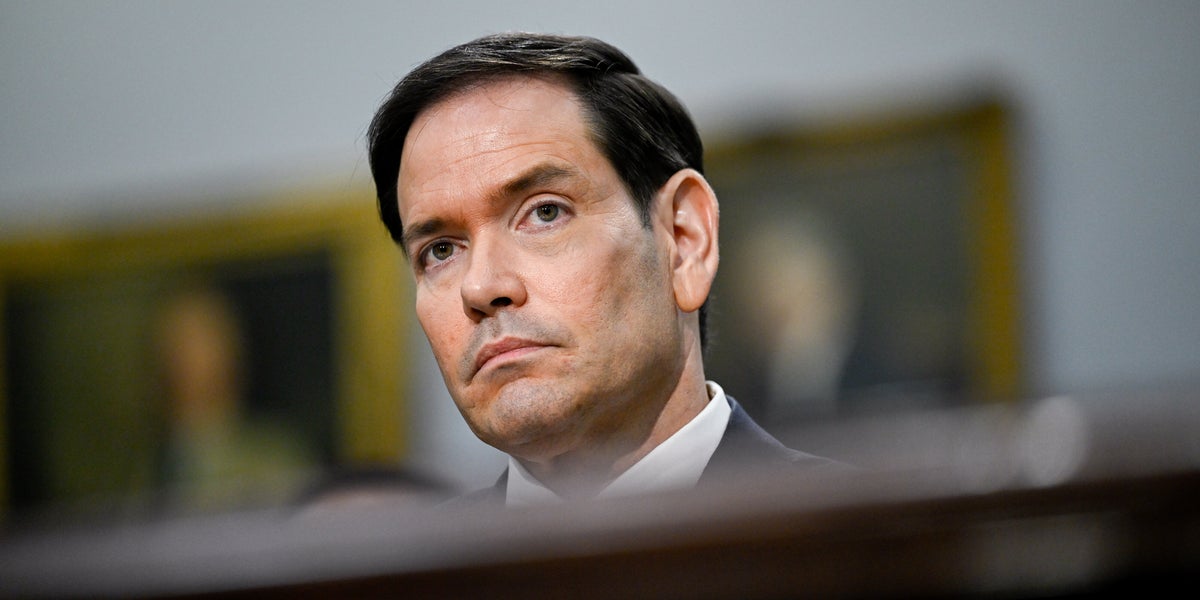
Secretary of State Marco Rubio has drawn scrutiny for his recent comments regarding immigration, which some scholars interpret as coded messages. During a Senate Foreign Relations Committee hearing, he responded to Rep. Grace Meng’s inquiry about the Trump administration’s decision to increase the refugee cap from 7,500 to 17,500, specifically noting a pathway for white South Africans due to their supposed higher likelihood of assimilation.
Meng highlighted that the policy appeared to favor South Africa’s white minority Afrikaners, who the South African government asserts are facing racial persecution—a claim that has been contested. She contrasted the expedited opportunities for these individuals with the case of approximately 1,100 Afghans who supported U.S. troops in Afghanistan and have been stranded in Qatar for over a year. Reports suggest the administration is considering resettling them in the conflict-ridden Democratic Republic of Congo, which is also battling an Ebola outbreak.
In defending the policy, Rubio portrayed Afrikaners, a group primarily descended from Dutch settlers and historically linked to apartheid, as suitable candidates for integration into U.S. society. He emphasized a distinct interest among this group in relocating to the U.S., suggesting they possess a significant chance of thriving here. “This is a short-term refugee resettlement program in our national interest,” he stated, underlining the importance of assimilation.
Meng retorted that the program for the new 17,500 refugees does not equate to the urgent needs of the Afghan allies in her district, many of whom have already become integral community members. She pressed for the U.S. to honor its commitments to these allies, including interpreters who have risked their lives to assist American forces.
Experts Critique Rubio’s Remarks as Racially Charged
Scholars assert that Rubio’s remarks echo the infamous rhetoric employed by the Trump administration. Resettlement of Afrikaners has been a focal point for Trump since his reelection, particularly as the administration restricts entry for refugees from Afghanistan, Syria, Sudan, and numerous other regions, while simultaneously making allowances for this specific demographic.
Despite assertions around the supposed plight of Afrikaners in South Africa, these claims have been uniformly debunked by both South African officials and international agencies. Notably, even several white Afrikaner farmers have dismissed the notion of “white genocide,” underscoring the complexities of the narrative presented by the Trump administration.
Lauren Landau, an immigration and development expert at the University of Oxford, suggested that the intentions behind such policies may be twofold: they disrespect South Africa’s diverse identity while appealing to a specific base within the U.S. This demographic, he argues, may perceive assistance to white Afrikaners as a stand against perceived threats from multiculturalism.
Landau criticized the Trump administration’s actions as part of a broader pattern that undermines global humanitarian standards, promoting a narrative of worth based on race and religion. He pondered why a group historically advantaged, such as Afrikaners, would be prioritized over others who face systemic injustices in their home countries.
Ernesto Castañeda from American University reflected on the broader implications of immigration policy under the Trump administration, pinpointing inherent racial biases in favor of individuals from predominantly white nations while denigrating immigrants from countries with larger black populations. He emphasized that successful integration relies on access to resources like work permits and education, rather than racial or ethnic background.
Rubio’s assertions regarding Afrikaners mirror past discussions about the preferential treatment given to white individuals during apartheid. During a Senate hearing, Sen. Tim Kaine raised concerns about this unequal approach, pointing out the absence of specialized resettlement programs for black South Africans or other marginalized groups, which indicates a troubling pattern of prioritization based on race.
