


Senate Approves Funding for Immigration Enforcement Agency
In a notable development, the Senate voted early Friday to approve a substantial funding bill for President Donald Trump’s immigration enforcement agency. This decision followed weeks of delays and substantial opposition stemming from various immigration-related controversies, particularly those linked to a $1.776 billion settlement fund that posed challenges to the legislation.
The final vote, which concluded at 5 a.m., saw the bill pass with a narrow margin of 52-47. This legislation ensures funding for Immigration and Customs Enforcement (ICE) and border security for three years, extending through the remainder of Trump’s presidency and into the next administration. The bill is set to be referred to the House of Representatives for further consideration next week.
The vote came after Republicans successfully defeated several attempts from both sides of the aisle to amend the bill and impose a permanent ban on the settlement payments tied to the ongoing controversy surrounding perceived political persecution. Despite some party divisions, Republicans managed to maintain cohesion on the primary funding issues.
Amendments Testing Party Unity Fail to Pass
Republicans faced a significant test of unity when they narrowly rejected an amendment proposed by Louisiana Senator Bill Cassidy aimed at directing settlement payments to injured law enforcement officers. This amendment collided with the political reality that many in Trump’s base had previously stormed the Capitol on January 6, 2021, challenging the legitimacy of the 2020 election results.
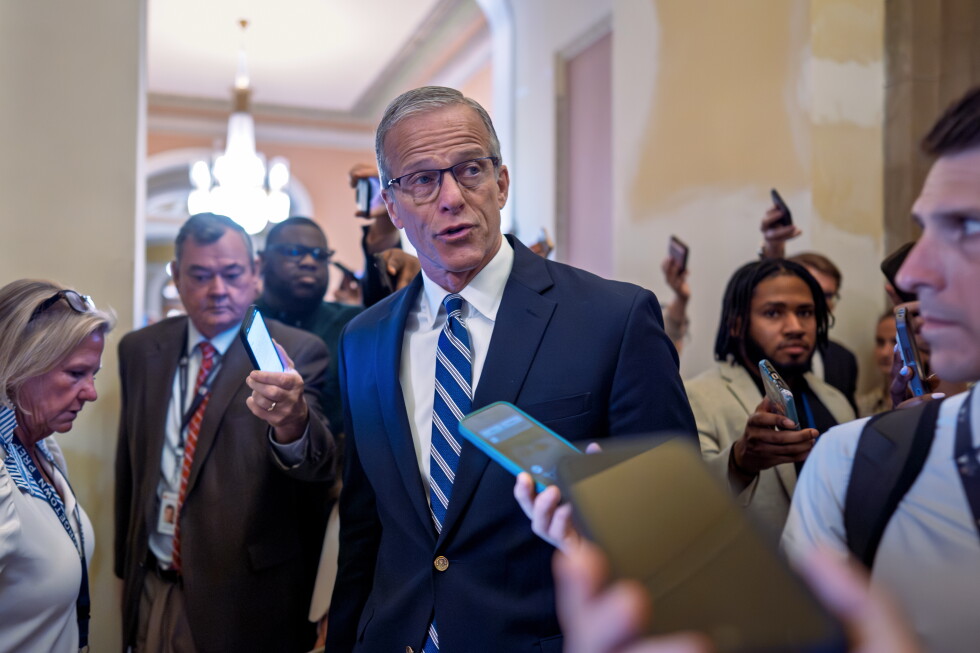
The debate surrounding the amendment stretched over several hours, considerably complicating a process that many expected would be straightforward. Senate Majority Leader John Thune expressed frustration as Republicans grappled with internal disagreements, emphasizing the need to prioritize the provision of funds for immigration enforcement.
Even as Thune indicated that his party should concentrate on crucial funding issues, some Republican senators advocated tirelessly against the disbursement of settlement funds, reflecting the tension within the party. Recently, Trump himself highlighted the importance of the fund, creating further uncertainty regarding its future and adding pressure to the current negotiations.
Contention Over Settlement Funds Impacts Legislative Process
The Senate’s rejection of attempts to ban the settlement fund illustrated the political stakes involved. Cassidy and a handful of fellow Republican senators were faced with the difficult task of either supporting amendments that could alienate their electoral base or standing by principles that could jeopardize immigration enforcement funding.
Senator Thom Tillis of North Carolina originated another amendment to divert the settlement funds into a separate anti-fraud initiative. While this proposal garnered some bipartisan support, it ultimately failed due largely to party-line voting dynamics, reinforcing the degree of division over this contentious issue.
Tillis contended that Republicans must confront their accountability regarding the fund, arguing that clarity on its utilization is crucial ahead of the upcoming election cycle. The defeat of Cassidy’s amendment, which sought to allocate compensation to law enforcement affected by recent violence, highlighted deep divisions within the party, especially considering its historic ties to Trump.
Protracted Delays in Funding for ICE and Border Patrol
The funding for ICE and the Border Patrol faced significant delays leading up to this vote. Senate Republicans worked to navigate a complicated procedure that sought to bypass a filibuster and push through their budget proposal without any Democratic support. However, intraparty conflicts and external pressures significantly hindered progress.
In response to previous tensions and protests, Democrats have emphasized the necessity of placing restrictions and accountability measures on any funding directed toward the Department of Homeland Security (DHS). Calls for improved background checks for employees and greater judicial oversight have emerged as critical demands from the Democratic coalition.
After the budget expired in mid-February without agreement on immigration practices, Congress managed to fund other DHS initiatives in late April with bipartisan support. Still, ICE and Border Patrol remained without regular budget allocations, underscoring the ongoing challenges and politicization surrounding immigration enforcement funding.
