


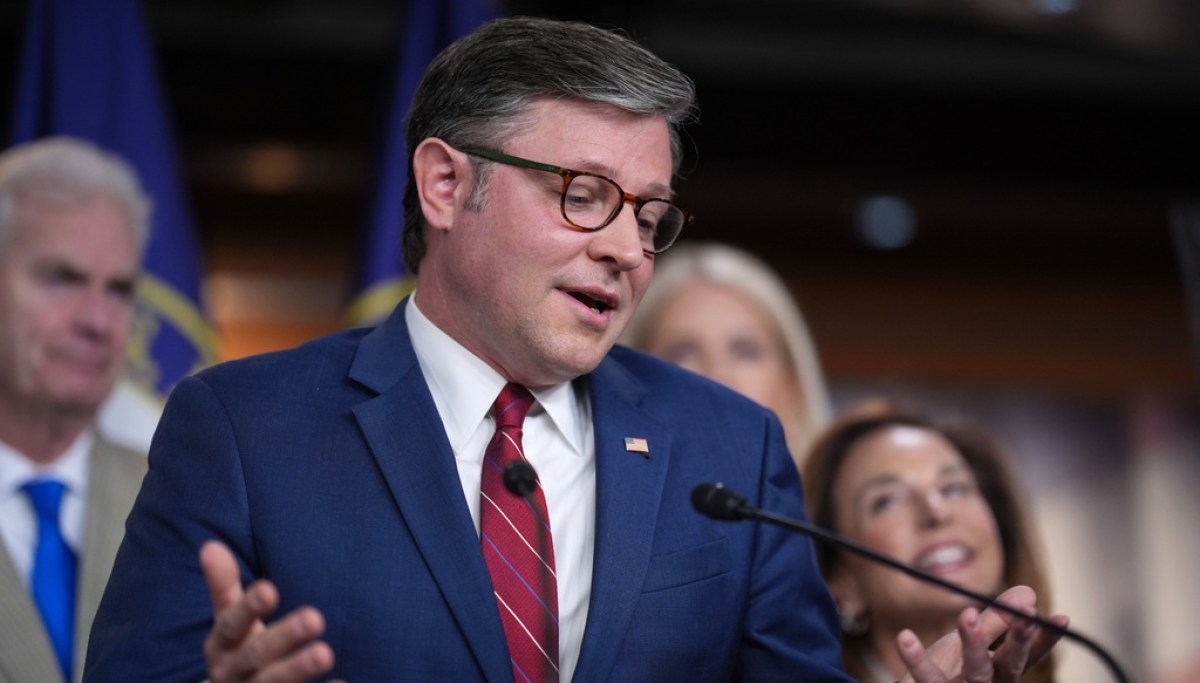
House Speaker Seeks Unity with Immigration Enforcement Funding Bill
House Speaker Mike Johnson (R-Louisiana) is set to push for the passage of an immigration enforcement funding bill on Tuesday, a move that could test party unity given the slim majority in the House. The proposed legislation, which amounts to $70 billion, is intended to support the Border Patrol and Immigration and Customs Enforcement (ICE). This funding was notably excluded from the Department of Homeland Security’s budget earlier this year.
Senate Passes Bill Amid Tensions
Last Friday, the Senate approved the funding bill with only a single dissenting vote from Republican Sen. Lisa Murkowski (R-Alaska) after an hour-long voting session. This debate evolved into a referendum on President Donald Trump’s $1.776 billion anti-weaponization fund. Ultimately, the Senate bill did not incorporate a ban on Justice Department funding related to a settlement on leaked tax returns, despite concerns raised by some Republican senators.
Key Republican Votes Remain Uncertain
If all House members participate in the voting, Speaker Johnson can afford to lose just two Republican votes. During the party’s previous partisan reconciliation effort, Rep. Brian Fitzpatrick (R-Pennsylvania) and Rep. Thomas Massie (R-Kentucky) voted against the substantial tax and spending bill. Massie indicated on Monday that his support for the current bill might be contingent upon any added provisions or changes in spending allocations.
Fitzpatrick’s Position Is Unpredictable
Rep. Fitzpatrick’s stance is particularly unpredictable. He has diverged from party lines on significant issues, including his recent support for aid to Ukraine and vocal opposition to the anti-weaponization fund. As Pennsylvania Republicans prepare to file an expulsion petition this week along with Rep. Tom Suozzi (D-N.Y.), Fitzpatrick’s office has not publicly commented on these developments.
Shifting Sentiments on Funding
Republican unrest regarding the anti-weaponization fund has intensified following a recent Justice Department settlement. Acting Attorney General Todd Blanche informed House members that the government is “not committed to advancing the fund” in light of a recent court ruling. In a notable pivot, Rep. Don Bacon (R-Neb.), who previously opposed the fund’s establishment, stated he would back the reconciliation bill despite its lack of a ban on the contentious fund, citing the court ruling as a critical factor.
Challenges Ahead for House Speaker
Speaker Johnson must also engage additional party members beyond Massie and Fitzpatrick, as uncertainty looms. One House Republican expressed indecision, while Rep. Kevin Kiley (I-CA) commented that Johnson appeared less optimistic about the bill’s prospects. Kiley emphasized the necessity for meaningful bipartisan reform in immigration enforcement, stating that that had yet to materialize, which has contributed to his hesitation regarding support.
Democratic Opposition Solidifies
Adding to the challenges, Speaker Johnson cannot rely on Democratic support. House Majority Leader Hakeem Jeffries (D-N.Y.) firmly opposed the “reckless Republican budget reconciliation bill,” asserting that taxpayer funds should be redirected to enhance affordability for Americans rather than providing additional resources to ICE. Jeffries condemned the bill for what he described as its harmful potential against law-abiding immigrant communities, underlining the growing partisan divide on immigration issues.
