


New Mexico and Albuquerque Challenge Federal Immigration Lawsuit
The New Mexico Department of Justice, along with the city of Albuquerque, has taken legal action by filing motions to dismiss the federal Justice Department’s lawsuit aimed at overturning state laws and city ordinances that curtail cooperation with mass deportation efforts initiated under President Trump’s administration.
Filed earlier in May, the federal lawsuit names Governor Michelle Lujan Grisham, Attorney General Raul Torrez, and Albuquerque Mayor Tim Keller as defendants. The complaint accuses state and local governments of unconstitutionally interfering with federal immigration enforcement by passing laws that restrict the use of public resources—such as county-owned jails and city parks—in assisting U.S. Immigration and Customs Enforcement (ICE).
This contentious issue follows the passage of House Bill 9 earlier this year, which prohibits public entities from contracting with ICE for immigration detention purposes. Despite the law’s implementation, the Otero County Commission has attempted to sidestep these regulations by extending its contract with ICE, arguing that the law could result in significant job losses and economic repercussions for the community.
The Department of Justice filed its lawsuit just days before the new law took effect on May 20. In response, Attorney General Torrez has agreed to not enforce the law while the case is under judicial review.
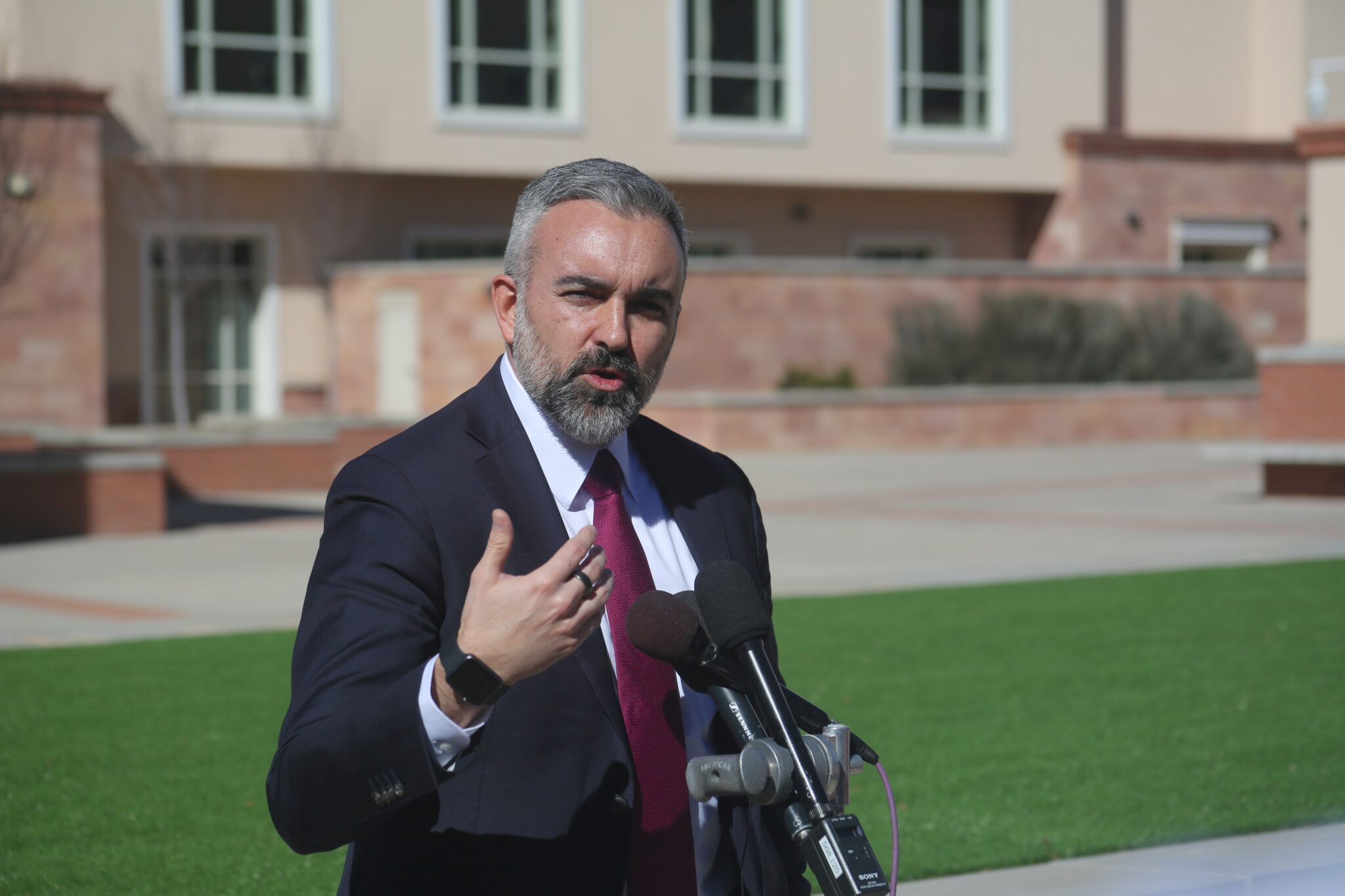
In court filings, Torrez contended that the federal government lacks the authority to compel states to collaborate with federal immigration actions. He stressed that House Bill 9 does not hinder the government’s capacity to detain immigrants. Senior attorney Jonathan Bakker, representing the state, echoed this sentiment, noting that the law imposes no obligations on federal authorities and allows them the flexibility to engage private entities for detention facilities in New Mexico.
At two other detention facilities in the state, ICE continues to collaborate directly with the private contractor CoreCivic to detain migrants in Milan and Estancia. Furthermore, the state’s legal argument posits that Otero County’s contracts with ICE and a private operator, Management & Training Corporation (MTC), are invalid as they were formed in an apparent attempt to circumvent the newly enacted law.
The city of Albuquerque has introduced similar arguments in defense of its Safe Community Places Ordinance, enacted in March. Deputy City Attorney Devon King asserted that the city retains the authority to manage its property and resources without being compelled to assist in federal immigration enforcement.
Both the city and the state have formally requested oral arguments before U.S. District Judge Kenneth Gonzalez. Additionally, Governor Lujan Grisham’s legal team has submitted a brief seeking to dismiss her as a defendant, claiming she acted within her gubernatorial responsibilities in signing House Bill 9 and asserting her immunity from lawsuits challenging the legislation mandated by the state Legislature.
In a recent statement, Attorney General Torrez emphasized that the enactment of House Bill 9 was driven by documented instances of inhumane treatment at the Otero County Processing Center—including unsanitary conditions, overcrowding, and allegations of retaliatory solitary confinement. Torrez described the Legislature’s decision as one of autonomy in line with Congress’s authority, reinforcing the state’s right to dictate the role of public agencies in such matters.
