


OMAHA — A year has passed since around 80 federal and local law enforcement agents, along with a canine unit, conducted a major raid on Glen Valley Foods in Omaha, detaining approximately 75 undocumented workers. This operation marked the most significant enforcement action against immigrants in Nebraska since 2018.
U.S. Immigration and Customs Enforcement (ICE) capitalized on this event by inviting a national television crew, emphasizing that the Trump administration aimed to “protect the nation’s workforce” while holding employers accountable for fostering illegal immigration. ICE officials promoted their focus on “identifying public safety and national security threats.”
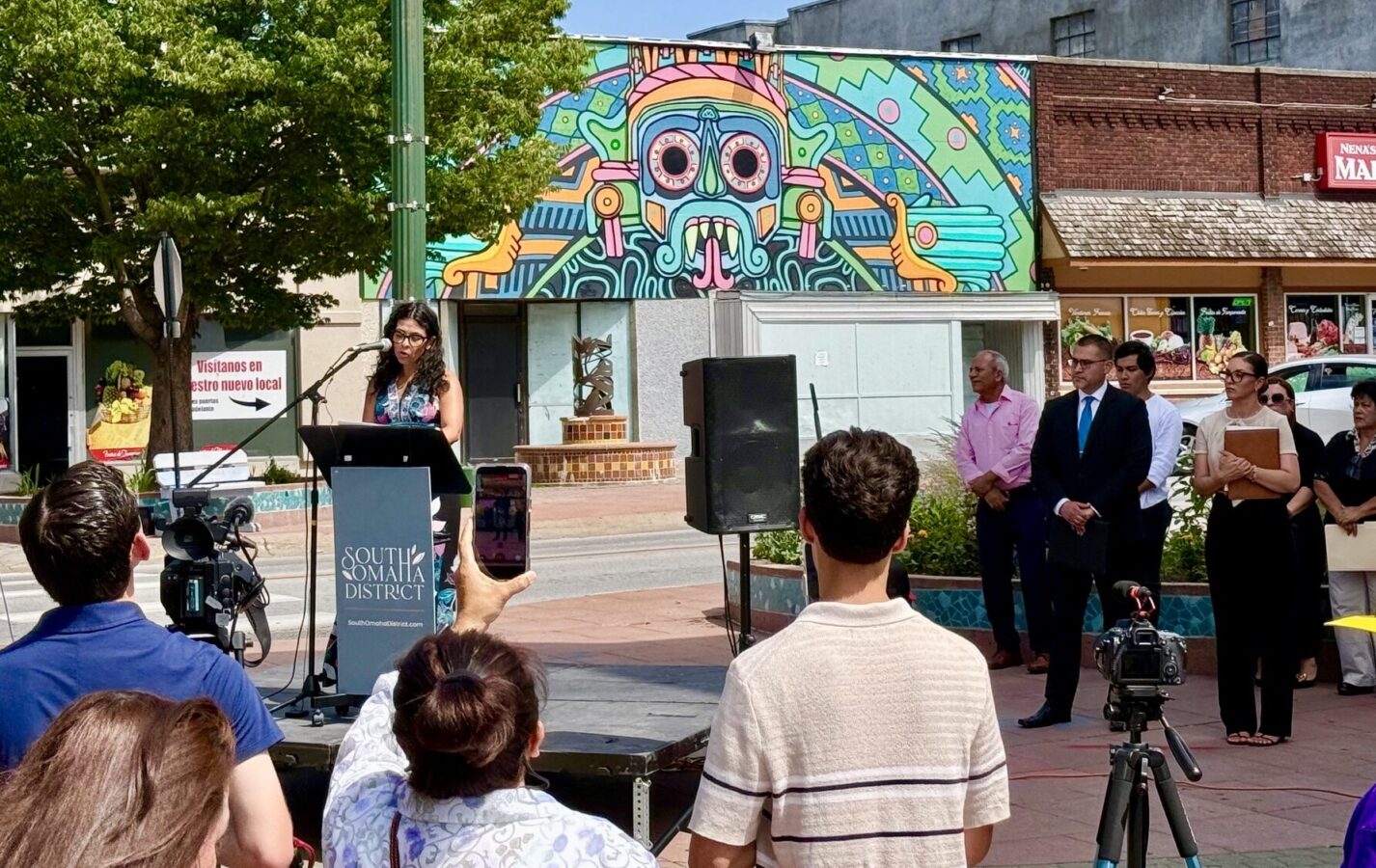
However, at a recent press conference, elected officials, service providers, and immigrant advocacy groups united to assert that the June 10 raid and ongoing immigration enforcement tactics have failed to enhance community security. Douglas County Board Chairman Roger Garcia remarked, “If their intent is to make our community safer, they’re not doing that. They are doing the opposite by taking away breadwinners, tying up mothers and creating tension.”
Garcia expressed a belief that drug dealers and violent offenders should face strict legal consequences. Seven speakers, including Omaha Mayor John Ewing Jr., reflected on the broader impact of the Glen Valley raid and the intensified immigration policies under President Trump, detailing the strain placed on immigrant families and the city.
Impact on Local Businesses
Merchants in South Omaha, a neighborhood historically welcoming to immigrants, have reported a decline in business activity following years of challenges, including arson incidents. In light of these issues, community groups have launched an initiative called Dia de Alegria, or Day of Joy, held on Wednesdays to promote commerce in the area. The initiative encompasses live music, tours, and various activities aimed at revitalizing South Omaha’s historic business district. Ewing also declared June as “Immigrant Heritage Month.”
Notably, the raid took place just a day after Ewing was sworn in as mayor, making it his first challenge in office after defeating incumbent Republican Jean Stothert, who was pursuing a fourth term. Ewing called on federal authorities to adopt more inclusive immigration policies, advocating for pathways to legal citizenship for nonviolent immigrants. “This is about making Omaha the best and most inclusive community we can be,” he stressed, urging collaboration to heal the wounds caused by ICE’s enforcement actions.
Roxana Cortez Mills, legal director for the Center for Immigrant and Refugee Advancement, noted that the Glen Valley raid resulted from an investigation into alleged misuse of identification documents. Following an audit in March 2025 that flagged 107 suspicious documents, federal authorities escalated their enforcement efforts. Public documents reveal that only one worker from Glen Valley was ultimately charged and convicted for identity-related fraud.
Ongoing Uncertainties for Immigrants
Cortez Mills criticized the allocation of public funds in light of the raid’s outcomes, emphasizing that most detainees faced civil rather than criminal violations. “They got away with 70-odd criminal convictions,” she remarked, highlighting the disruption caused to entire communities and the separation of families who were vital to local industries.
The environment of uncertainty continues for many immigrants, exacerbated by fluctuating policies that instill fear of deportation. ICE has not responded to requests for comments, and the U.S. Attorney’s Office in Nebraska, which oversaw the Glen Valley case, also declined to comment. Governor Jim Pillen stood by federal partners following the raid, attributing border challenges to the Biden administration’s past actions. He echoed concerns regarding identity theft but did not provide further details.
During the rally, Lina Traslavinha Stover, Executive Director of Heartland Workers Center, shared her observations of the emotional toll taken on families, stating that many have experienced intense fear about daily activities such as driving to work or attending school. She noted a sense of responsibility among young family members to step up in the absence of their parents. Amid this distress, community organizations, including the Center for Immigrant and Refugee Progress and the American Civil Liberties Union of Nebraska, have emerged to provide support and legal guidance to affected families.
Personal Narratives of Resilience
Among the speakers was 20-year-old Luis Mejia, who recounted his experience on the day of the raid. Accompanying his mother to work, Mejia experienced a sense of normality until the presence of ICE agents prompted panic. After being questioned for identification, he searched for his mother, who had been placed in ICE custody. “Suddenly, my siblings and I were without our mother, who was our only provider, so I felt a responsibility to take care of them,” he explained.
Mejia’s mother, alongside other workers, was held for a month before being released on bail as she fought deportation. Motivated by his experience, Mejia has joined Heartland Workers to support other families facing similar struggles. He has also registered to vote and plans to cast his ballot for the first time in the upcoming election. Community leaders, including state Senators Margo Juarez and Dunixi Guerreca, rallied around Mejia and encouraged local businesses to support initiatives like the Day of Joy.
