


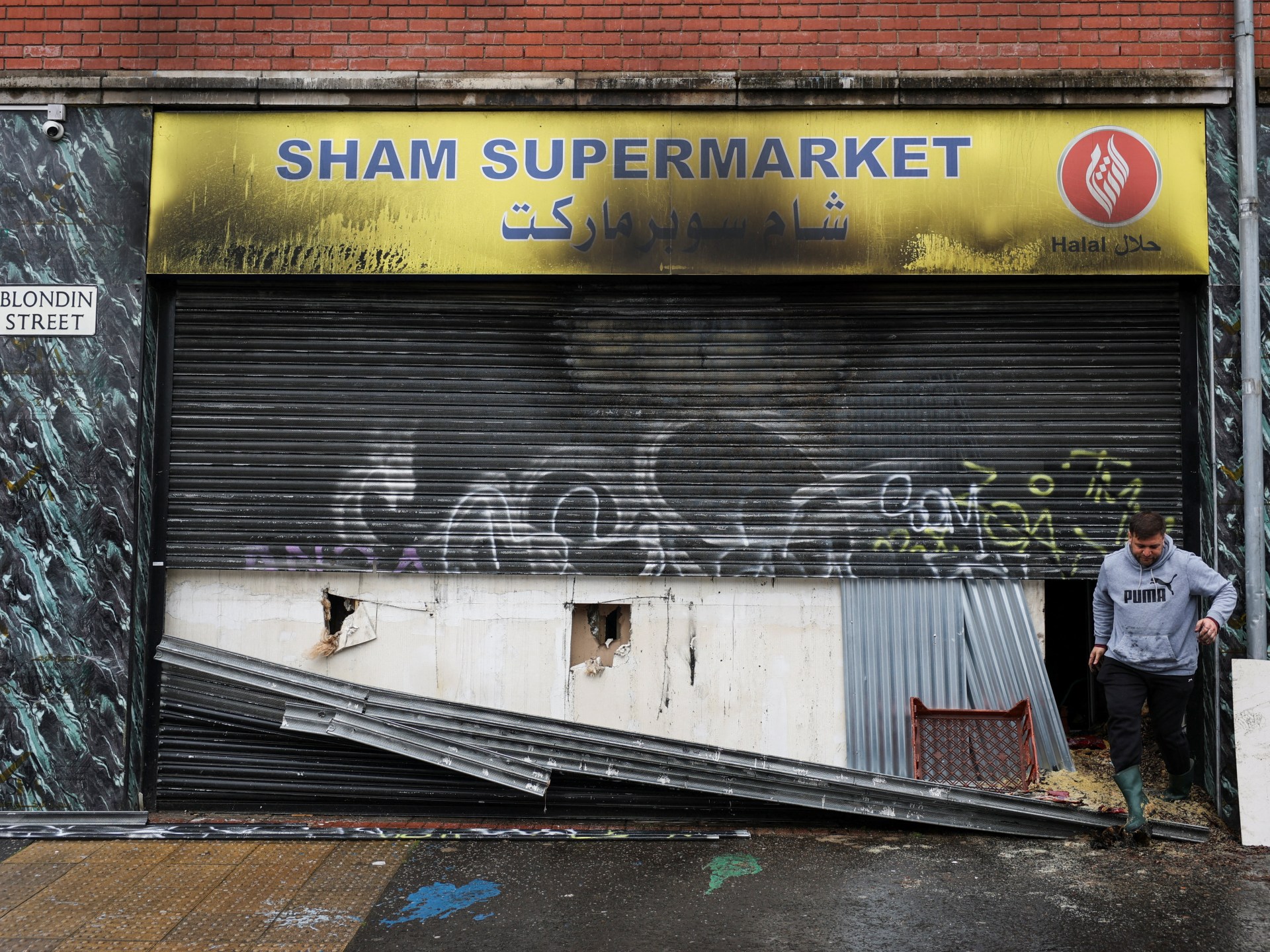
Belfast, Northern Ireland – Zeinab, a mother of three from Sudan, felt a wave of horror as violence erupted in her east Belfast neighborhood.
Anti-immigrant mobs launched a series of racially charged attacks in Northern Ireland’s capital following a knife attack this past Wednesday.
Incidents of Violence Erupt in Belfast
list of 4 itemsend of list
The individual accused of the knife assault, a 30-year-old Sudanese national who entered Northern Ireland via Ireland, faces charges of attempted murder. The victim, identified as 44-year-old Stephen Ogilvie, remains hospitalized with devastating injuries to his face and back, and he has reportedly lost an eye.
“We strongly condemn and reject what happened,” said Zeinab, who preferred not to disclose her last name. “Unfortunately, the suspect turned out to be a Sudanese national. This does not reflect the character of Sudanese people, who are typically recognized for their kindness and generosity.”
Feeling threatened as homes and businesses connected to ethnic minorities were set ablaze, Zeinab urged the NGO Anaka Women’s Collective to evacuate her family.
Like others from minority backgrounds, she found solace with an Irish family who provided refuge in a suburb of Belfast. “May God reward them,” she stated, expressing gratitude for their extraordinary kindness. “While not everyone here is accepting of foreigners, there are many who show us love and generosity.”
As twilight settled over the city on Tuesday, a tense silence engulfed local traders, many of whom hurriedly shuttered their businesses after receiving threats circulating on social media.
An AI-generated list, disseminated by notable figures including Tommy Robinson and Elon Musk, warned local establishments to close by 5:30 PM. This list specifically identified streets throughout Belfast and a broader range of locations across the UK.
Robinson, a far-right activist, incited crowds by declaring, “The whole of Britain is taking to the streets tonight in response to another attack on our people,” leading hundreds to respond.
Youth, some barely in their teens, approached Lower Newtownards Road in east Belfast with determination. Within an hour, the sounds of buses and other vehicles being incinerated echoed through the rain-soaked streets, while smoke billowed ominously into the air. Reports suggest that some perpetrators were as young as 10.
Graffiti tauntingly scrolled across the shutters of halal butcher shops, stating “Fucking Islam.” Amnesty International Northern Ireland director Patrick Corrigan noted that anti-Muslim sentiment appeared to be increasingly prevalent amid the recent unrest.

Video footage captured the chaos as rioters smashed windows, kicked in doors, and threatened residents of nearby homes believed to house migrants. Onlookers watched as young individuals wreaked havoc, targeting Belfast’s small yet growing ethnic minority community and asserting their dominance over the area.
According to the 2022 census, just 3.4 percent of Northern Ireland’s population—over 65,000 individuals—identify as being from an ethnic minority background. Additionally, only 2,379 are currently seeking asylum in the country of nearly 1.9 million residents. Corrigan remarked that this marked the third successive summer of escalating racist violence in Northern Ireland, with each incident becoming increasingly severe.
These events mirror a troubling trend observed in Britain where unrest often erupts in the wake of crimes involving alleged perpetrators from minority backgrounds. In a statement reflecting similar sentiments to recent events in the south of England, the family of the Belfast attack victim described such violence as “unwelcome” and condemned efforts aimed at inciting division and hostility.

Belfast Paralyzed by Fear
Northern Ireland Crime Commissioner Geraldine Hanna highlighted that the influence of an anonymous digital attacker has alarmingly disrupted Belfast, showcasing vulnerabilities that the local government appears unable to address.
Hanna noted that a protest scheduled for Wednesday was ultimately called off.
She insists that this situation should be classified as “domestic terrorism,” questioning why governmental responses have been insufficient, while civil society organizations might play a crucial role in providing immediate assistance and developing counter-strategies.
Protests erupted in major city centers across Northern Ireland, with participants donning black attire and concealing their identities. Some masked individuals established unauthorized checkpoints, interrogating motorists about the presence of suspected “foreigners.”
Law enforcement officials have also faced aggression, as bricks and stones were hurled at police officers in riot gear in north Belfast.
The Right Participation and Practice charity reports that approximately 200 families have fled, while Northern Ireland’s housing authority has mobilized assistance for just 29 households since the unrest began, with repairs still pending assessment.
A viral ‘hit list’ targeting properties perceived to be multi-occupation homes in South Belfast has raised significant concern. This list, compiled from public data, spans both public housing and student accommodations, aiming to intimidate vulnerable populations within the community.
On the political front, responses from All-Island Republican Sinn Féin MP John Finucane and Northern Ireland First Minister Michelle O’Neill were effective in easing tensions.
New Ulster Unionist Party leader John Burrows declared he felt threatened by a mob on Lower Newtownards Road, while journalists covering the scene reported threats and harassment aimed at them.
Simultaneously, Democratic Unionist Party (DUP) officials defended the protests by citing “genuine concerns about legal immigration,” with party leader Gavin Robinson further advocating for a closure of the “open and porous border” with Ireland.
