


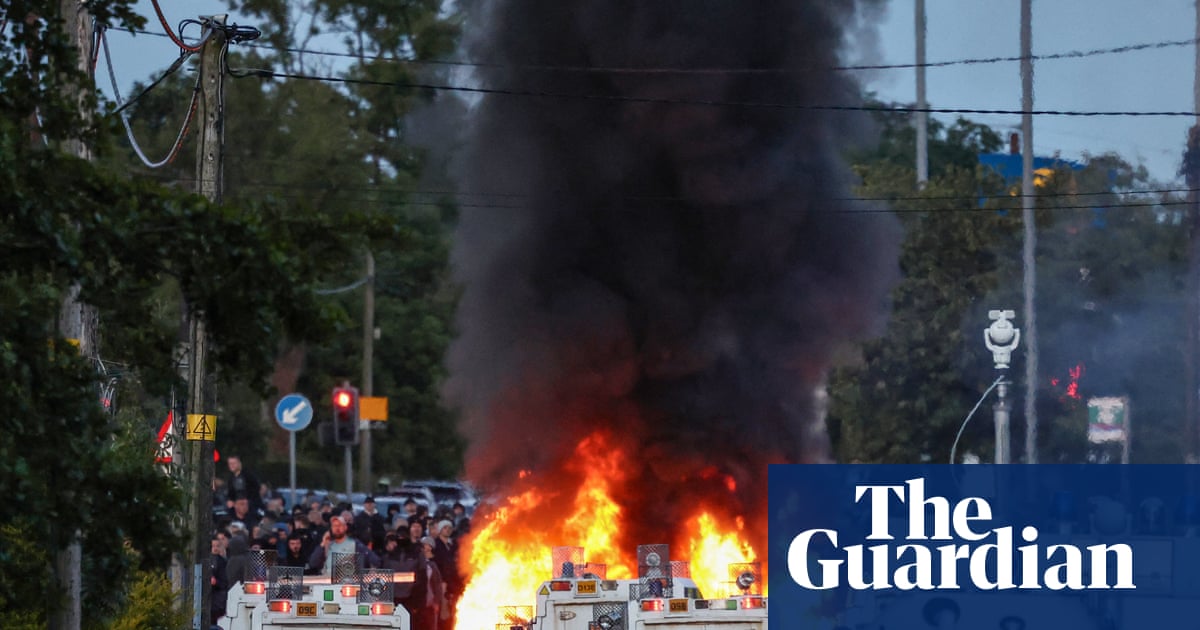
Violence Unfolds in Glengormley and Southampton
The community of Glengormley, located on the northern outskirts of Belfast, braces for escalating violence deemed by some as a modern-day pogrom. Meanwhile, courts 500 miles away in Southampton are grappling with their own surges of unrest.
Triggering Events in Northern Ireland
This week’s violence in Belfast was ignited by disturbing footage showing a black assailant allegedly stabbing and slashing a prone white victim in the face and neck while shouting in Arabic. The suspect has since been identified as a refugee from Sudan.
Demonstrations Escalating in Southampton
In Southampton, a separate violent demonstration erupted outside the central police station on June 2, where approximately 1,000 people gathered. This protest was catalyzed by the release of police body camera footage depicting the last moments of 18-year-old Henry Nowak, who had been wrongfully arrested and died from stab wounds inflicted by British Sikh Vikram Digwa, now convicted of murder.
Violent Escalation at Protests
Prosecutor Siobhan Lindsley informed the court that many in the crowd appeared intoxicated, with a significant number wearing masks. One protester was reported to have incited the crowd by asking if they wanted to attack Digwa’s incorrect home address, setting off a wave of violence. Protesters hurled bricks, chairs, and trash cans at police, who found themselves encircled and under relentless attack for about two and a half hours.
Far-Right Involvement in Southampton Riots
The demonstrators included individuals from both local and foreign far-right groups, such as the Southampton Patriots and the National Renewal Party. Such affiliations have raised serious concerns about the influence of extremist ideologies and the motivations behind these violent outbursts.
Judicial Response and Sentencing
In court, several defendants entered guilty pleas, revealing the human impact of the riots. Among them was 22-year-old Taylor Grundy, who faced two and a half years in prison for his actions, which included setting a commercial trash can ablaze. Another defendant, 29-year-old Dillon Crawford, received a three-year sentence for throwing projectiles at police. Both men displayed remorse, yet their criminal histories suggest a troubling background of violence.
Political Ramifications and Social Tensions
Political figures like Nigel Farage, head of the anti-immigration Reform UK party, have framed these incidents as a reflection of societal discontent, positing that the police’s perceived prioritization of ethnic minority rights over those of white individuals exacerbates tensions. While Farage’s views resonate with some, critics argue they further inflame divisions for political gain. They point to broader societal issues that need addressing beyond racial tension, including economic factors that are undeniably contributing to public unrest.
Context of Riots and Public Sentiment
Despite claims of escalating immigration issues, statistics indicate that Northern Ireland’s immigrant population remains relatively low, with nearly 97% identifying as white in the 2021 census. Recent riots, involving approximately 200 participants, are therefore less about immigration and more indicative of deeper social stresses and grievances intertwined with race, nationality, and mismanagement of public resources. Educational insights suggest that the combination of rising living costs and perceived economic neglect may be creating a volatile environment, prompting citizens to resort to violence as a means of expression.
Conclusions on Future Unrest
Amid ongoing tensions, experts warn that the loss of social cohesion and the underfunding of police forces could lead to further unrest. While the situation remains fluid and complex, it underscores the critical need for thorough investigation and dialogue to address the underlying causes of these societal fractures.
