


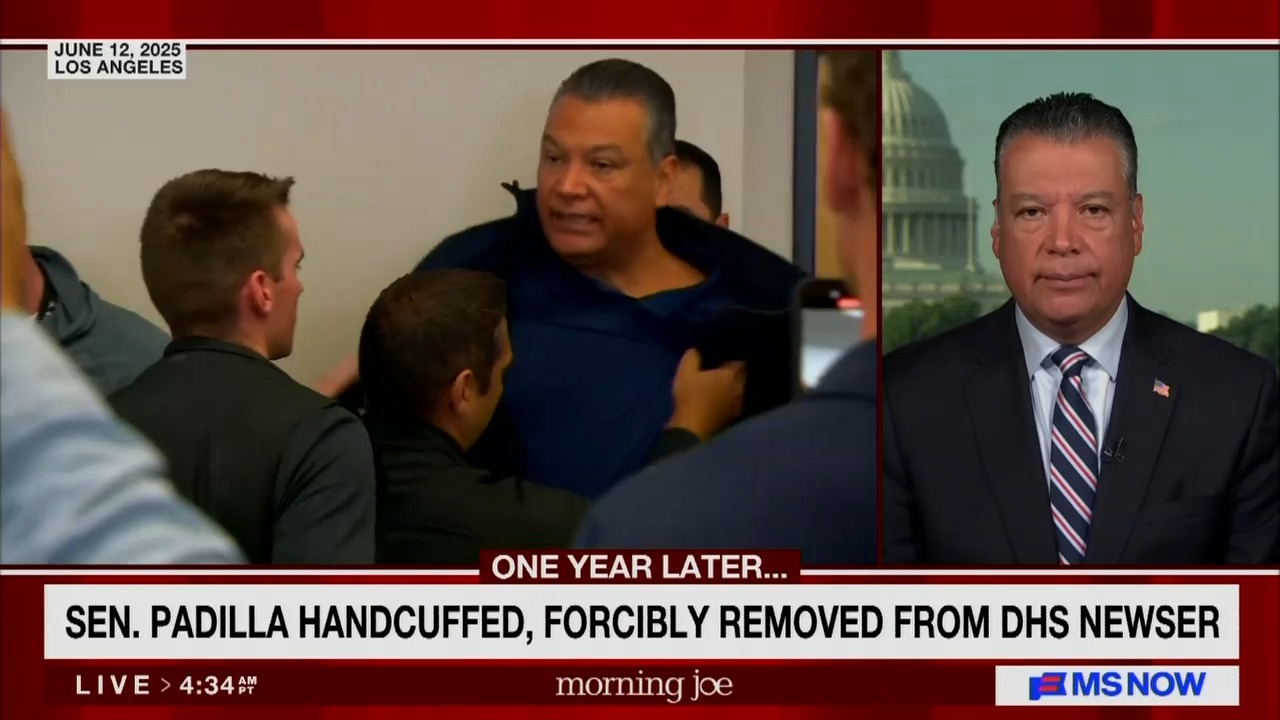
Padilla Reflects on Immigration Policy One Year After Federal Confrontation
WASHINGTON, DC — Senator Alex Padilla (D-Calif.), Ranking Member of the Senate Judiciary and Immigration Subcommittee, participated in a press conference hosted by the Department of Homeland Security (DHS) in Los Angeles, commemorating the anniversary of a significant confrontation he faced with federal agents.
On June 12, 2025, Padilla was present at the Los Angeles Federal Building to oversee government operations, coinciding with a press conference led by then-Secretary of Homeland Security Kristi Noem. As he was being briefed by General Gregory Guillot, Padilla attempted to ask Noem questions but was unexpectedly tackled and forcibly removed by federal agents. This incident highlights the contentious relationship between local officials and federal immigration enforcement during the Trump administration.
Since that day, immigration enforcement measures have intensified in both violence and scope. Padilla expressed concerns about the government’s harsh immigration policies and pointed out that measures enacted over the past year have disproportionately affected vulnerable populations. He specifically noted the troubling conditions faced by individuals in detention centers, prolonged processing times for DACA renewals, and the current administration’s lack of oversight and accountability.
Pushing for reforms, Padilla reiterated the necessity of modernizing the U.S. legal immigration system. He stressed the significant contributions immigrants make to the economy and urged policymakers to establish a more just immigration framework that prioritizes dignity, safety, and the rule of law.
During his address, Padilla lamented the shift in tactics used by immigration authorities, noting that while graphic instances of violence may no longer dominate the news cycle, more covert and brutal strategies are now in place. He emphasized that the lack of media coverage should not overshadow the ongoing suffering within detention facilities, which remain largely closed to public scrutiny.
With respect to the delays affecting DACA recipients, Padilla highlighted the increasingly protracted timelines for paperwork processing. Many applicants are left in limbo, facing the risk of deportation as their DACA statuses expire without timely renewals. He criticized the government for exploiting bureaucratic hurdles that complicate the lives of immigrants who are not the violent offenders portrayed by some narratives.
Padilla concluded by calling for an urgent overhaul of the immigration system to better reflect the realities of modern America. He argued that individuals seeking to enter the U.S. legally, including workers and students, deserved an efficient and fair process. Furthermore, he emphasized the importance of recognizing long-term residents who have contributed to American society, stating that they should not be relegated to the shadows out of fear but should be allowed to live openly and without fear of retaliation.
